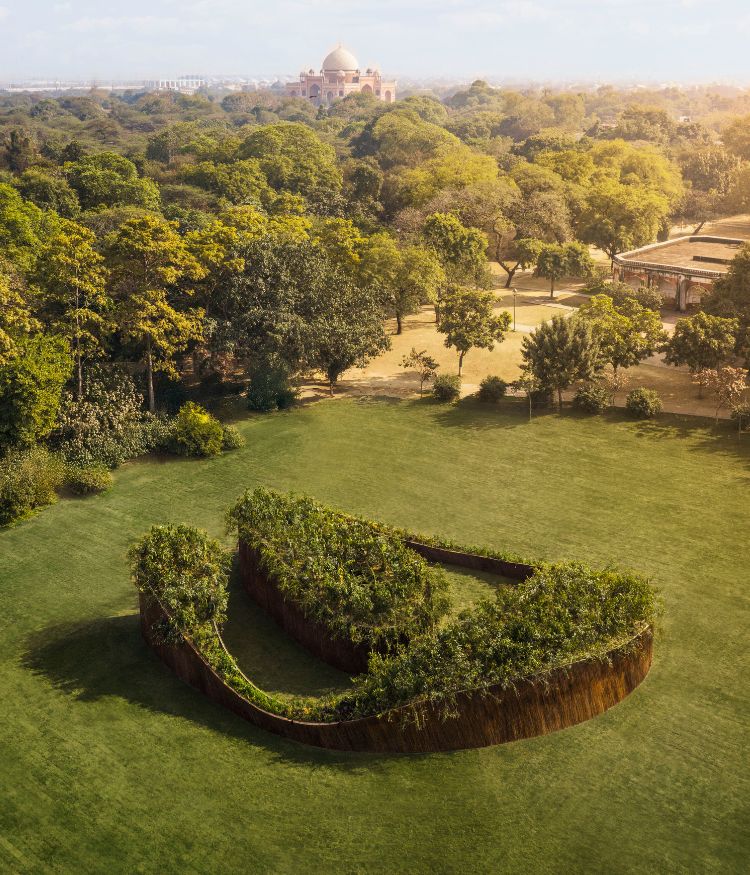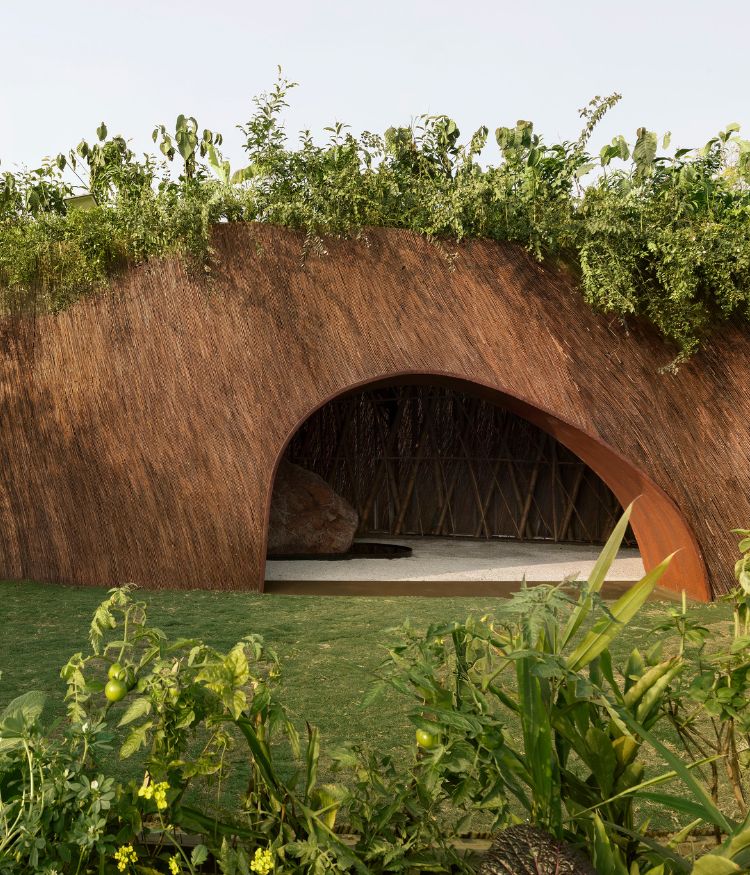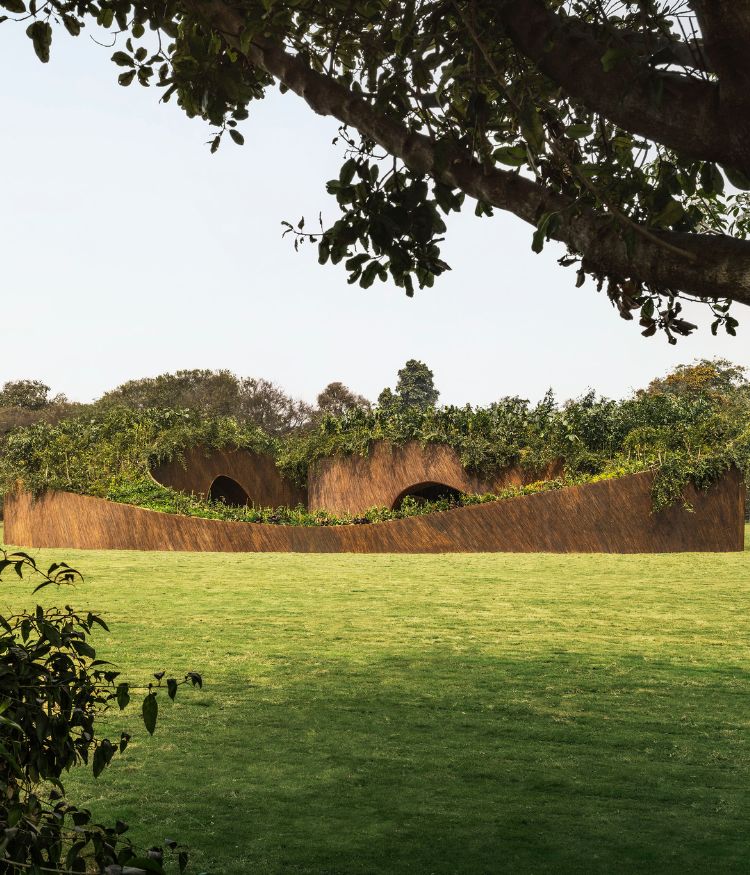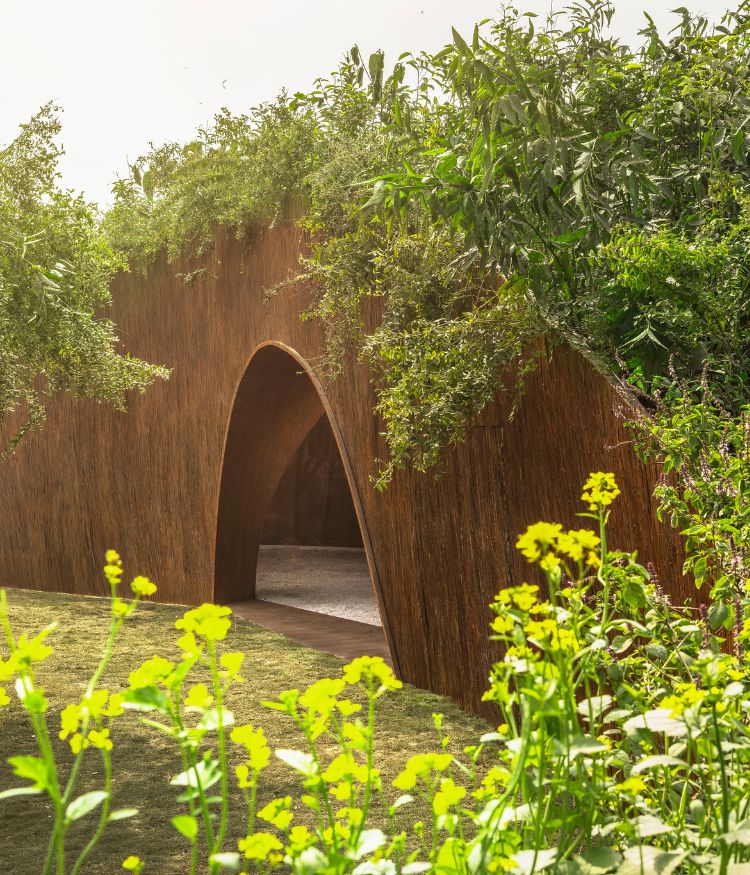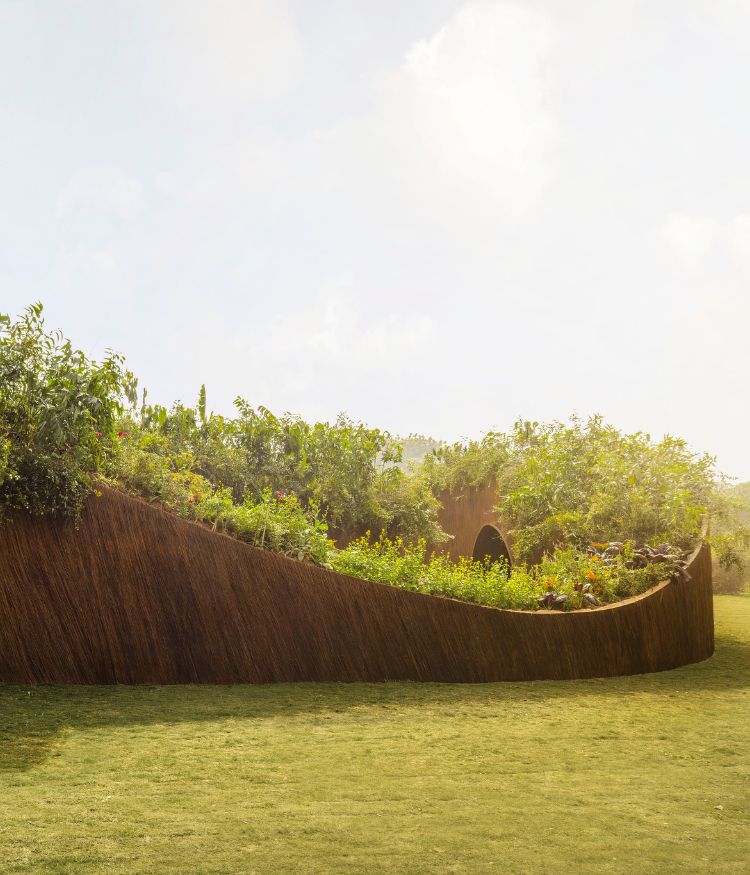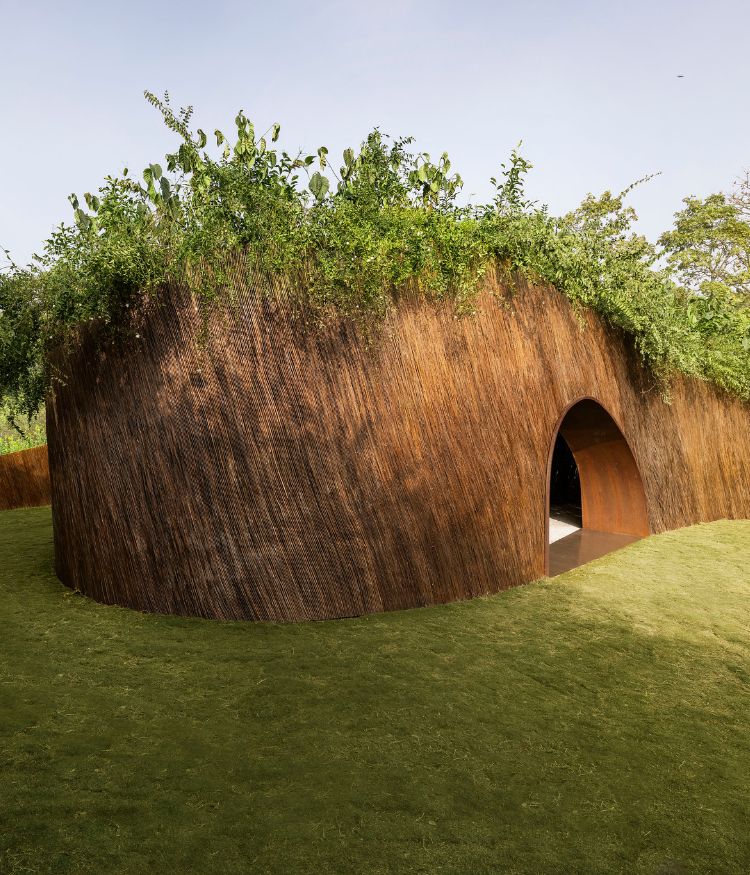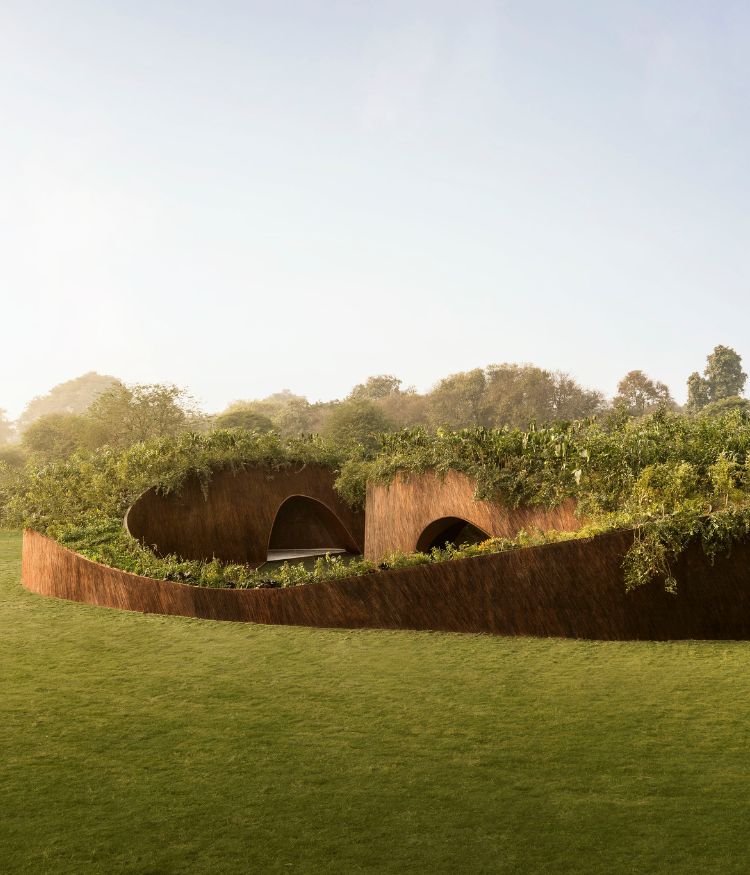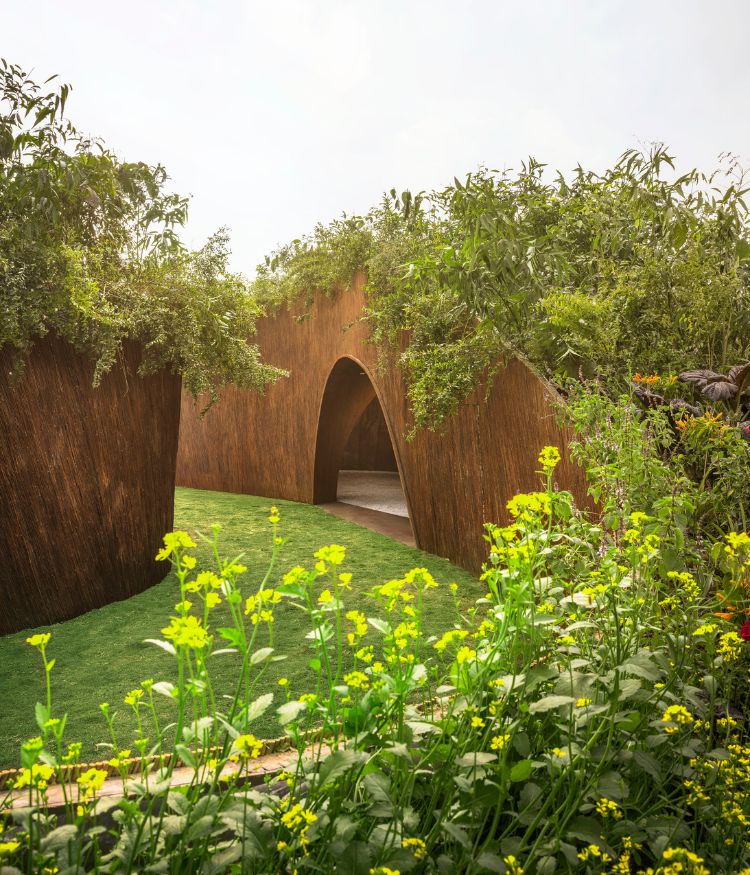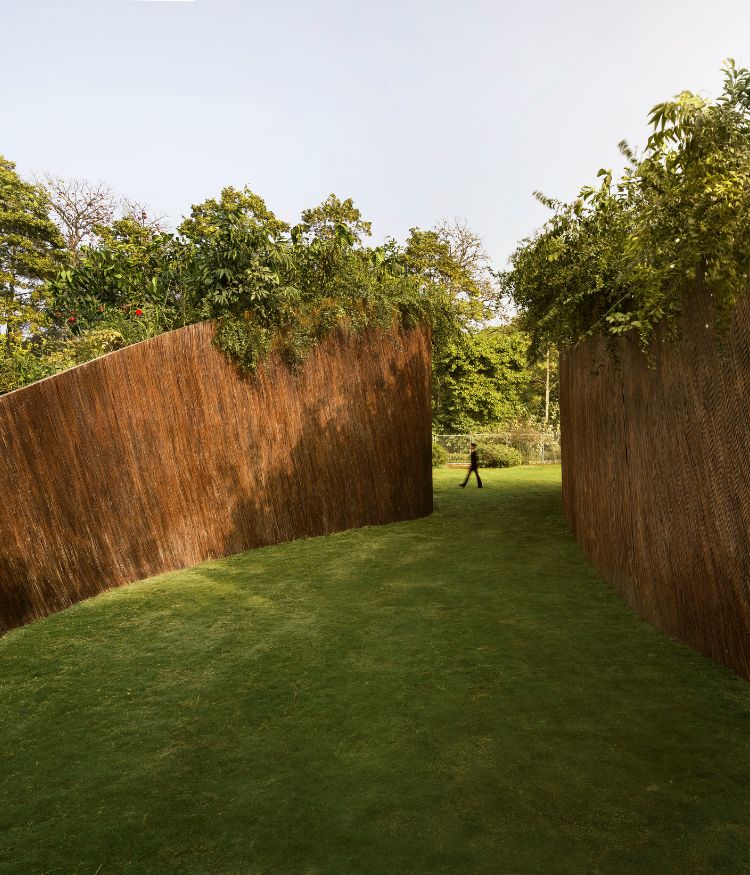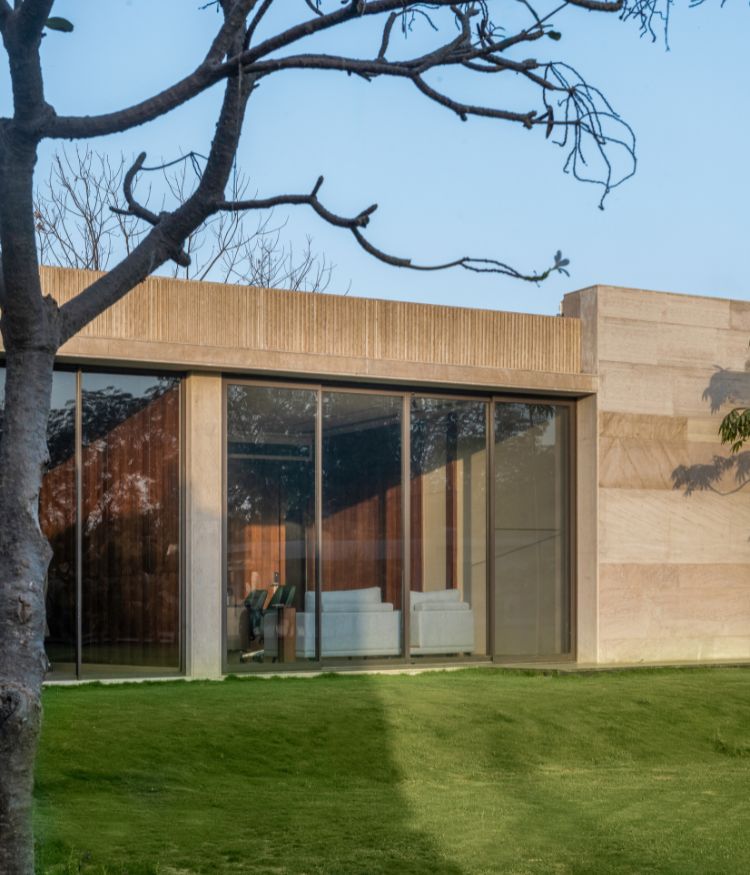
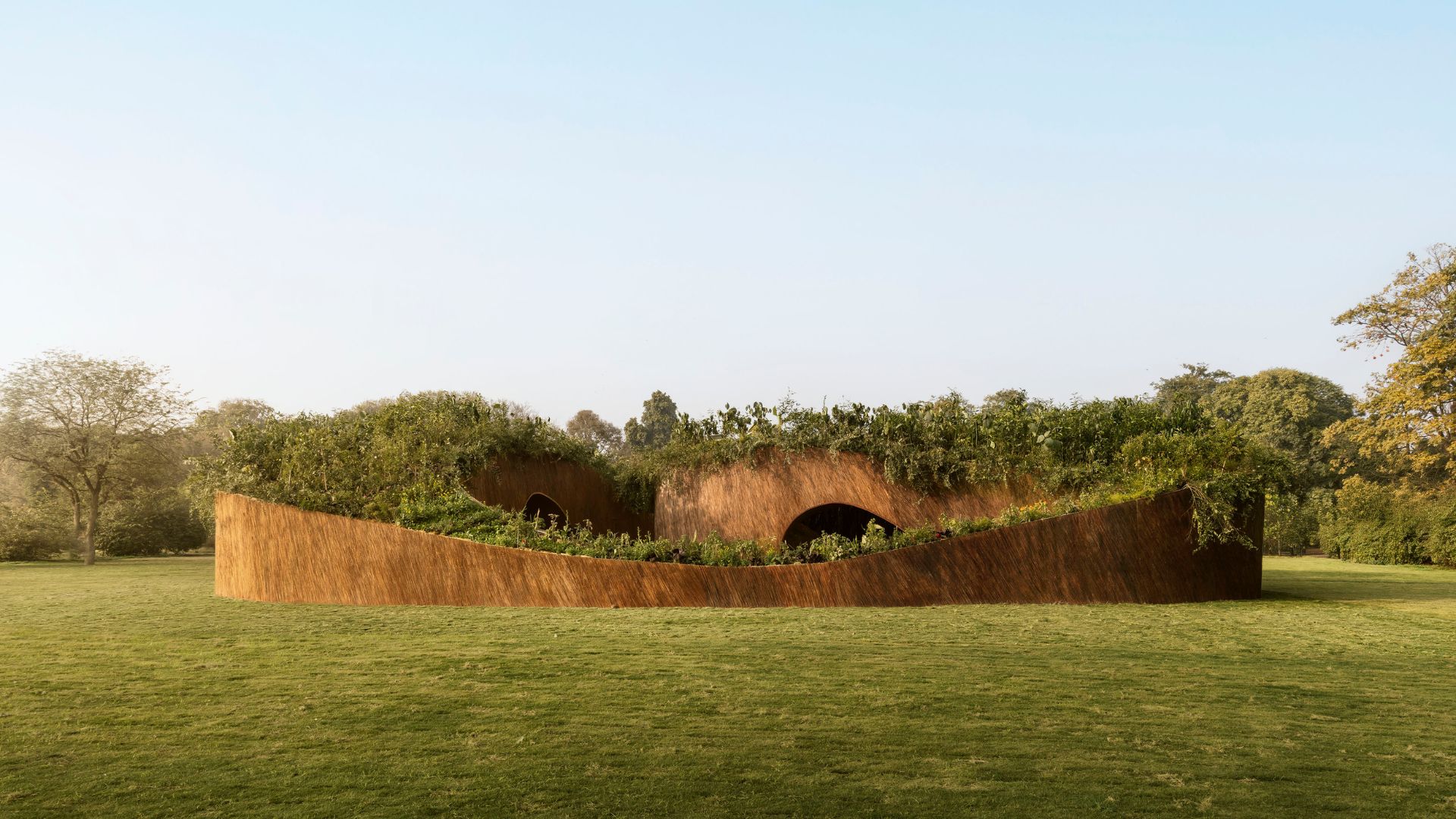
Decolonising design. Where do you even begin the process of uprooting something that has festered for centuries? Then again, perhaps uprooting is the wrong analogy. At the Aranyani Pavilion, conservationist and artist Tara Lal offers an alternative. Instead of viewing design in isolation, the 200 sq mtr structure in Delhi’s Sunder Nursery and the ecological restoration and creative arts initiative behind it turn their attention to the land itself. Often the first site of domination, the landscape has long been manipulated, sometimes by the lack of understanding and at other times, due to a lack of care in indigenous relationships with nature. Lantana camara is one of several invasive species that followed colonisers into the country. From hedges around city bounds to decorative ornamentation, the plant quickly spread in thickets, outcompeting native plants for nutrients. “Lantana is a clear example of what happens when design choices are driven by appearance and speed, without responsibility to place. Those patterns have not disappeared — they show up today in architecture and development that prioritise quick results, visual impact and convenience, often ignoring land, water systems and local ecologies,” says Tara. Is the solution then to incinerate the wood, as communities often do? Or to explore the material qualities of the wood and try to build anew? Choosing the latter, the lantana wood becomes the skin of this pavilion designed by T__M Architects and executed by Guillaume Lecacheux of The Works and Ekarth. “We have sourced the wood from communities in Karnataka, treated to resist fire and termites. While it may not be a load-bearing material, it can surely be used in temporary structures,” says Guillaume. To compensate for the lack of load-bearing, he created support through a mild steel and bamboo frame, which was essential to support what sits atop the pavilion. A roof of indigenous plants grown with the help of Basti Gardens of Hope, a project working with the residents of Nizamuddin Basti next to the Sunder Nursery. After its public run, the plants will be removed and donated to initiatives such as these, and the structure, Tara tells us, “will then be relocated to the Rajkumari Ratnavati Girls’ School in Jaisalmer, where it becomes part of the school’s daily life.” It is telling that in a garden surrounded by monuments, all forget-me-nots of empires lost to time, what Aranyani does is turn the attention not towards the flamboyance and glory of architecture but in its collective spirit. In its own way, decolonising the way we build, and the way we think about the act of creating.
Read more: Across the high and low, how ordinary life appropriates public spaces