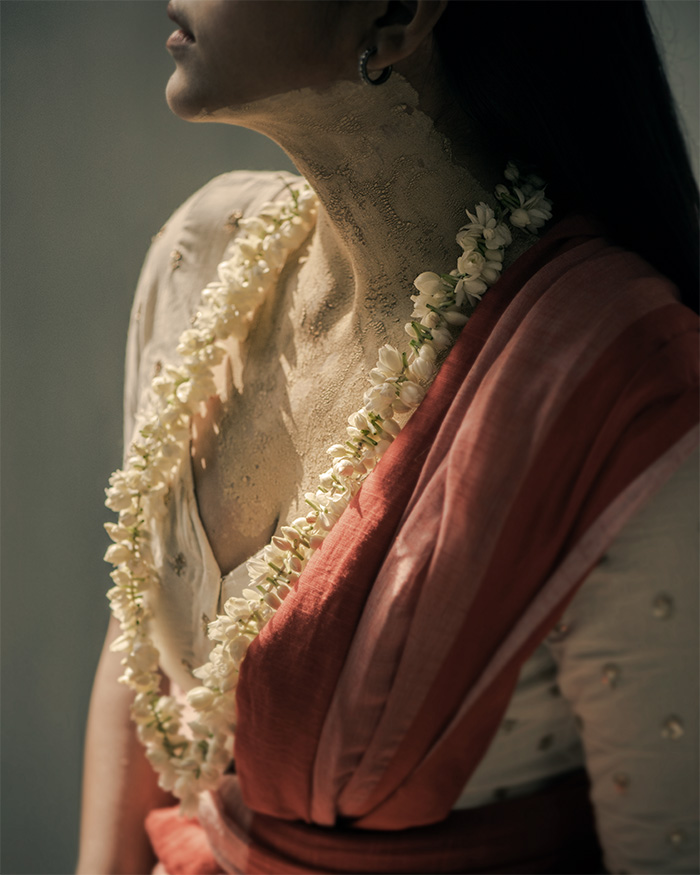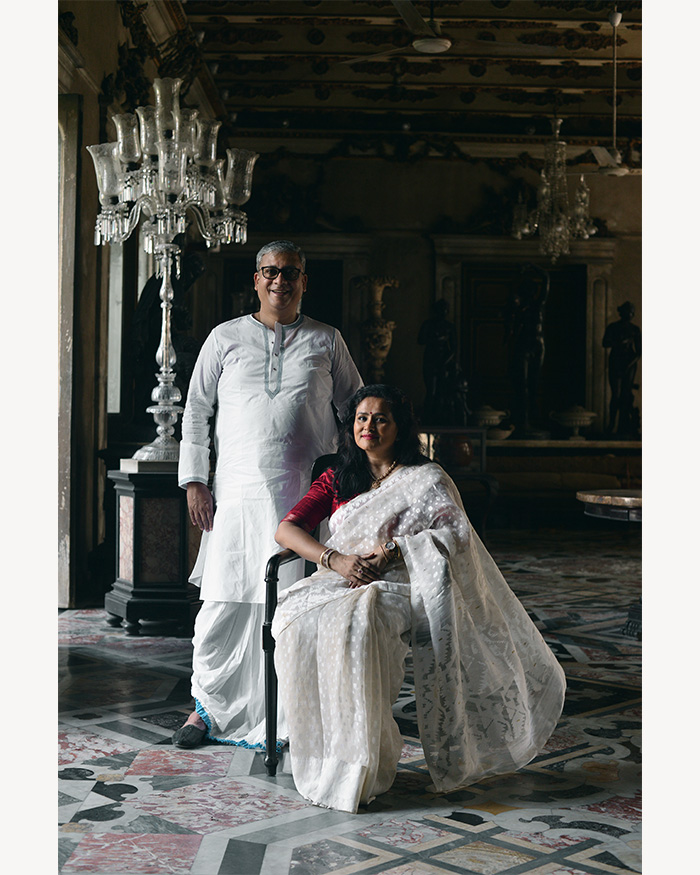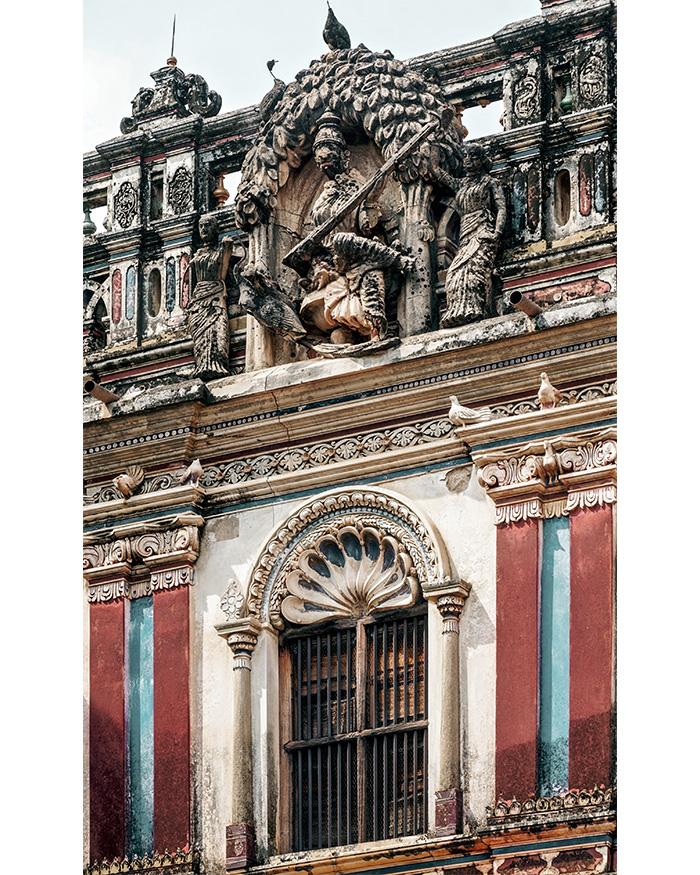

No language of the Indian subcontinent offers a single term that encapsulates maximalism. For the West, maximalism is an aesthetic and philosophical trend that stands at the other end of minimalism in a binary spectrum. Whereas in India, our cultural roots and aesthetics are intertwined with the soul and the sacred. And from that springs both a celebration of life and a spiritual quest, resulting in an exuberant expression of the senses along with the austere restraint of an ascetic. The underlying impulse stems from the same source where opposites and contradictions (maximalism and minimalism), abundance and austerity, coexist naturally and easily. The tradition of cladding the body with gold brocaded ceremonial textiles in lush, vivid colours or in austere white woven cloth was contextualised by the occasion and not as a trend. Even austerity is imbued with serene beauty, poetic detail and a contradictory sense of fertile abundance.

The Vedic tradition of adornment goes back many millennia, based on the belief that the body is a temple where the soul resides. Personal cleanliness was practised daily with ritual bathing through the use of fragrant oils and pastes. In the Rig Vedic dawn hymns, women were described as “anointed with unguents and resplendent as the sun,” while temple dancers bathed in sandalwood and turmeric before performing aarti. Layering, a fundamental concept in adornment, begins with oils for the hair and body, often combining up to a hundred herbs and flowers and fragrant resinous gums in one single oil.
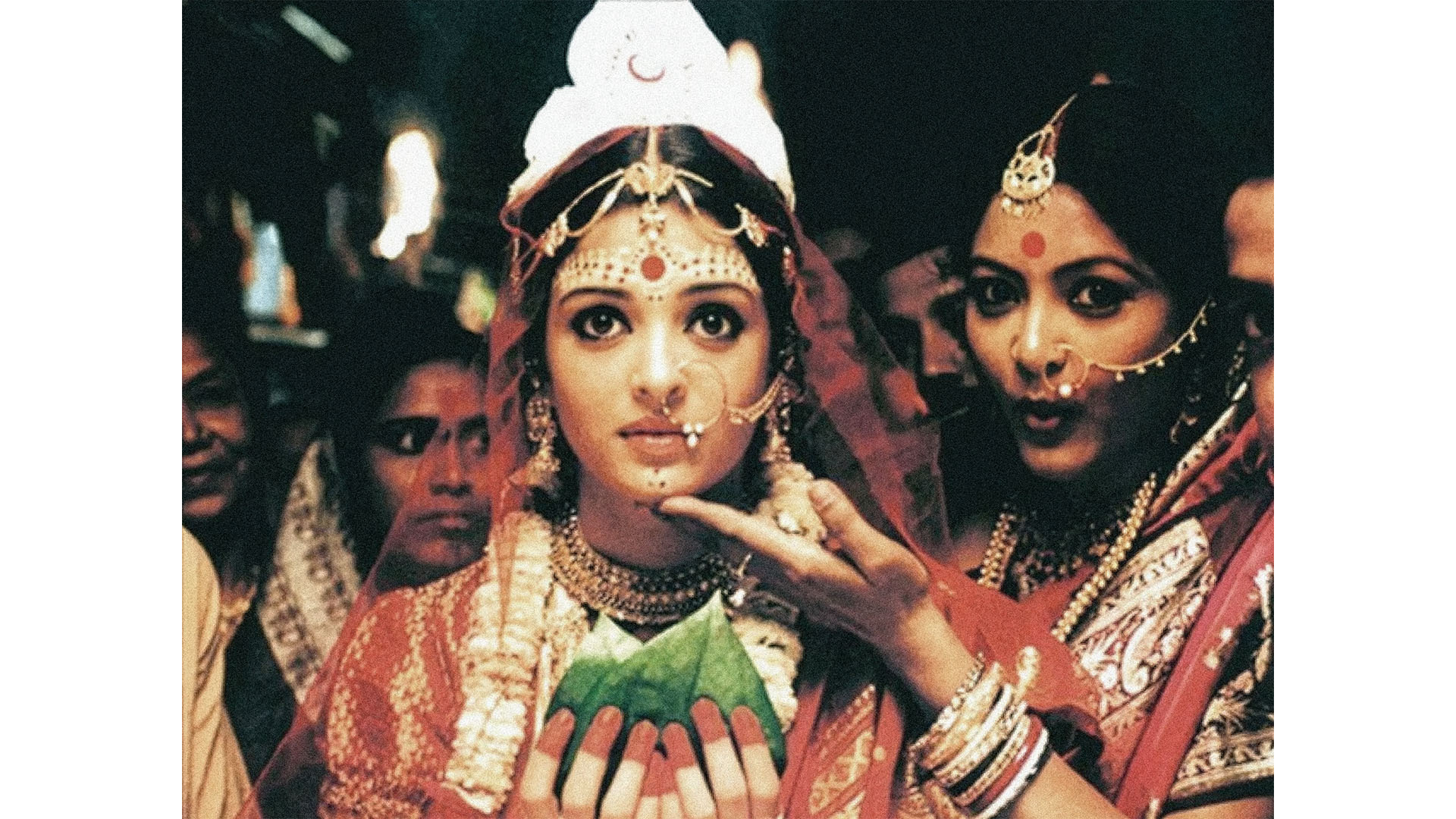
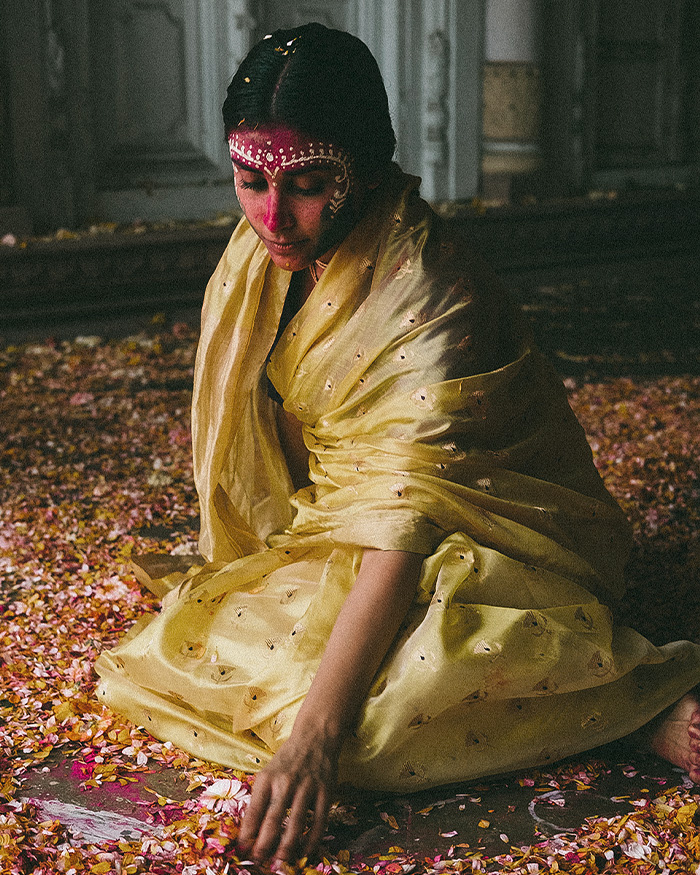
Chokher Bali – Produced by SVF Entertainment; Image courtesy of SVF Entertainment

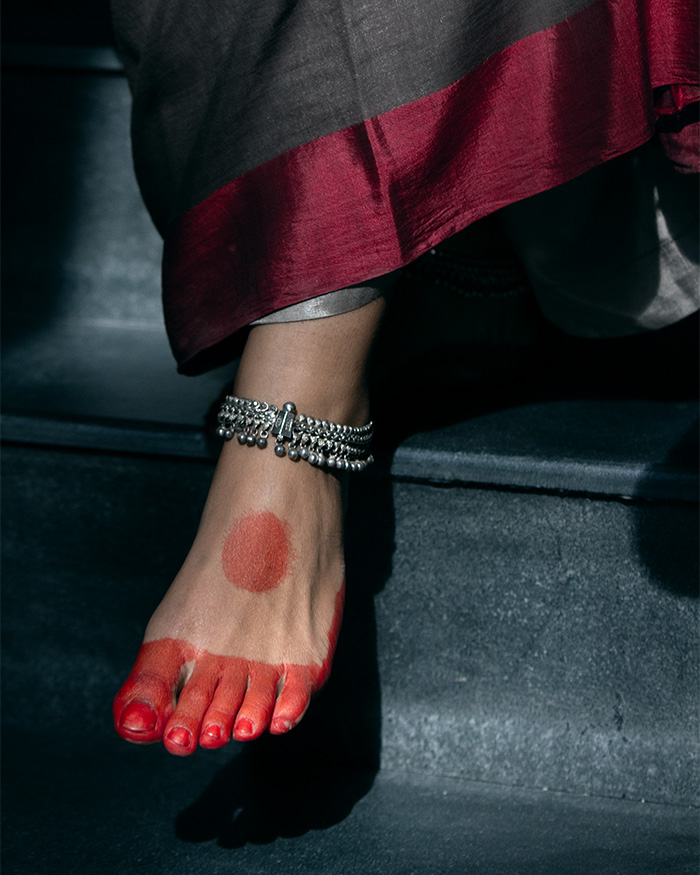
Red kumkum for the forehead created through an alchemy of haldi and chuna (slaked lime), kajal and surma for eyes that protected and enhanced their beauty, mehndi for hands and feet with hundreds of artistic variations, multiple coloured glass and gold bangles endow the feeling and spirit of wellbeing with a sense of richness and abundance.

Scenting rituals were entwined with worship through the layering of oils, pastes and powders made from sandalwood, agarwood, vetiver, camphor, musk, jasmines and a host of other ointments and distillates. The art of extracting from fragrant botanicals and resins along with the technology of creating sensuous oils flourished in the sub-continent for thousands of years and reached its culmination during the Mughal period. From 16th to 19th century CE, under their patronage, attar production was elevated to a sophisticated art form in Kannauj. A paramount centre of perfumery from earlier times was Ujjain, a city known as Avantika in ancient texts, believed to have high cosmic energy. It was the centre of learning and home of Indian astronomy and perfumery since the Mauryan period 322-185 BCE and flourished during the Gupta period 320-550 CE. It was at Ujjain in the 6th century CE that one of the first documented record of perfumery in India was made by the astronomer scholar Varahamihira in his seminal treatise called the Brihat-Samhita. It detailed the preparation of scents, powders and aromatic pastes for worship and personal use. The practice was known as Gandhayukti: the art and science of perfume. A charming tradition in Ujjain was that of creating scented hair oil by adding fresh jasmines while cold pressing sesame seeds in a Ghani. Using jasmine to scent hair has been a practice for centuries and continues today across the country. In South India, late evenings in markets are still perfumed with heady scents of night blooming jasmine gajras or veni adorning the women’s hair.

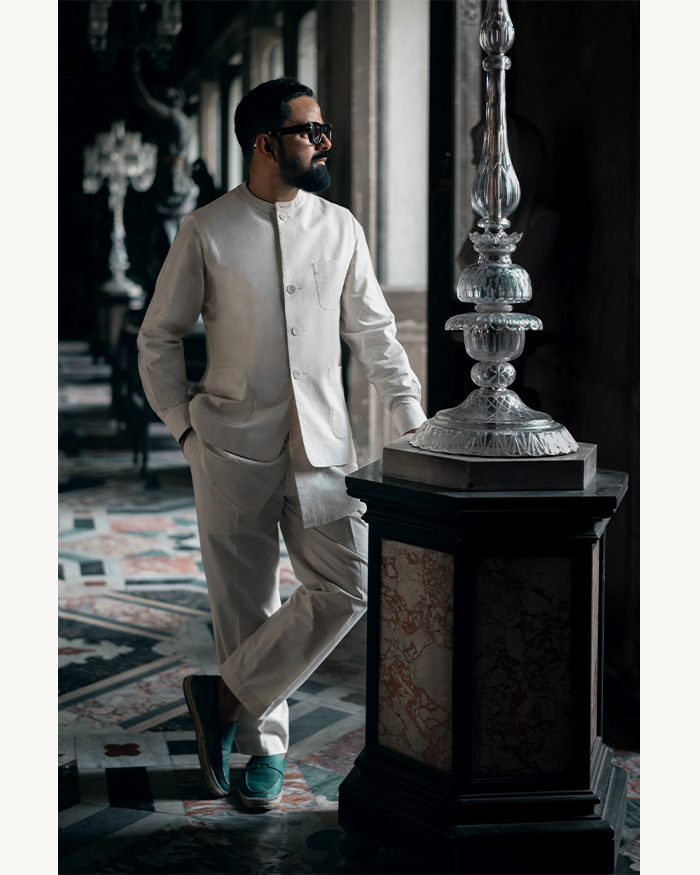
Image courtesy of Raw Mango

RITUALS OF LAYERING

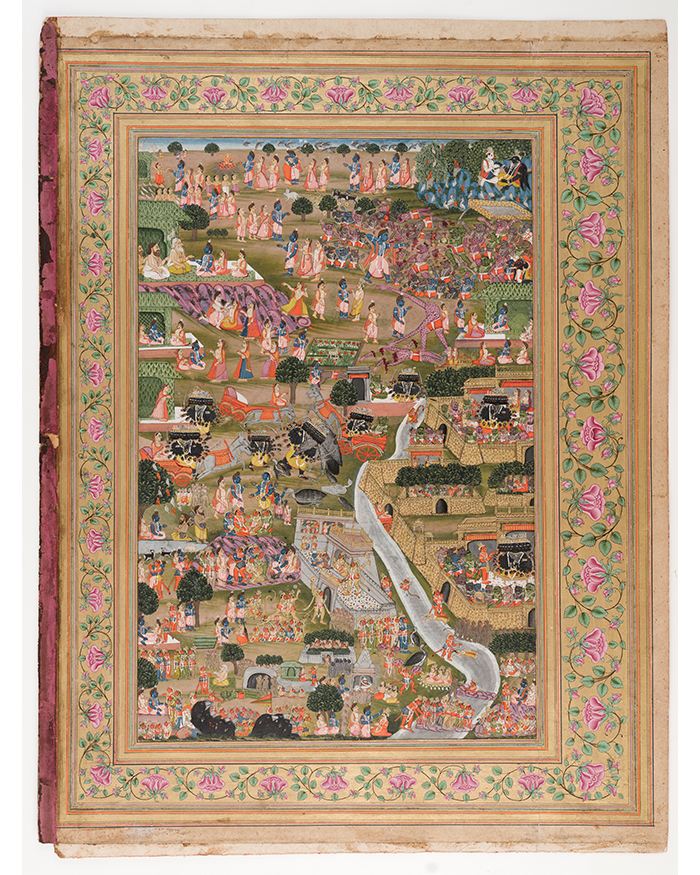
Ceremonies and rituals in India are immersive, sensory-rich experiences with an abundance of flowers, incense and sweets that honour a deity or celebrate a samskara (rite of passage) to mark a stage of life. I think the most maximal, elaborate rituals in adornment are those connected with the samskara of weddings. Rituals that stretch over a period of days for both the bride and groom begin with the tradition of oiling the hair and body with scented herbal oils. Followed the next day by an age old tradition where members of the family apply haldi chandan, a paste of turmeric, sandalwood, rosewater, yogurt and gram flour on the face, arms and feet of the bride or groom — ending in a ritual bath for beautification and to cleanse and purify. On the wedding day the bride equated to the goddess Lakshmi, is covered from head to toe in Solah Shringar, an ancient tradition of using sixteen adornments (bindi, maangtika, sindoor, kajal, nath, haar, karanphool, baajuband, mehndi, choodiyan, kamarband, aarsi, bichuas, payal, ittar and shaadi ka joda) to mark the entry into this extremely significant phase of her life. Shringar as a concept of adornment for beauty, auspiciousness and divine grace appeared in the texts of the Rigveda almost 3,500 years ago and evolved over various periods especially during the Gupta period around 1,600 years ago, also known as the Golden Age of India. The Kama Sutra written during this period, details a comprehensive approach to beauty, emphasising hygiene, cosmetics, and the performance of fine arts as part of a complete personality.

It was a time when adornment was a broad subject covered in many treatises. Ashtanga Hridaya, a 1,500 year old Ayurvedic text lists six different cosmetic formulations recommended for the six seasons of the year, underscoring the ancient understanding of adapting self-care to seasonal change.

Padmaprābhrtaka bhāna and Ubhayābhisārikār were one-act monologue plays from the Gupta age that mention cosmetics used by both men and women. Tilaka – auspicious marks on the forehead with sandalwood paste Anulepana – oils, salves scented with sandalwood, camphor, and musk. Anjana – black kohl on eyes. Alakta – lac dye to redden lips, feet, and the hands. The concept of Solah Shringar seen in temple carvings was also introduced during the same period, with statues of the deities Parvati, Lakshmi and Saraswati depicted in elaborate jewellery and hair ornaments.

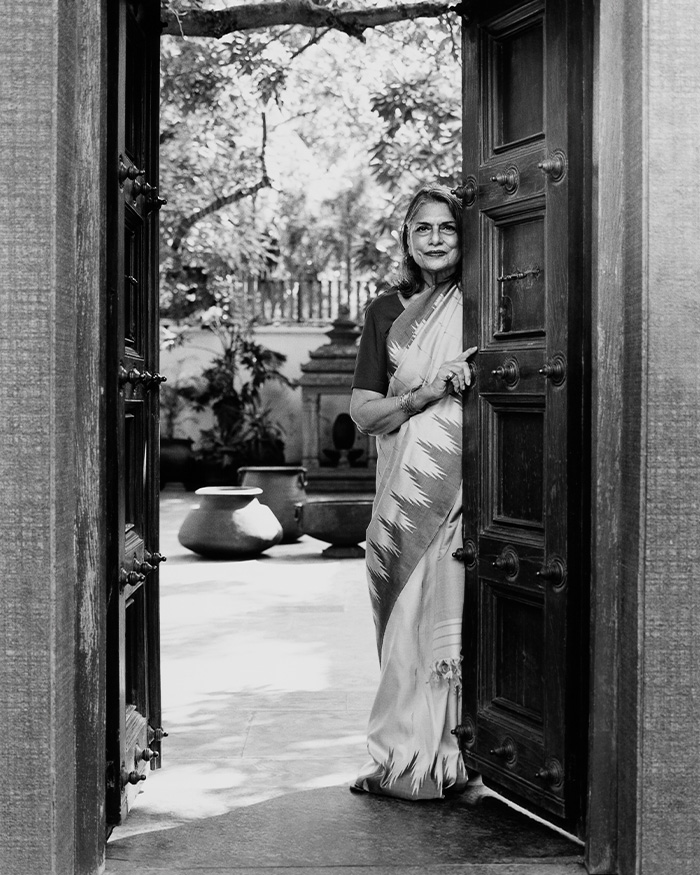
Image courtesy of Paro; Instagram @parogoodearth

SYMBOLISM IN COLOUR AND DESIGN*

Colour is celebrated across the subcontinent, each being associated with a particular deity or planet. Imbued with astrological benefits they are used or worn on appropriate corresponding occasions. Green is the colour of Parvati and fertility. Indigo belongs to Shiva and Kali. Red is the colour of Lakshmi and auspiciousness. Yellow is associated with Saraswati, goddess of wisdom and prosperity and is used during rituals like the haldi ceremony or on Basant Panchami. White is linked with the moon and Venus, a symbol of peace and tranquillity, balancing emotions and enhancing receptivity to higher vibrations. The designs on adornments also most often carry deep symbolism. From jewellery to the ritual patterns of kollams and torans, the patterns reflect meaning and associations in numerous ways. For example using an ornament such as the Sun and Moon hair pins on either side of the head symbolises the Sun’s energy on one half and the Moon’s energy on the other half. Pingala nadi (energy channel) is seen as Solar masculine energy and Ida nadi as Lunar feminine energy and they combine in the centre as Sushumna nadi (the main flow of energy) representing a balance between the two.


THE SACRED AND THE SENSORY

“Indian maximalism is about engaging all the senses, a reflection of the richness in everyday practices where beauty is intertwined with self-realisation, and a connection to the divine. A connection that is encapsulated in the concept of Satyam, Shivam, Sundaram — Truth, Godliness, Beauty. These elements are interlinked, suggesting that true beauty emerges from honesty, virtue and integrity,” says Bandana Tiwari, a culture journalist. Maximalism, as deciphered in the traditional Indian context is not the absence of restraint, it is not a vanity parade of endless clutter or an over the top clashing jumble for the sake of a trend. It is in fact a deep seated cultural instinct that celebrates abundance and embraces rich intentional layering across adornment, rituals and beauty. It is not about mindless excess but about conveying emotions that honour rites and relationships, connecting us with the cosmos, family and community — the wellsprings of a meaningful life.

*Note from PARO by Goodearth – a cultural knowledge sharing platform founded by Simran Lal

Read more: Ritu Dalmia on the great Indian story of papad and achaar

Image courtesy of Paro; Instagram @parogoodearth
SHARE THIS ARTICLE

You May Also Like

Watch

No results found.

Search
Close this search box.