
Produced by Mrudul Pathak Kundu
Human history is filled with stories of tribes, traders, invaders and large swarms of the populace migrating across continents. The reasons were multivaried: yet another famine, unprecedented climate change, or the occasional (often) tyrannical ruler. But in 16th-century Mughal India, a peculiar shift was occurring — idols of Hindu deities were abandoning their shikhara-topped temples, and were being moved by worshippers into their own havelis. Was it out of the fear of persecution, or to bring God closer to home during those turbulent times? These havelis in question were no ordinary residences. As trade flourished, wealthy merchants often invested a fortune into constructing lavish, richly ornamented structures that signalled their monetary and cultural affluence. One such structure stands alongside artist Amit Ambalal’s residence in Ahmedabad.
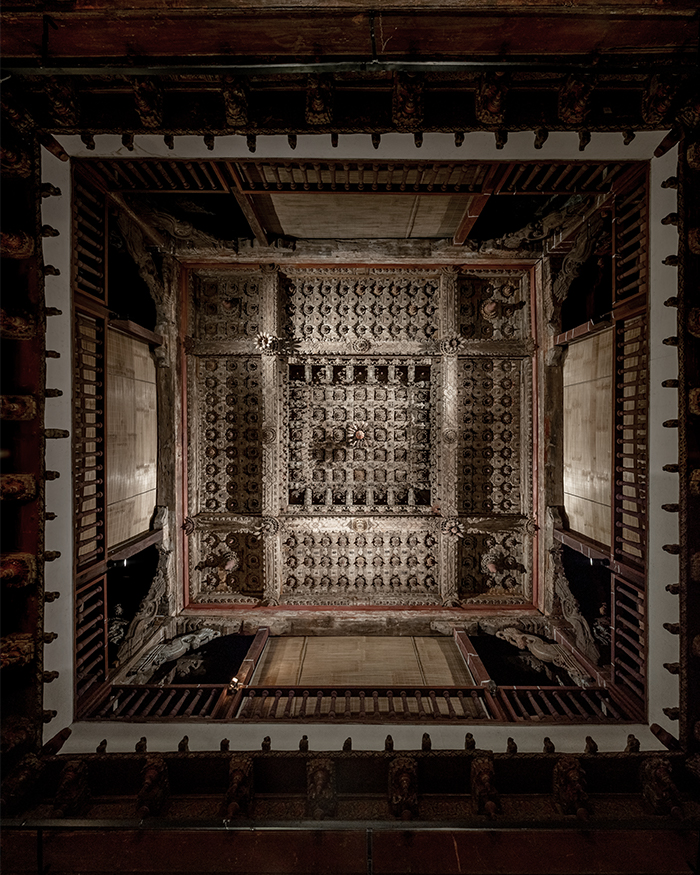
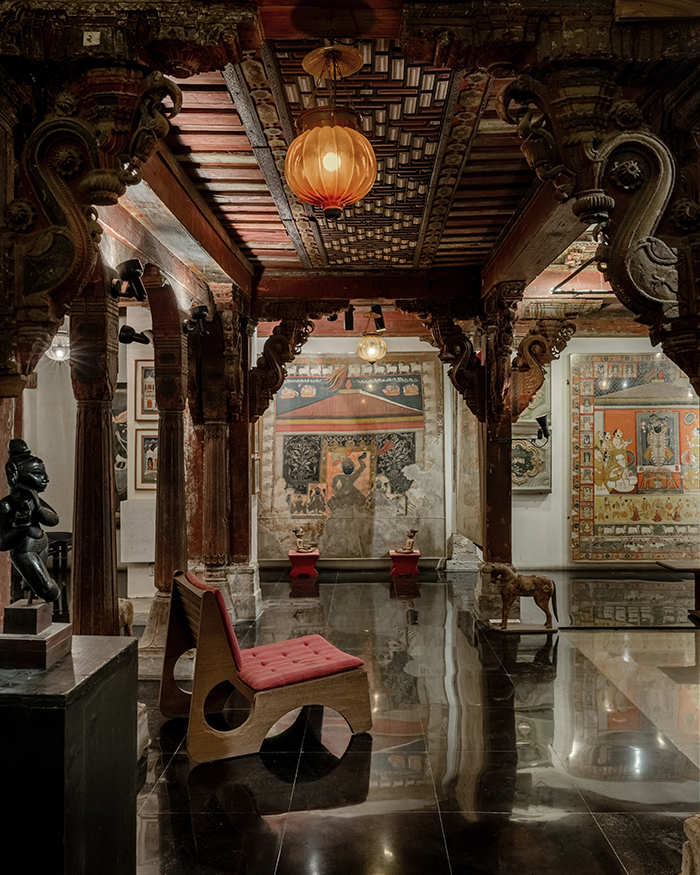
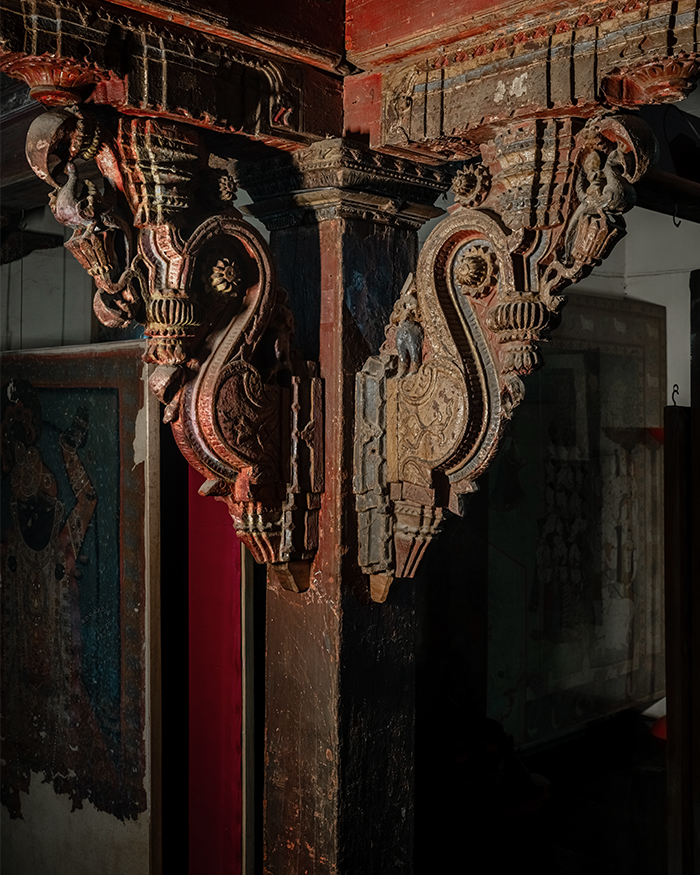
The two-storey haveli, dubbed Kamal Chowk, is a greater sum of smaller, infinitesimally intricate motifs that loop across its double-height entirety. Four well-adorned pillars and plinths conceived in reds, yellows and faded blues uphold the true piece-de-resistance: the ceiling, featuring what looks like innumerable floral motifs carved by artisans from Patan centuries ago. The walls display Amit’s extensive Pichwai collection from the Nathdwara School of Painting, each one a riot of colour that depicts Lord Krishna as Srinathji: the god’s younger, impeccably adorned version, balancing the Govardhan hill on his little finger. For those accustomed to seeing such works of art in white cube galleries, prepare for the sheer grandeur of this sight to eclipse anything you’ve ever seen before.
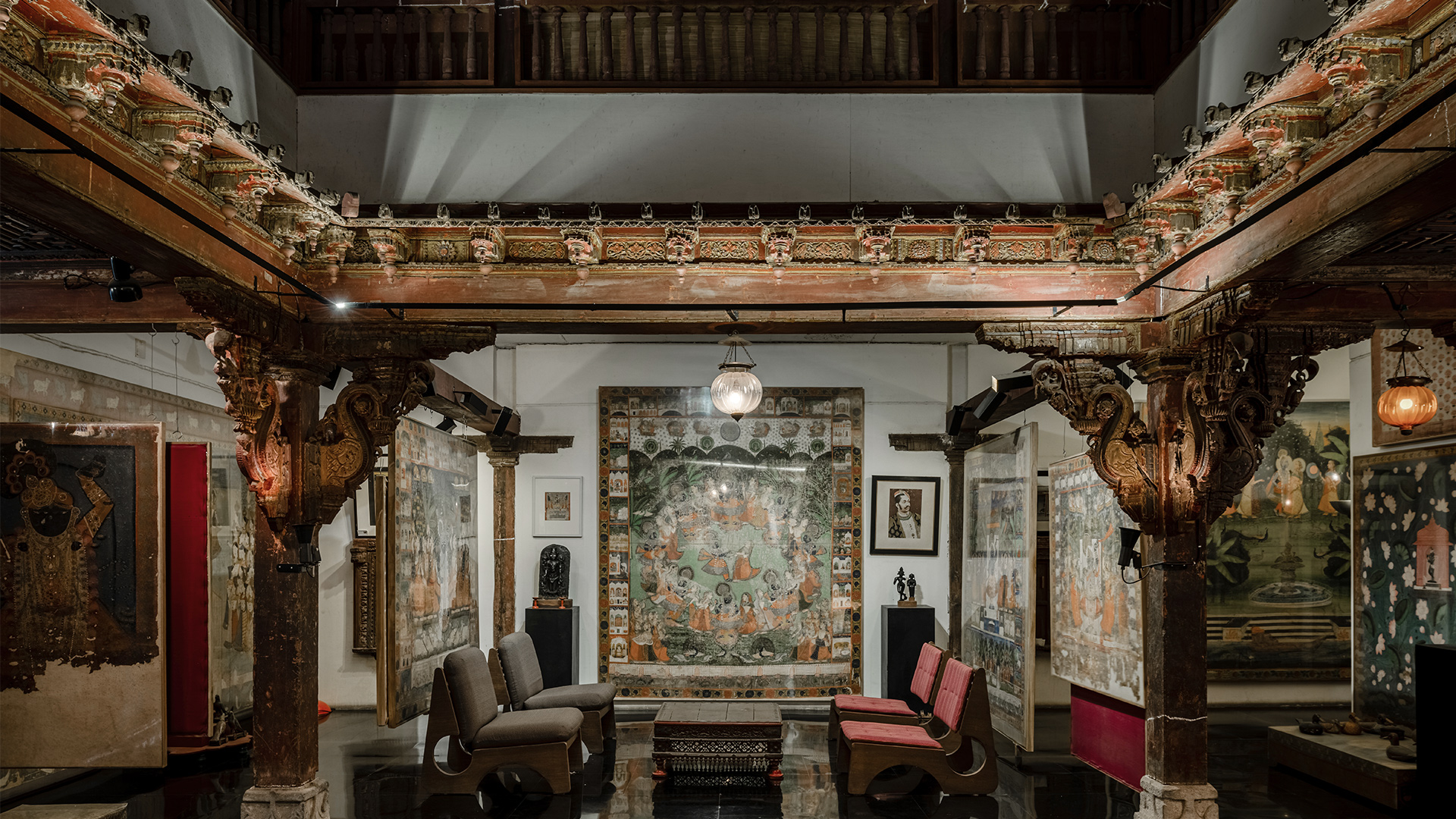
The most bewildering part of the haveli doesn’t lie in the intricacy of its architecture. It lies in its origin. Amit came across the structure in Burhanpur, a town in Madhya Pradesh located nearly 600 km away. The 16th-century building housed multiple deities through the years, but had fallen into disrepair as both its divine and human tenants had deserted it. It is here that Ambalal stepped in, taking up the Herculean task of returning the haveli to its former glory. It was carefully dismantled piece by piece and brought to Ahmedabad — a larger-than-life souvenir.
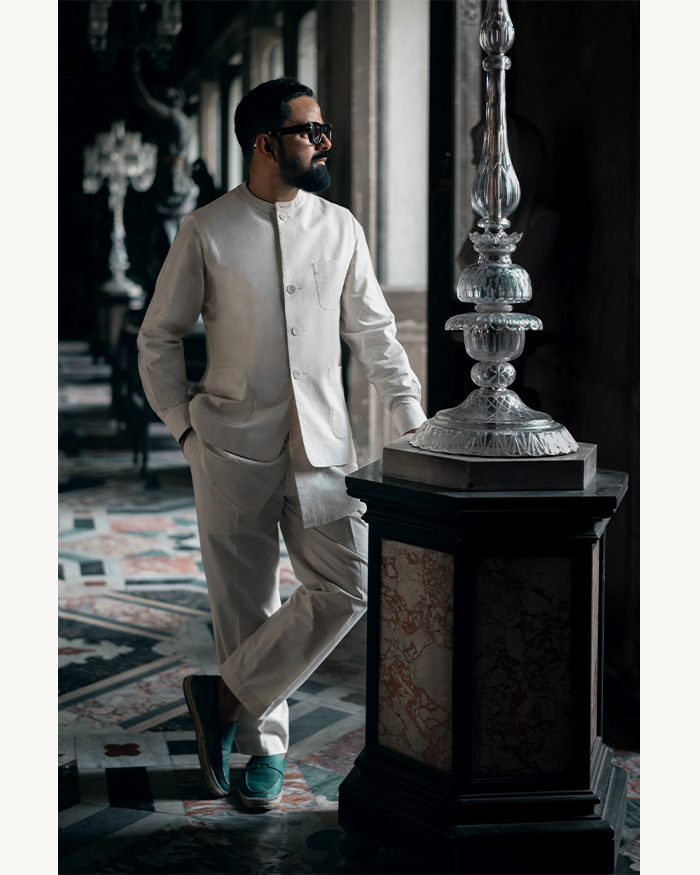
“It was like a giant puzzle. There was no reference to guide us when we were reassembling it, barring a few pictures of the ceiling,” recalls his son Anuj Ambalal, who runs an Ahmedabad-based design studio called The Cube Inc. alongside his brother Anand. Anuj credits much of the restoration to the genius of the late Prabhudas Mistry, who was a part of their firm and a master craftsman skilled in constructing traditional homes. Architect Leo Pereira helped piece the outer structure together, while Anuj, Anand and Prabhudas worked on the overall restoration and the interiors: a meeting of intuition, first-hand experience and formal practice. “We were kind of a buffer between them, trying to translate what ideas Prabhudasbhai had into modern architectural terms for Leo,” Anuj reminisces. It was part instinct, part guesswork, and a whole lot of gruelling drudgery that helped shape Kamal Chowk.
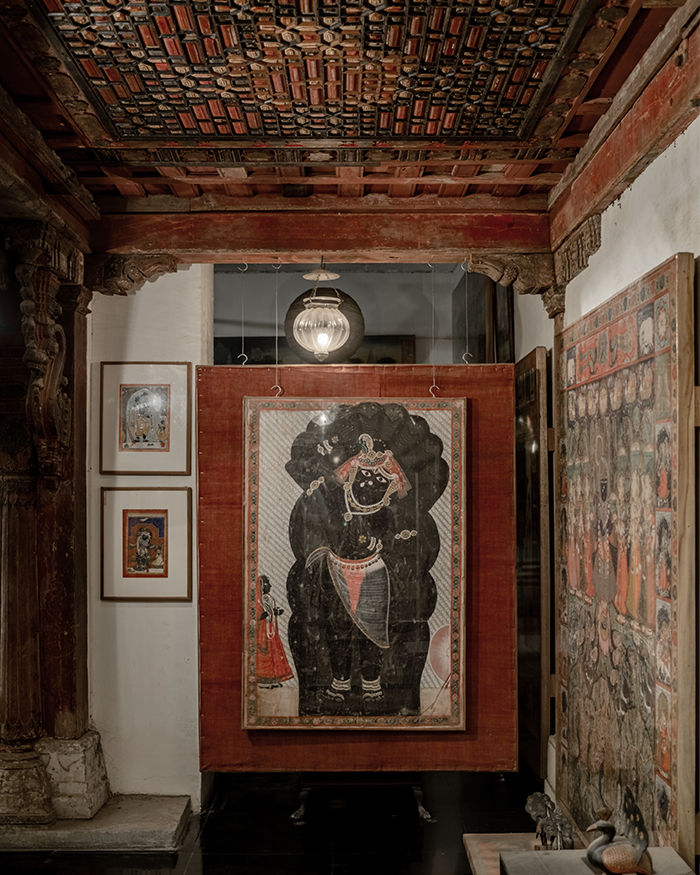
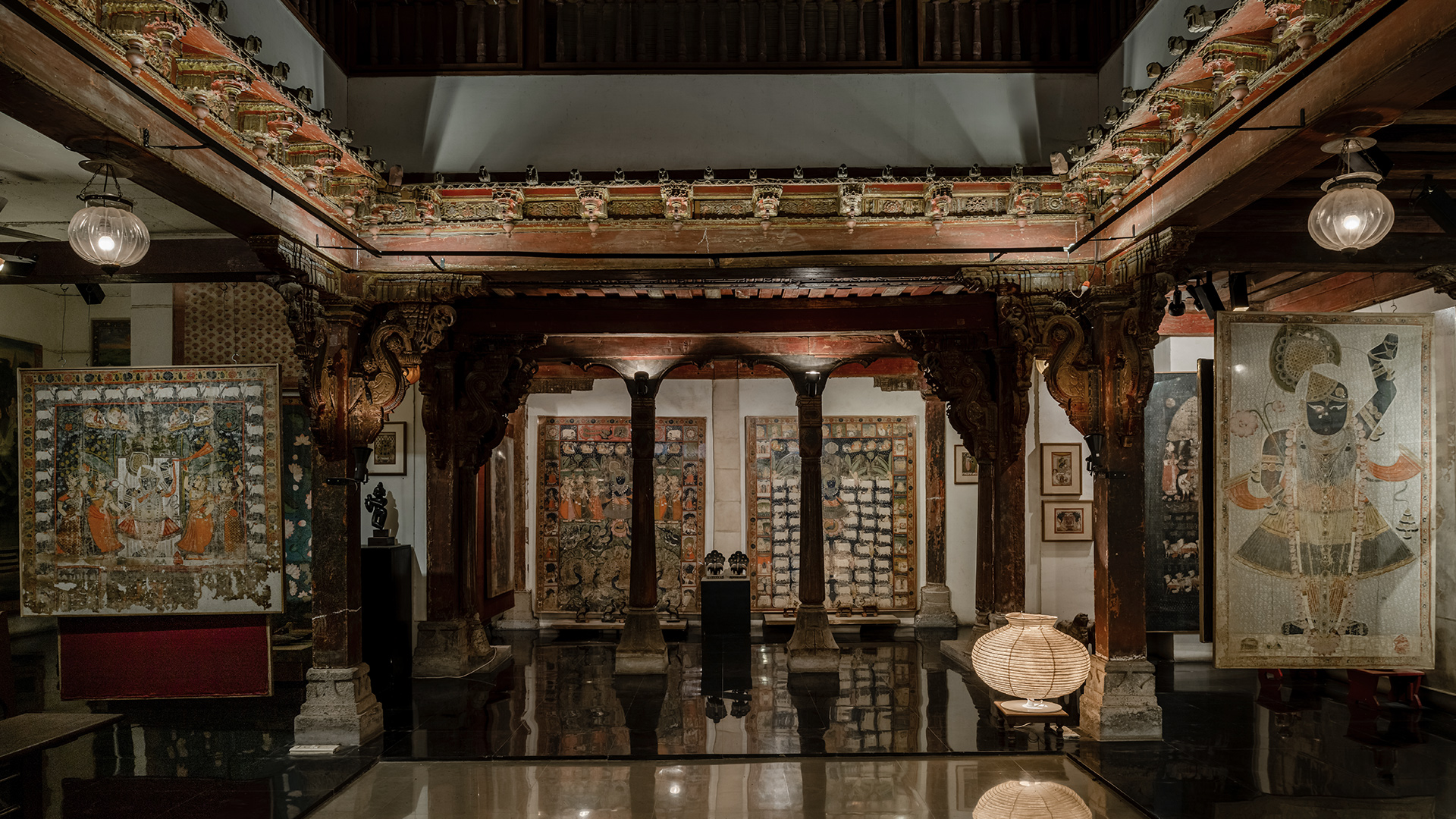
Anuj’s understanding of the haveli’s murky history is more factual than apocryphal. “The Sultans of the Faruqi dynasty had called artisans from Patan to Burhanpur to make this structure. Some believe that it was used for Vaishnav worship, but the only documentation we have is of Padmavati Devi’s idol in the space,” he explains. Why a haveli, and not a temple? Historians believe this gradual shift to residential spaces was two-fold: as followers of the Pushti-marga, a sect in Vaishnavism that worships Sreenathji, believed in seva over asceticism. They would often dress the idol, create daily feasts for it, and even reside with it, treating it as if it were their own child. This change in typology both aligned with their ideology and helped them escape the wrath of Aurangzeb, who’d taken to destroying religious structures to assert political dominance during this period.
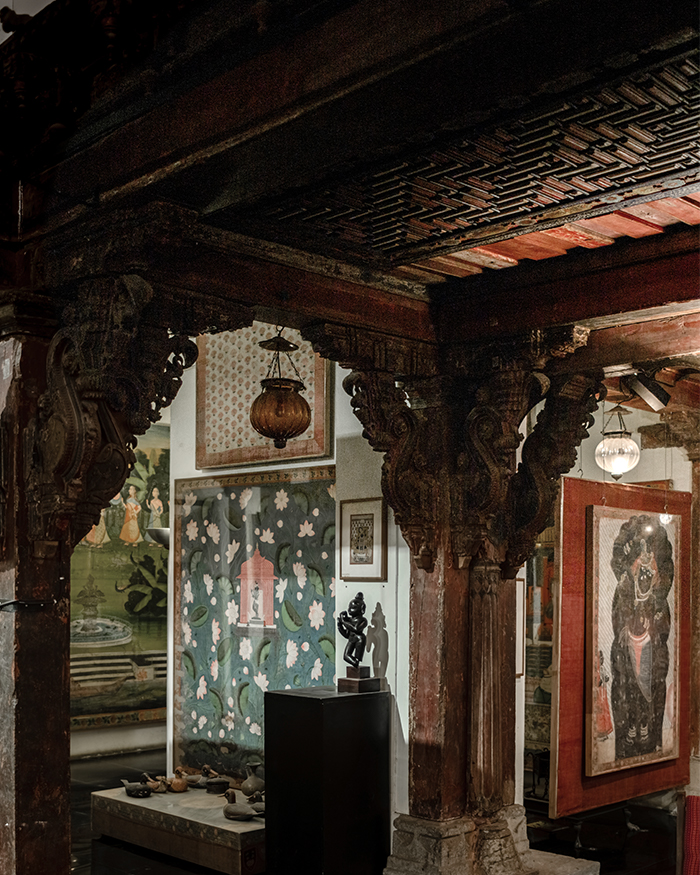
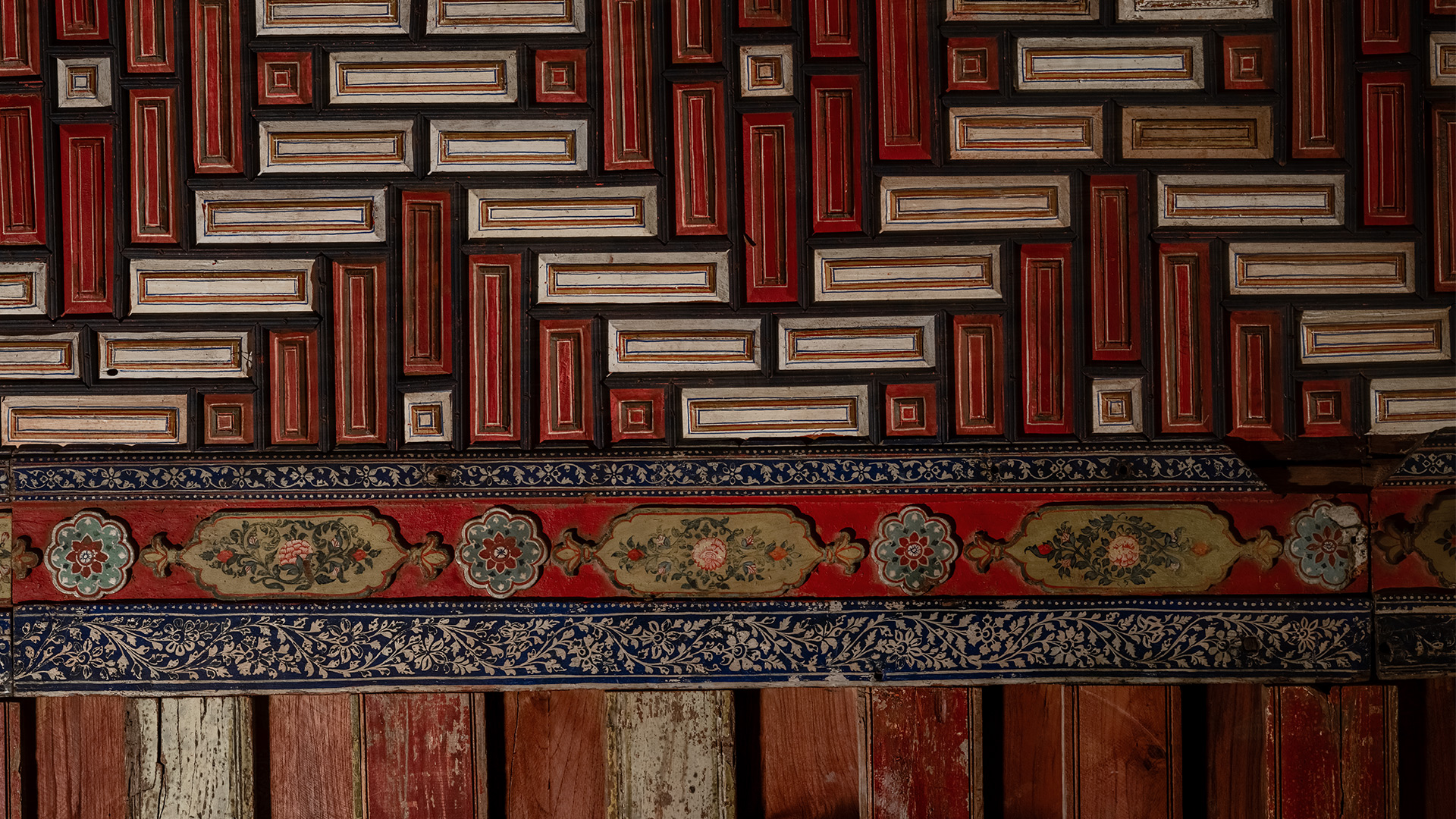
Gradually, wealthy merchants and traders began commissioning artisans to create elaborate havelis, complete with a drawing room, a kitchen, and a wooden mandapa for the idol — quite similar to what sits in Kamal Chowk today. The origin of the Nathdwara school of painting, a subject Amit has penned multiple books on, is carefully tied in with these developments. The word Pichwai roughly translates to “hanging at the back.” These elaborate paintings, often depicting Krishna’s childhood through vibrant floral and animal motifs, originated in response to a need for a decorative backdrop to hang behind the idol in these ornate havelis. Was this the reason why the family chose to display their Pichwais in Kamal Chowk instead of their primary residence? Anuj says the decision was instinctual first, but turned out to be quite pragmatic. “Pichwais are delicate. They cannot be exposed to the sun’s UV rays, which would have been difficult to avoid in the main house. So this became an intimate space, where one can sit with them up close,” he explains. As it turned out, the Pichwais were the missing piece of the puzzle. Their presence on the wall felt like a quiet click, a subtle sign that the composition was now truly complete.
Today, the Ambalal family use Kamal Chowk as a space for private reverie, opening its doors to the public for the occasional music performance. Much like the Pichwais, the stellar acoustics of the space came as a pleasant surprise, too. Anuj tells us there’s little evidence of music in the haveli’s past, but who knows? History has a strange way of repeating itself.
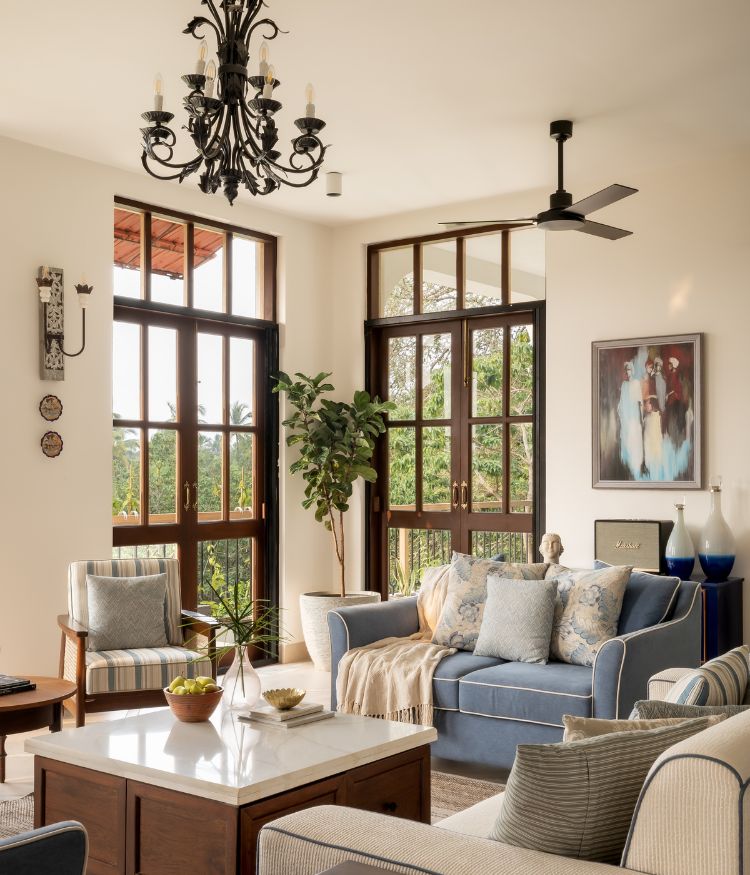
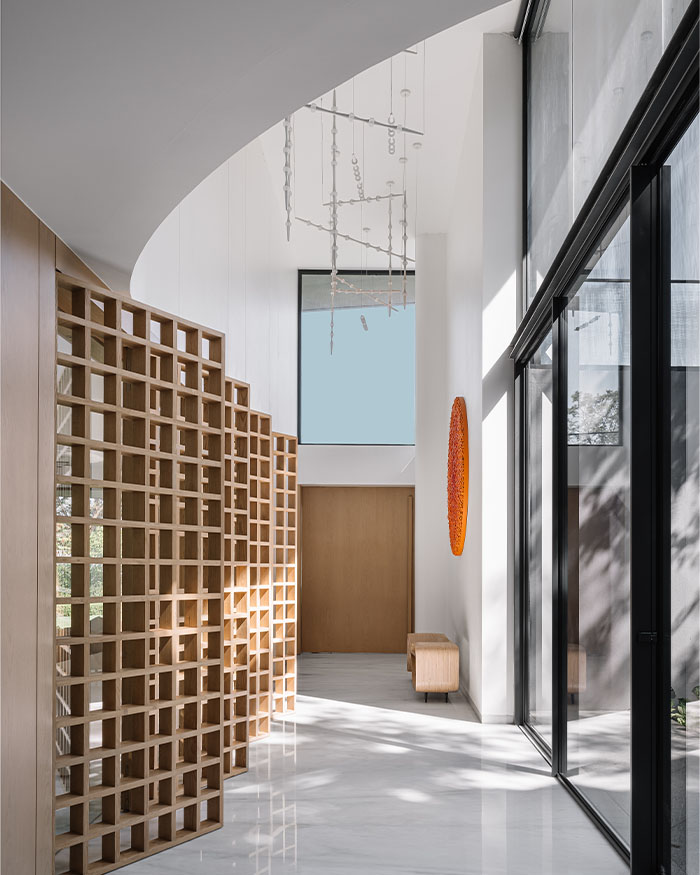
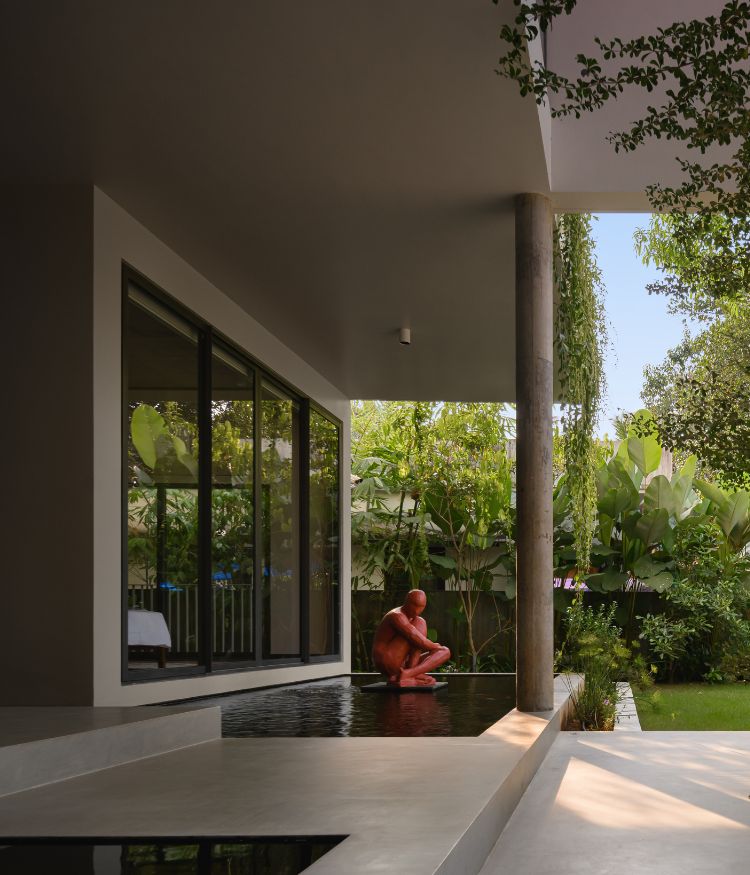
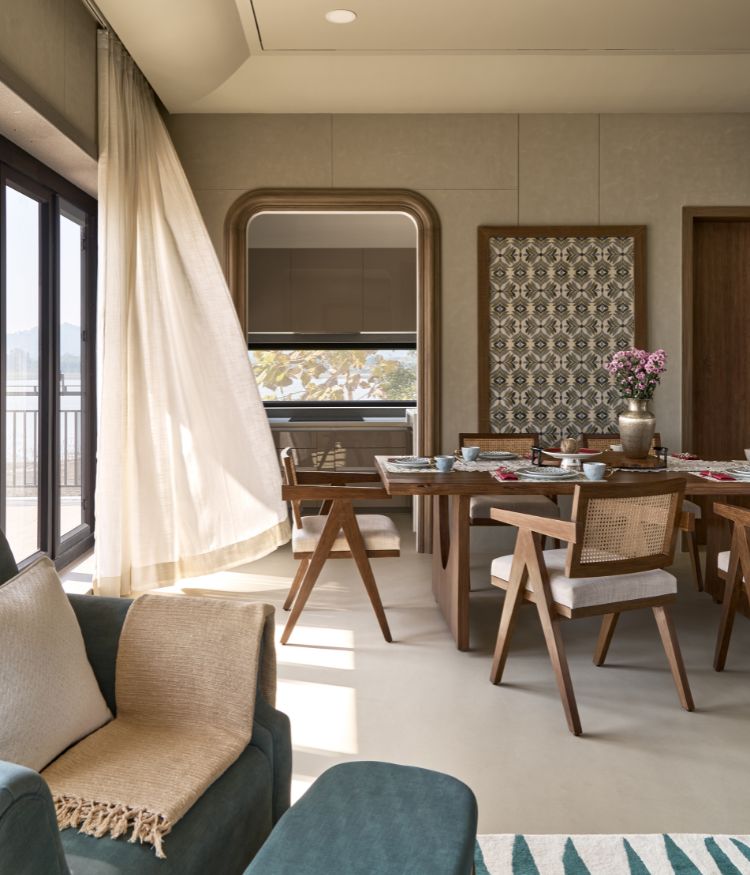
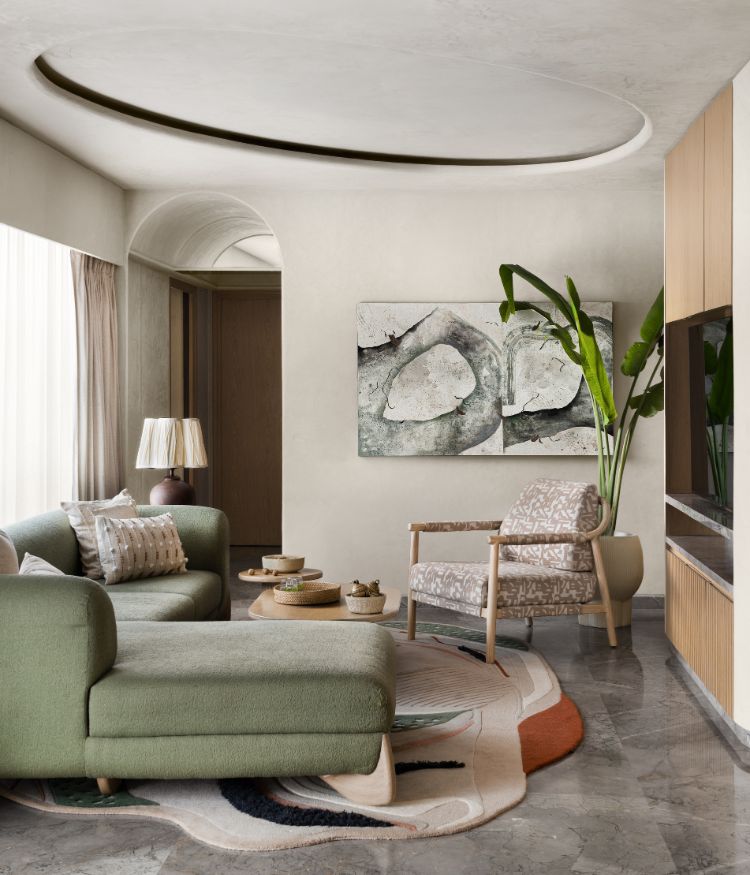
A clean, modernist fusion with a sprinkle of “I desire to escape the city life and immerse in nature.” This wish was fulfilled by two design wizards, Shiv Dada and Mohit Chawla of 23DC Architects for a homeowner in Amritsar who envisioned a home that whispers tranquillity with a minimal touch of Indian heritage. The […]
No results found.