Photography by Himanshu Lakhwani

Chasing rhinos in Assam

Wildlife, occult, and magical foot massages at the River and Rhino Wildlife Retreat and Spa

BY

Safaris and I don’t share a particularly fortuitous relationship. I’ve been promised Bengal Tigers, but walked away with an eyeful of wild Nilgais instead. While my peers recount thrilling anecdotes about seeing animals in the wild, I regale them with tales of running away from a vicious peacock with pitch-dark eyes. But the one-horned rhinoceros, I’m assured assiduously, can be found in abundance across the wetlands of Pobitora. “We have the highest density of the Indian one-horned rhino across the country, ma’am,” affirms Amar Jyoti Boro, the in-house naturalist at the River and Rhino Wildlife Retreat and Spa in Assam.

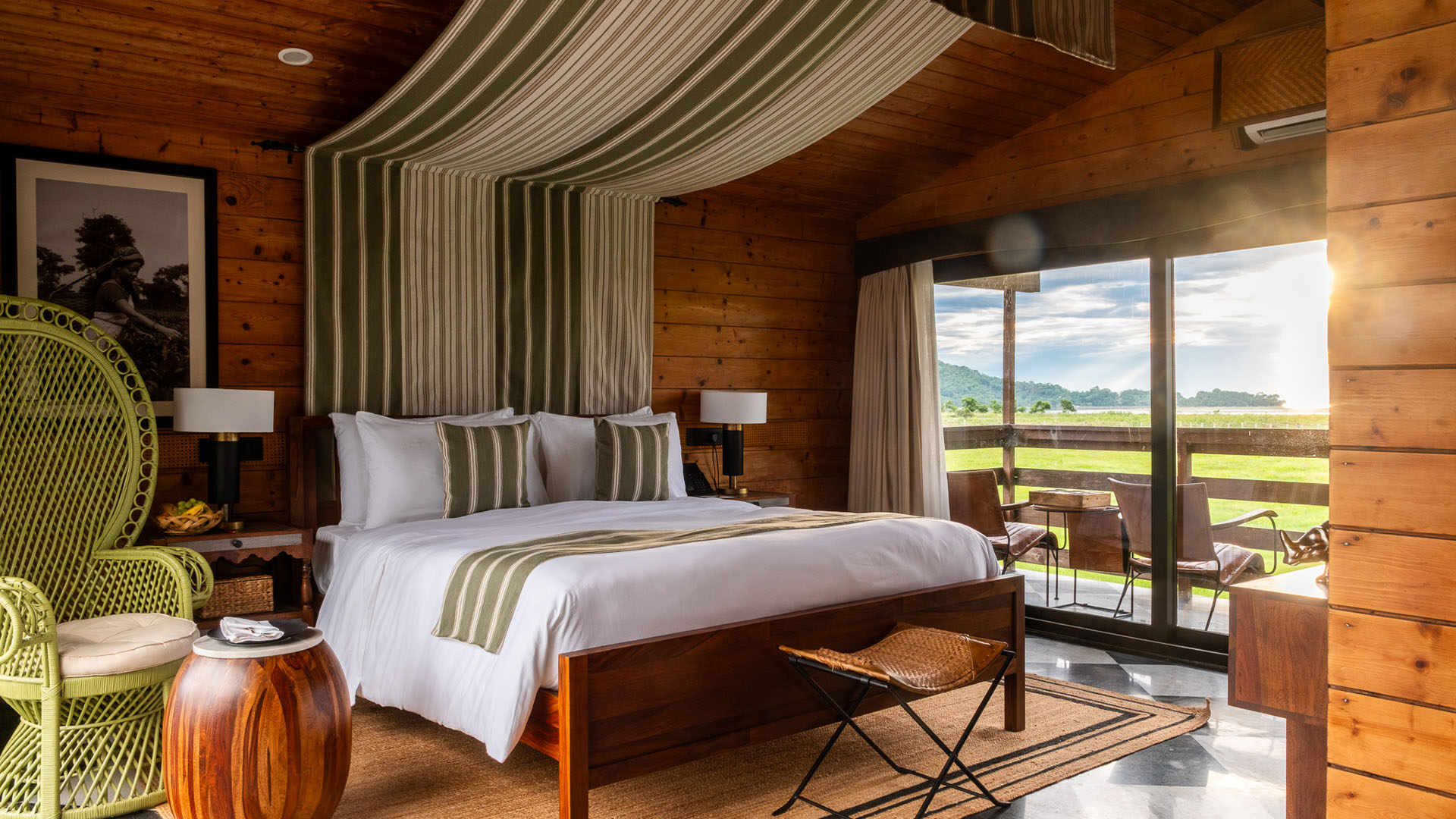
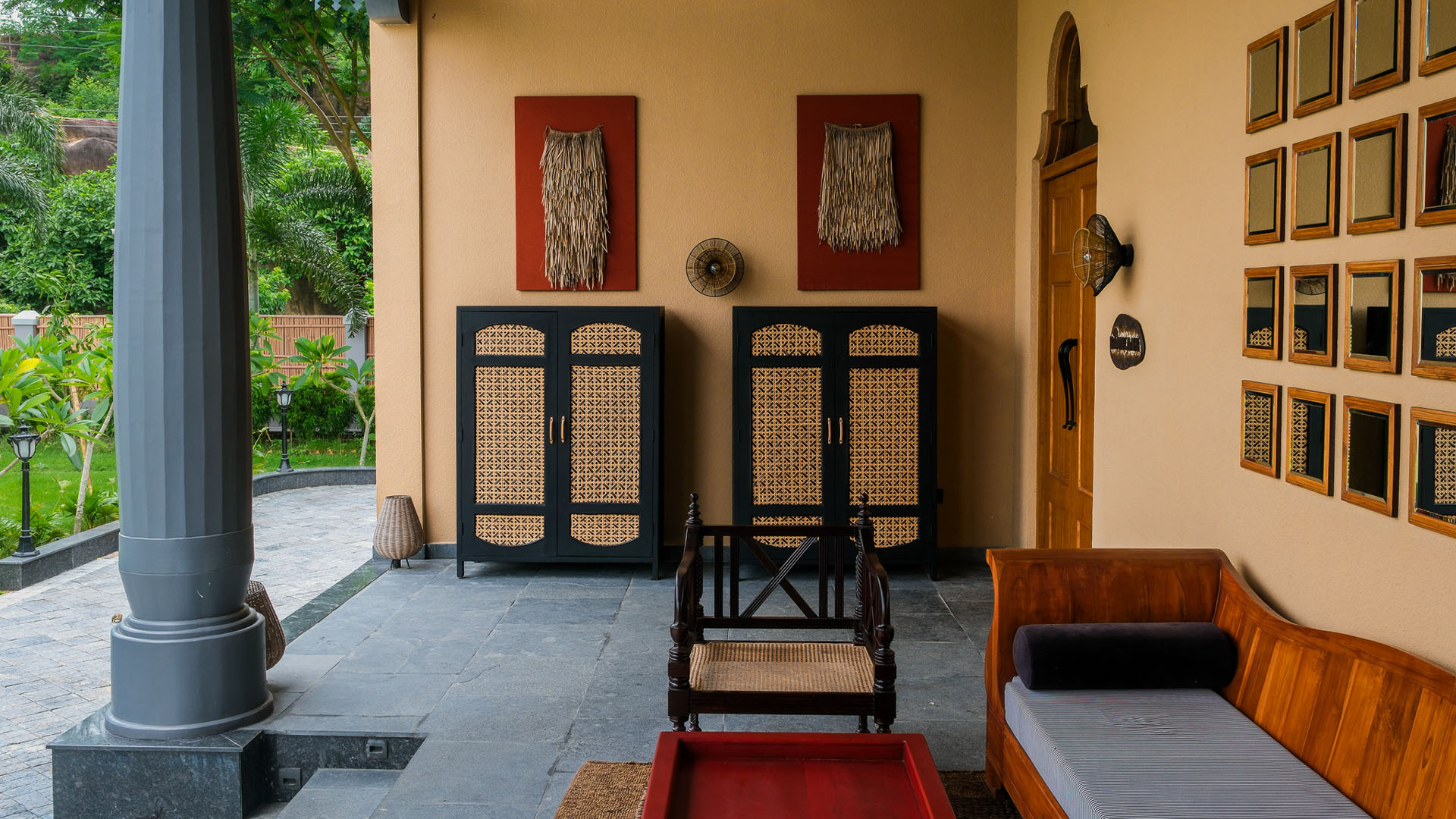
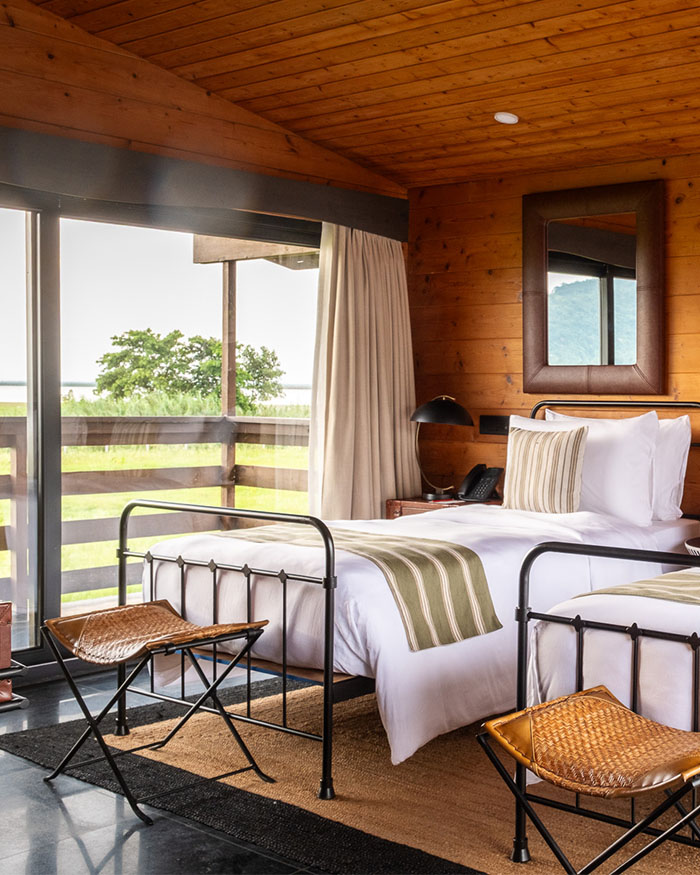
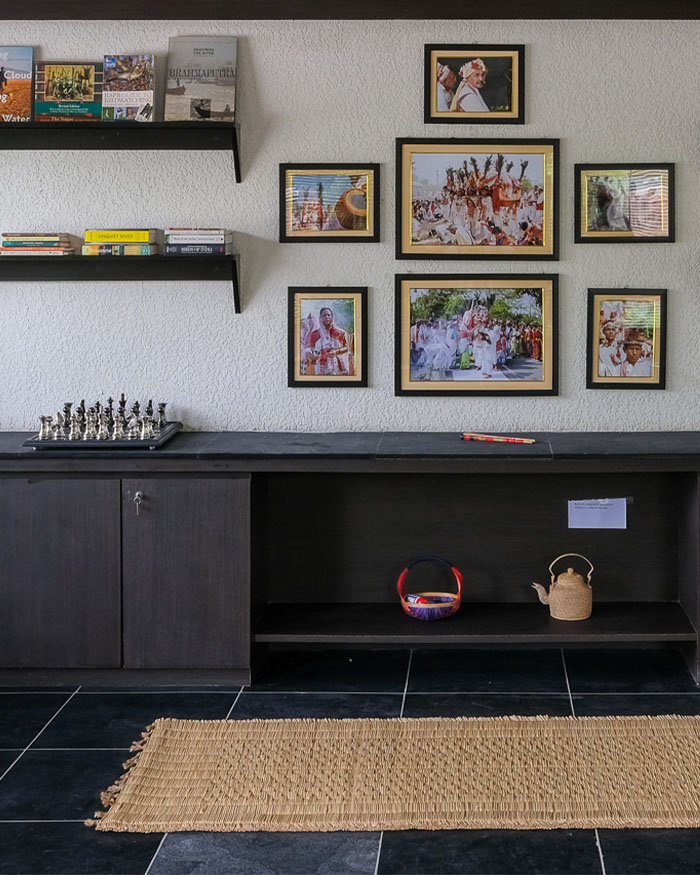
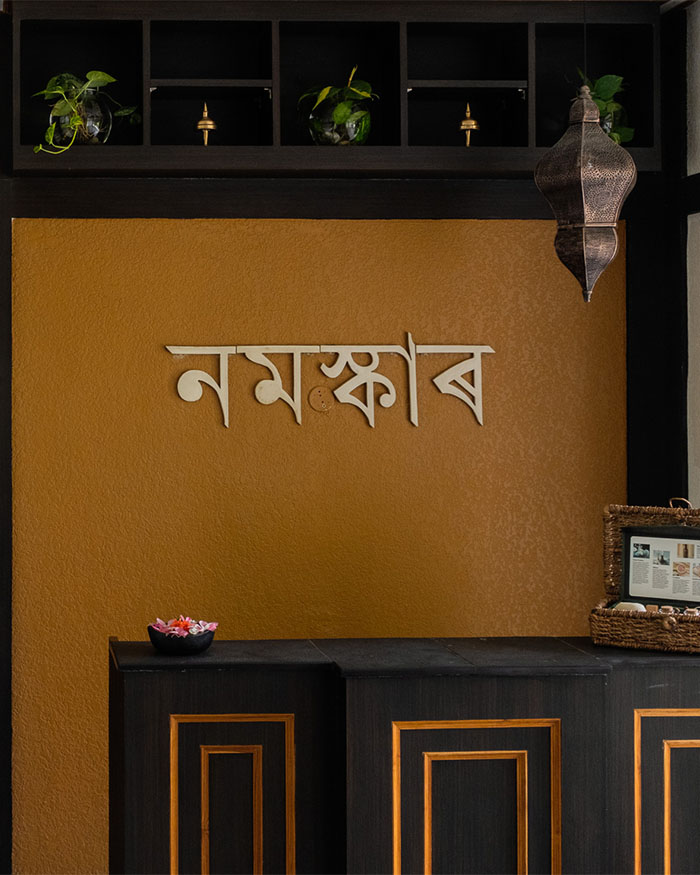
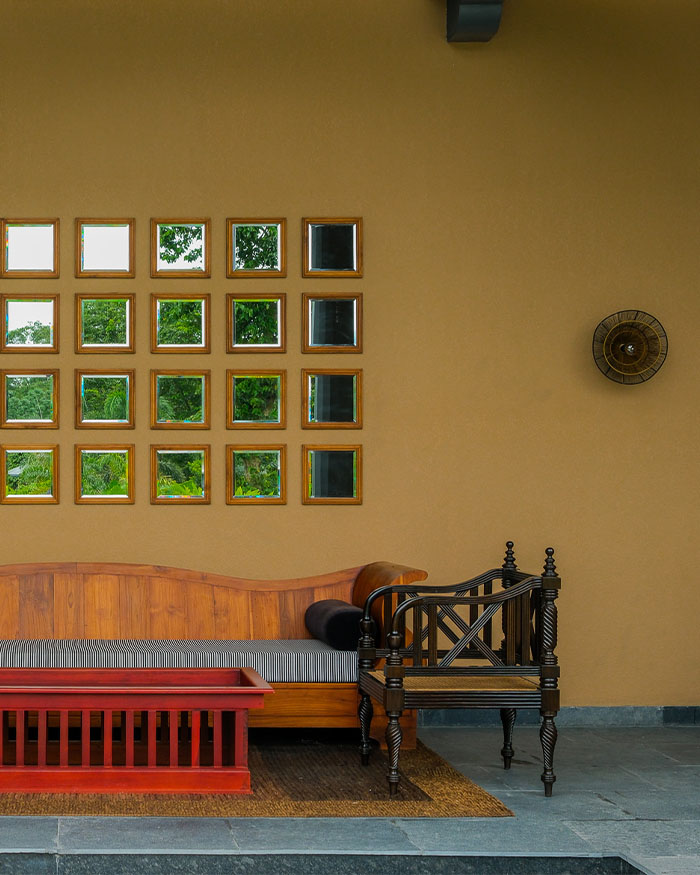
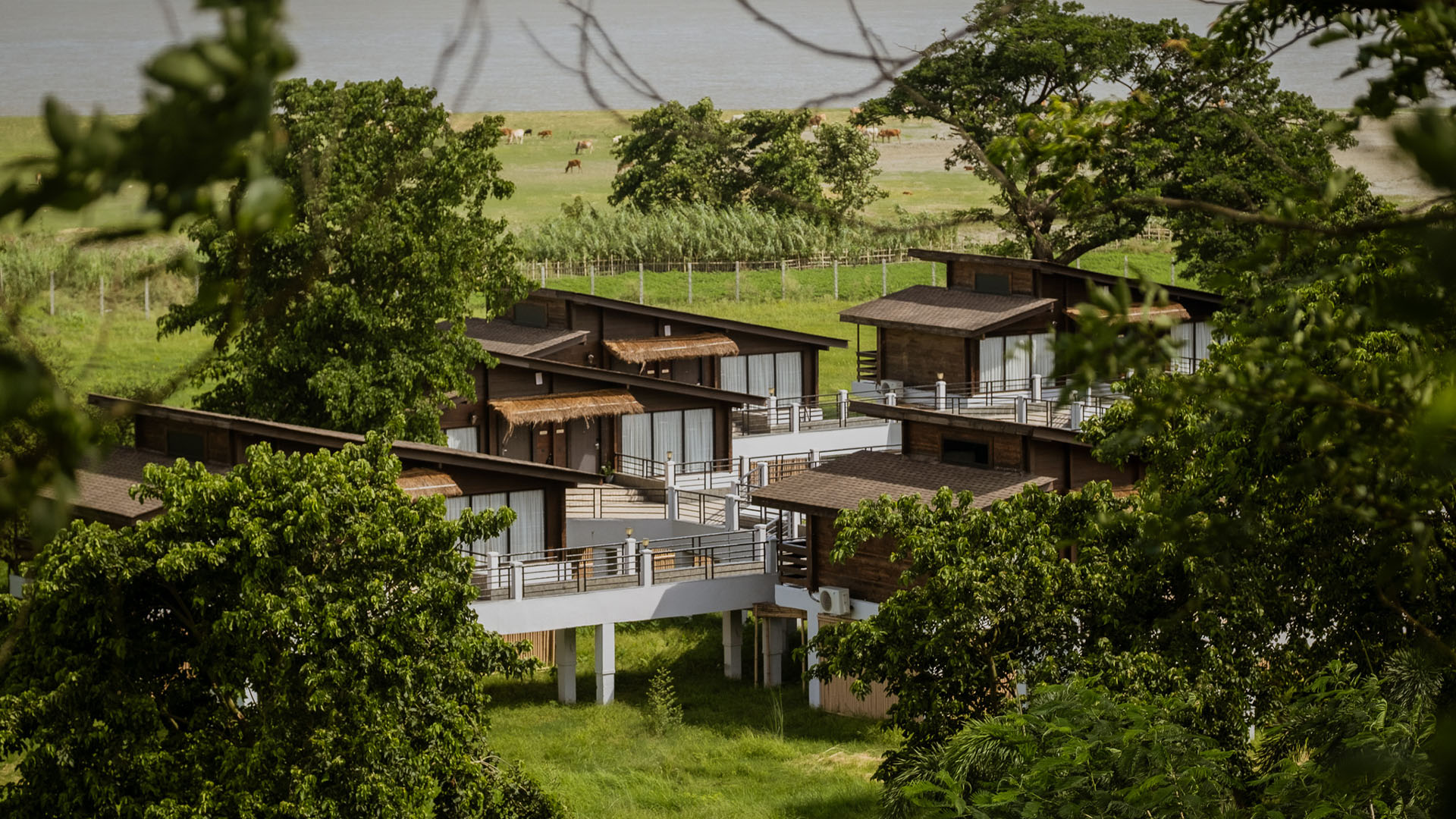
I’d reached the property the previous night. Much of the two-hour-long drive from the airport was spent peering at Mayong’s lush wilderness, cast in inky darkness, whizzing past my windows. But in the morning, I’d pulled my curtains back to reveal a cloudy Brahmaputra only a few metres shy of my balcony — a sight that almost made me miss my safari slot at the Pobitora Wildlife Sanctuary. Operated by BluSalzz Hospitality and developed by SM JDB Estate Private Limited, the River and Rhino retreat comprises an in-house restaurant, a spa and 16 guest cottages built upon stilts. Each cottage is strategically placed to ensure all are privy to a slice of the lush, uninterrupted view of the river and its accompanying green wetlands beyond. EDIDA-winning designer Aku Zeliang drew inspiration from this very sight to design the interiors, reimagining old Assamese-style homes in a contemporary setting: sketching in asymmetric sloping roofs, rich, warm-toned wood, and designing cane and bamboo accents crafted by local artisans.

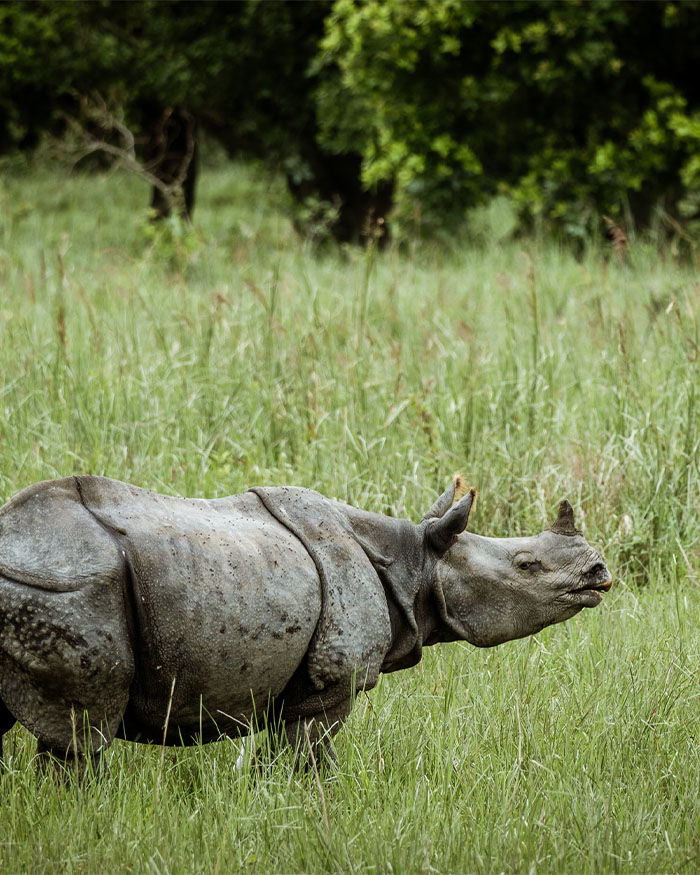
When I (finally) emerge from my room to embark upon the jeep safari, Amar Jyoti tells me that I just missed the sight of an Oriental Pied Hornbill right above the spa. Only five kilometres away from the property, the Pobitora Wildlife Sanctuary boasts more than 200 species of migratory birds and is densely packed with over a hundred rhinos. The birds are generous enough to grace the resort with their vibrant plumage and birdsong. The rhinos? Not so much — and for good reason, too. Majestic as they are, the Indian one-horned rhino is also exceptionally territorial, weighing several tons yet capable of running at a speed of up to 45 kmph. A jeep safari, like the one we were about to embark upon, is the safest option — but you sure wouldn’t want to come across one in the wild!
Photography by Himanshu Lakhwani

In pursuit of rhinos, rest and relaxation

As we head deep into the fragrant jungle, Amar Jyoti enthusiastically rattles off the names of every creature, big and small, that flits past our jeep. He points to droves of chestnut-hued Lesser Whistling ducks (who trill instead of quack) nearby, and tells me to keep an eye out for the Oriental Darter — a slender-necked bird that hunts for fish by submerging itself in the water. We cross droves of blooming cotton silk trees, cascading orange petals atop the green, green grass. Spring, evidently, is in full swing.

Someone spots a rhino, and the jeep comes to a complete halt. The creature is indifferent to our rapt attention, languidly moving through the grasslands at its own pace. “The rhinos love to eat and sleep, ma’am. They eat more than 50 kgs of grass per day,” Amar Jyoti explains. Much like me, the rhinos are partial to afternoon siestas and hence, become more difficult to spot later in the day. An average day in their life comprises a consistent cycle of eating, sleeping, snacking and swimming. I’ve never felt a stronger kinship with any creature before.

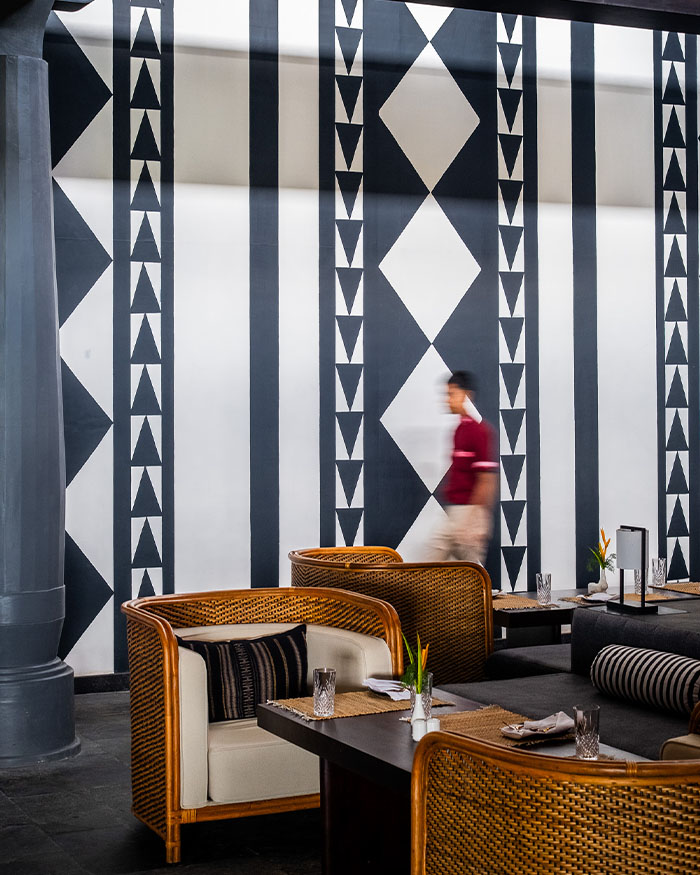
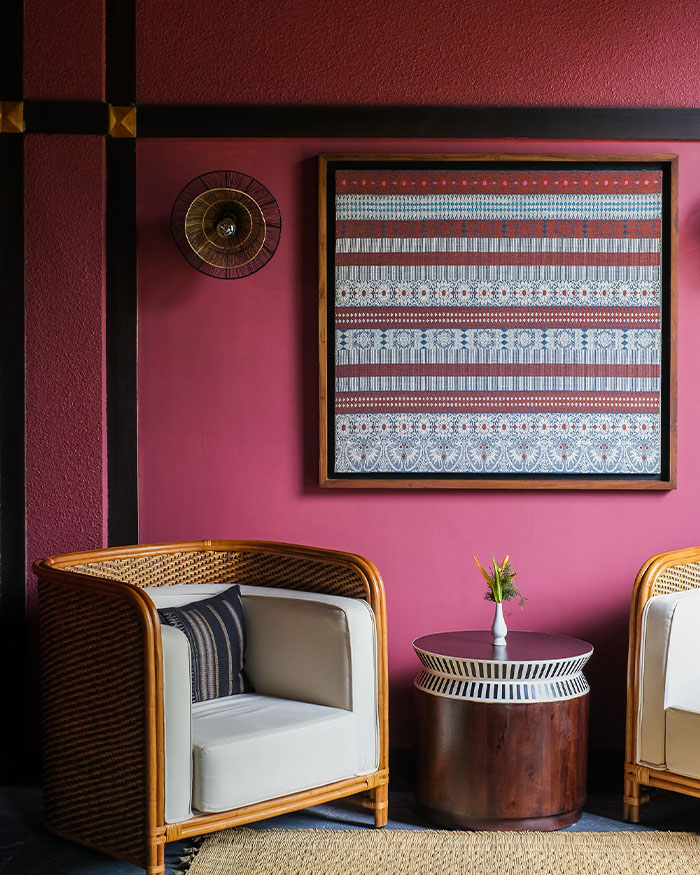
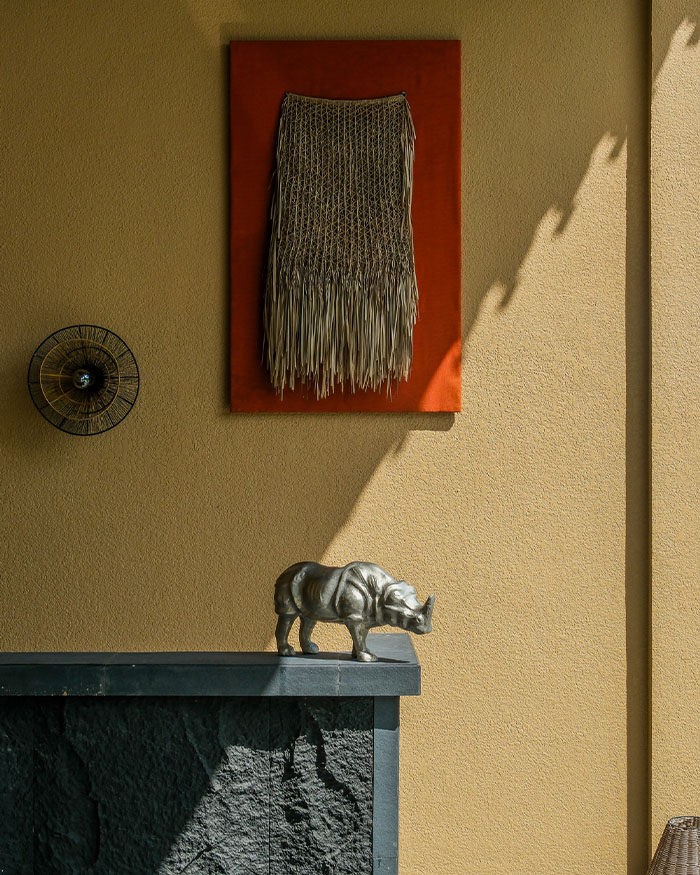
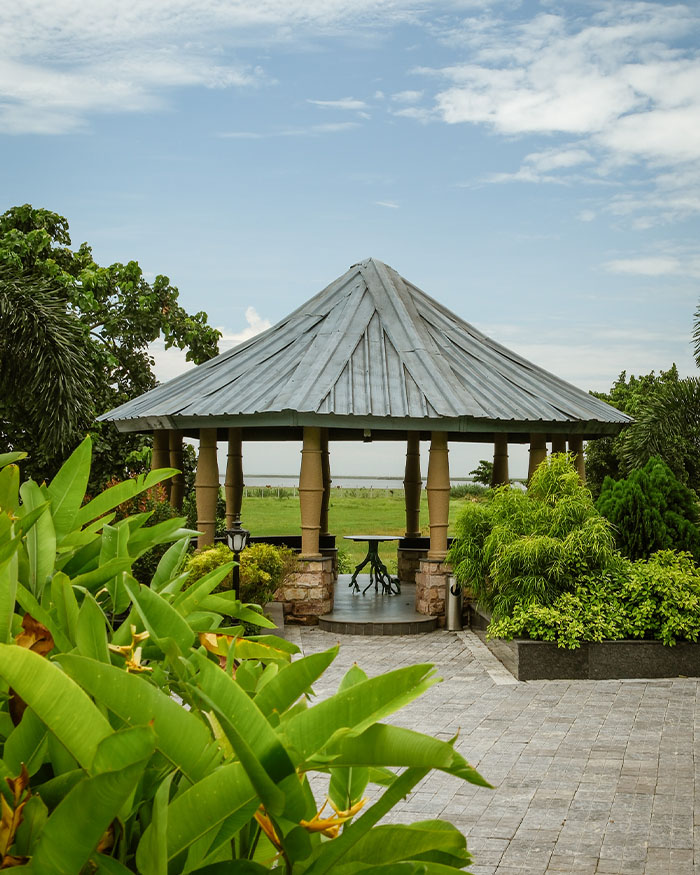
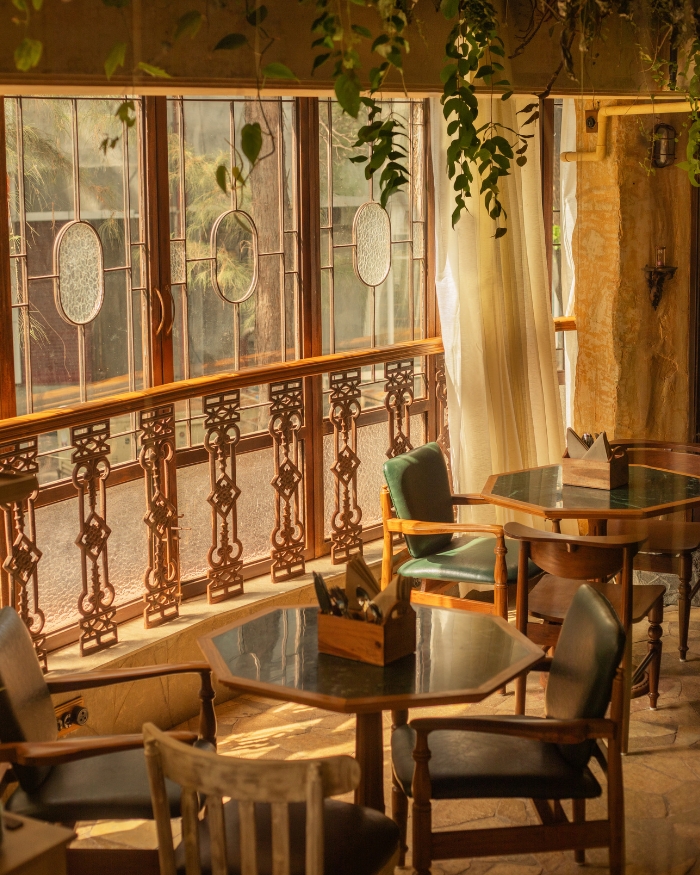
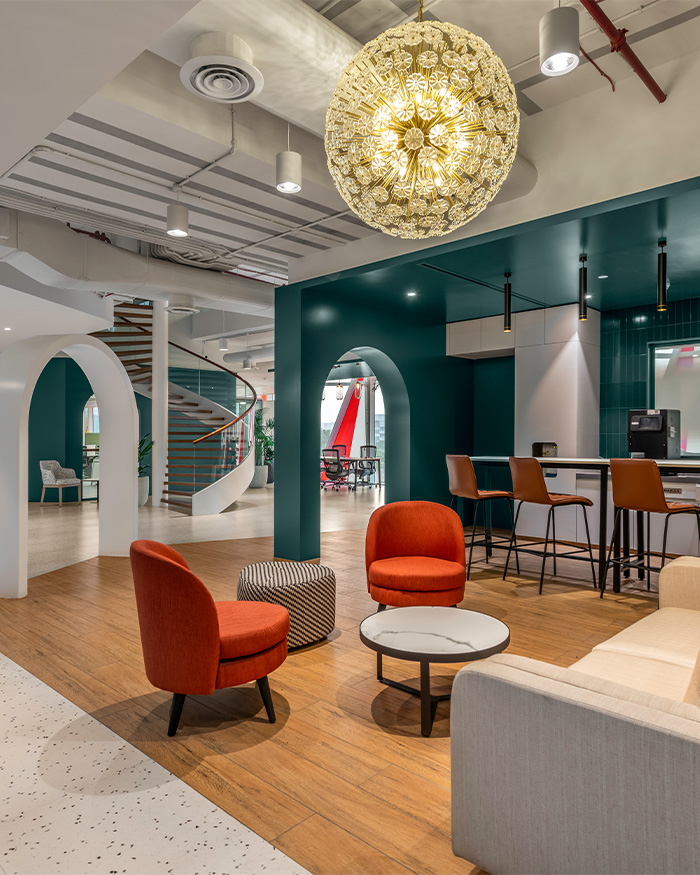
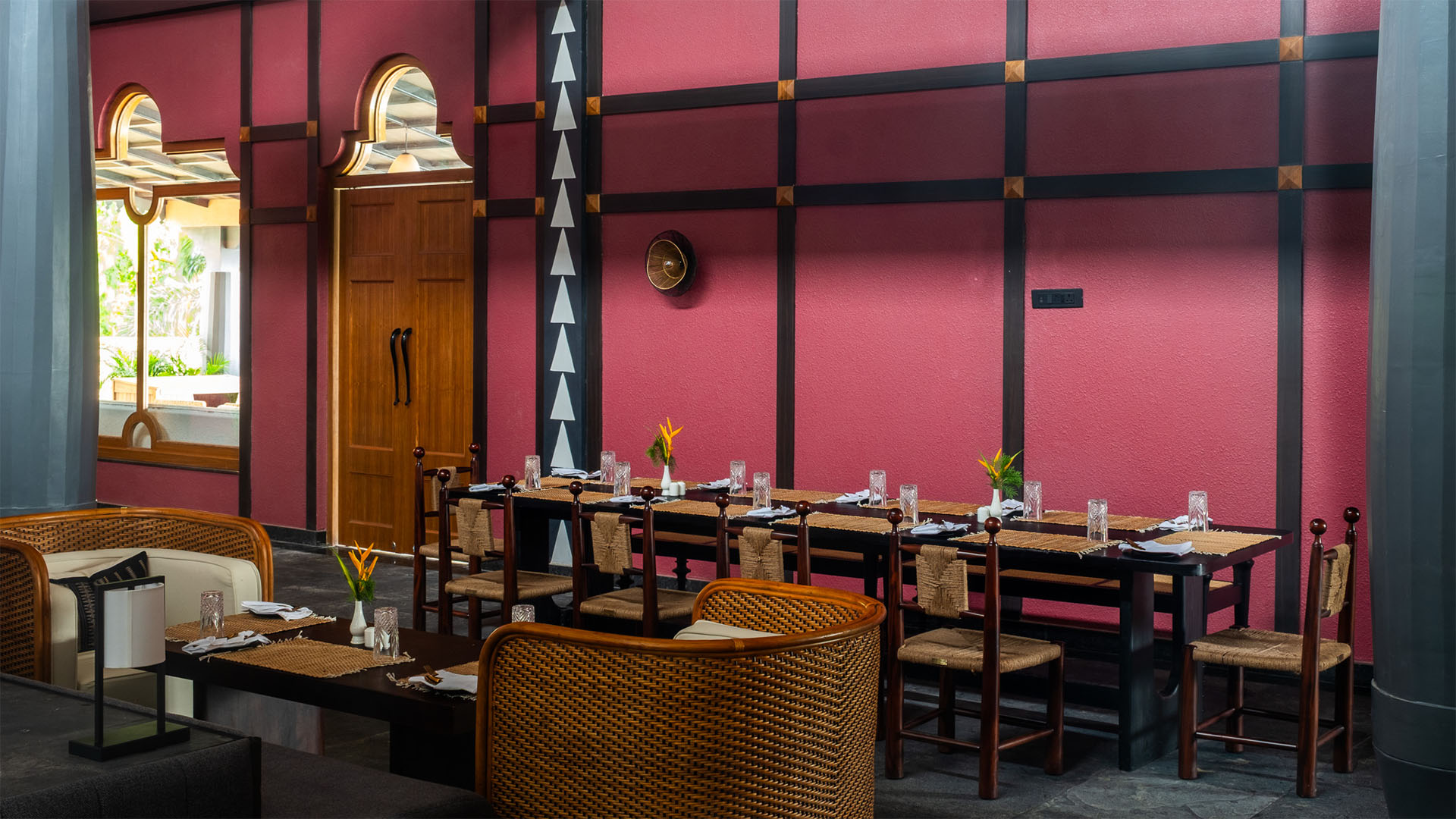
Far from the jungle, you’ll spot hints of the Indian one-horned rhino in the interiors, too. Mani Gurung points out the uneven texture that coats the pillars of a gazebo in the retreat, explaining that all surfaces in the property are finished to resemble their armour-like skin. In tandem, the overarching material and colour palette, too, is crafted to echo the surrounding landscape. As Aku affirms, “Most spaces rely on wood tones and neutral textures, while certain areas introduce stronger hues and tribal-inspired graphics to add contrast without overpowering the architecture.” True to his words, the Baan Kahi restaurant is the only structure abounding in colour, featuring deep maroon walls and bold black-and-white graphic accents. The space is anchored by a sculptural red bamboo and cane centrepiece from the Terikak series by Urra Design, which won Aku an EDIDA India award in the Sustainable Design category back in 2024.

Photography by Himanshu Lakhwani

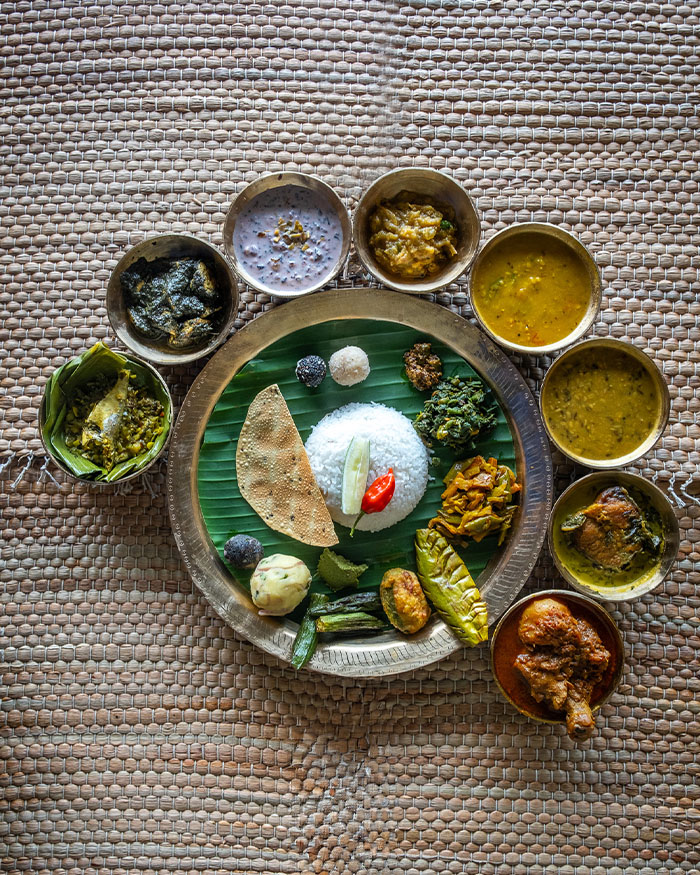
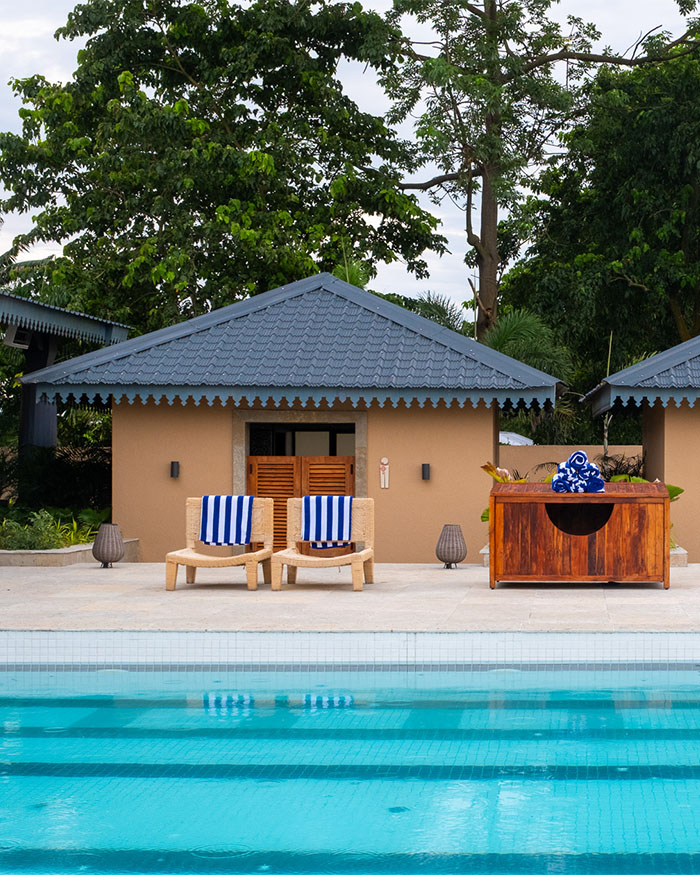
As I devour my post-safari breakfast, a hearty meal of pineapple puree with puris, pani pitha (a traditional Assamese rice flour pancake) and jolpaan (joha rice, curd and jaggery), the sun slants through the double-height space at its own languid pace. Each meal is freshly prepared from local produce — and even I, a self-professed picky eater, devour each meal on the days to follow with great joy. The all-encompassing Assamese thali, put together by Guwahati-based chef Kashmiri Nath, proves to be an unmissable experience. Replete with local vegetables, it is indulgent enough to leave you satisfied but stops short of inducing a debilitating food coma. On most days, I, a complete teetotaller (much to the dismay of the very kind bartender), chose to end my meal with a glass of cold coffee — a beverage I enjoyed right by the swimming pool outside the restaurant. Past the pool umbrellas and loungers, the Brahmaputra and the wetlands greeted me here, too.

Village tours, handlooms, and black magic

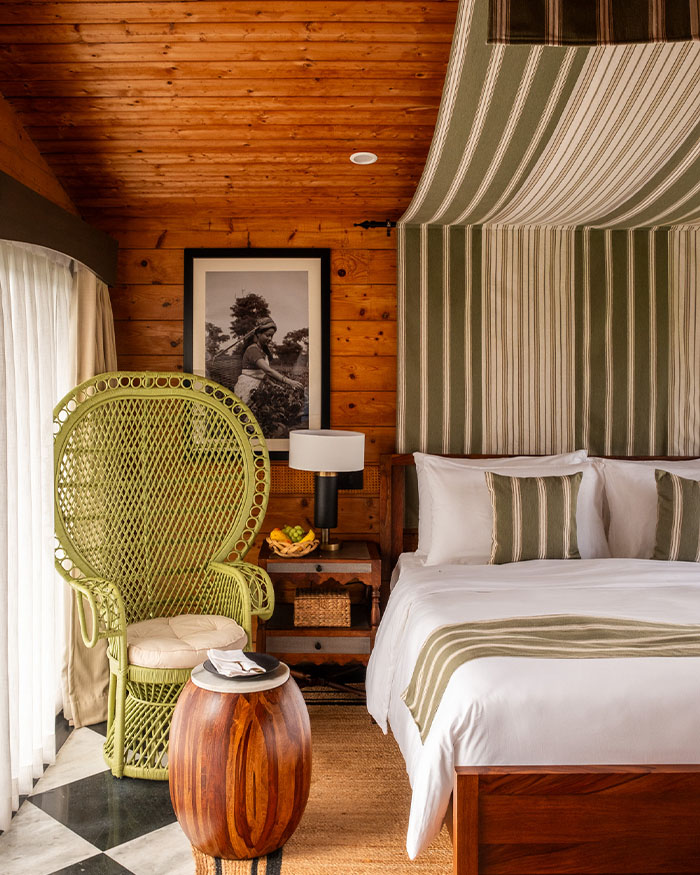
I did channel my inner Rhino a fair bit on this trip. Any hour left unaccounted for in my itinerary (which were very few to begin with) was spent lazing in my room — a picturesque haven with interiors inspired by Assam’s flourishing tea gardens. I spent my time alternating between reading in the large, green rattan peacock chair, staring at the striped green canopy above my bed, and watching the sun change hues through my balcony.


Photography by Himanshu Lakhwani

But on the other days? I kicked up dust on a village walk, watching Savita Kro Deka, a local weaver (and the loveliest host), sew the traditional red-and-white Assamese gamosa on a traditional handloom. I brushed up on my bird-watching skills, peering at a White-throated Kingfisher up close through binoculars (we spent some time looking for hornbills, but they remained steadfastly elusive). It was my final stop that proved to be the most memorable — the Mayong Museum, which chronicles the area’s centuries-long tryst with black magic. The locals are quick to assure you nobody practices “black” magic here anymore, though “white” magic is still practised by residing practitioners known as bejes. In case of a snake bite, the villagers still prefer visiting a local bej rather than a hospital, whose scope of powers is vast.

The museum’s walls document it all — from casting spells to banish body pains and jaundice, to, rather excitingly, locating thieves and stolen goods through a flower and a metal bowl (once the spell is complete, the metal bowl is believed to magically reappear wherever the stolen item is hidden). You could spend hours wrapped up in the stories and artefacts that decorate this compact space.

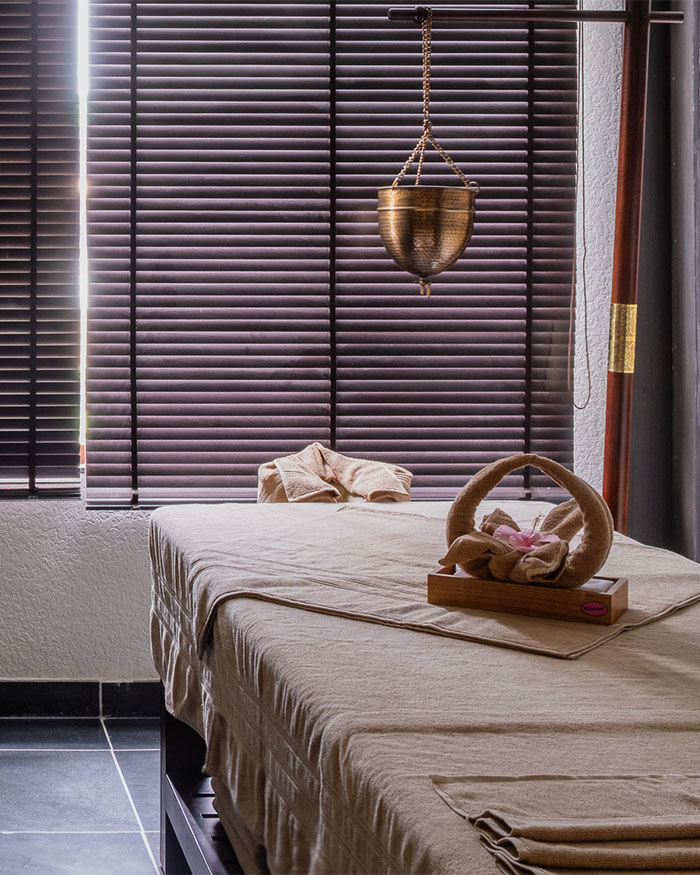
Having spent three nights in this magical land of rhinos, occult and elusive hornbills, I can attest to the fact that you’ll have to walk. A lot. But fear not, for the foot massages at the River and Rhino Wildlife Retreat’s in-house spa, I’ve been told, feel akin to “white magic” themselves!

Read more: How I found wellness in wilderness at Bori Safari Lodge, Madhya Pradesh

Photography by Himanshu Lakhwani
SHARE THIS ARTICLE

You May Also Like

Watch

No results found.

Search
Close this search box.