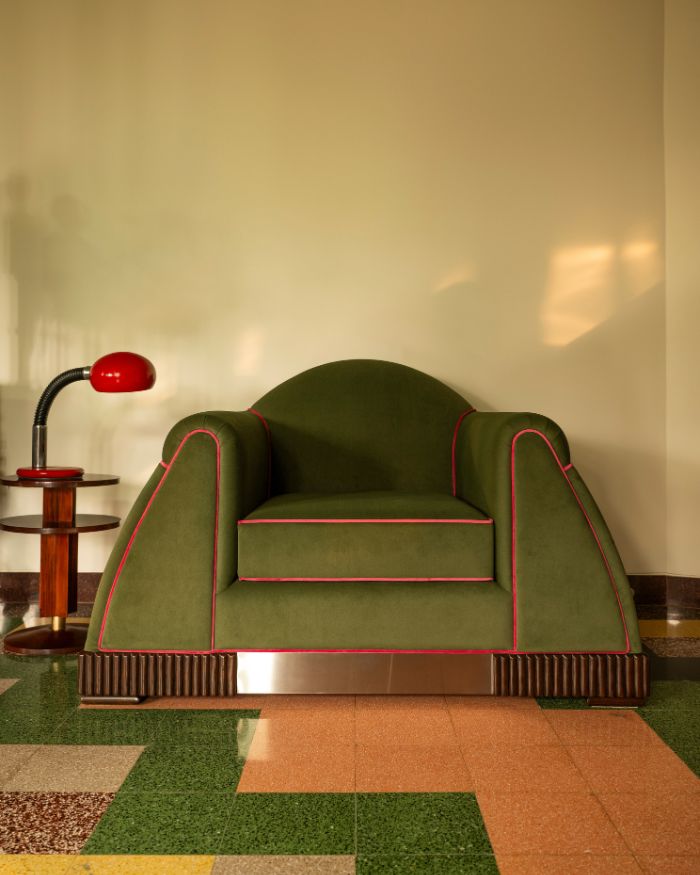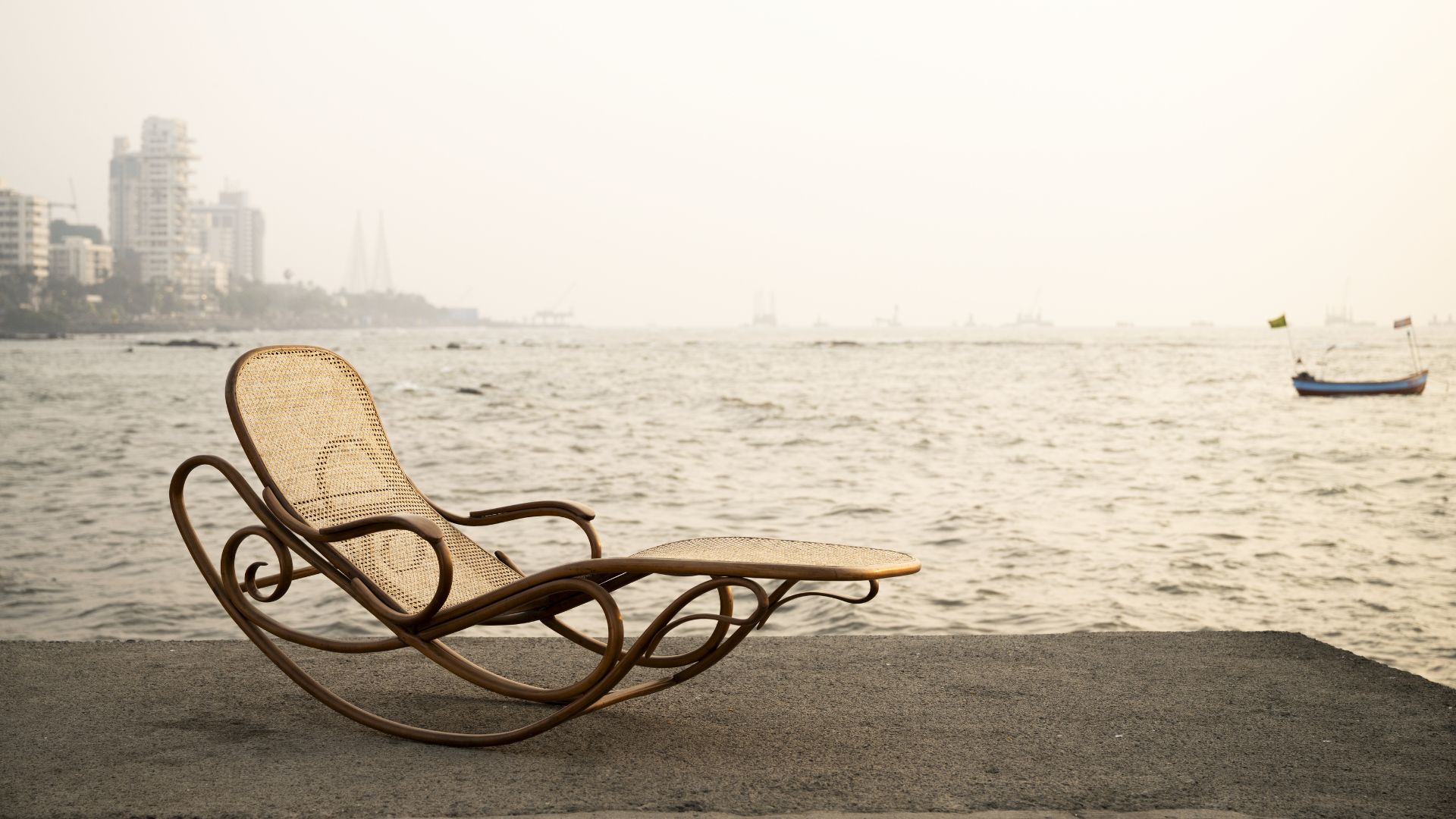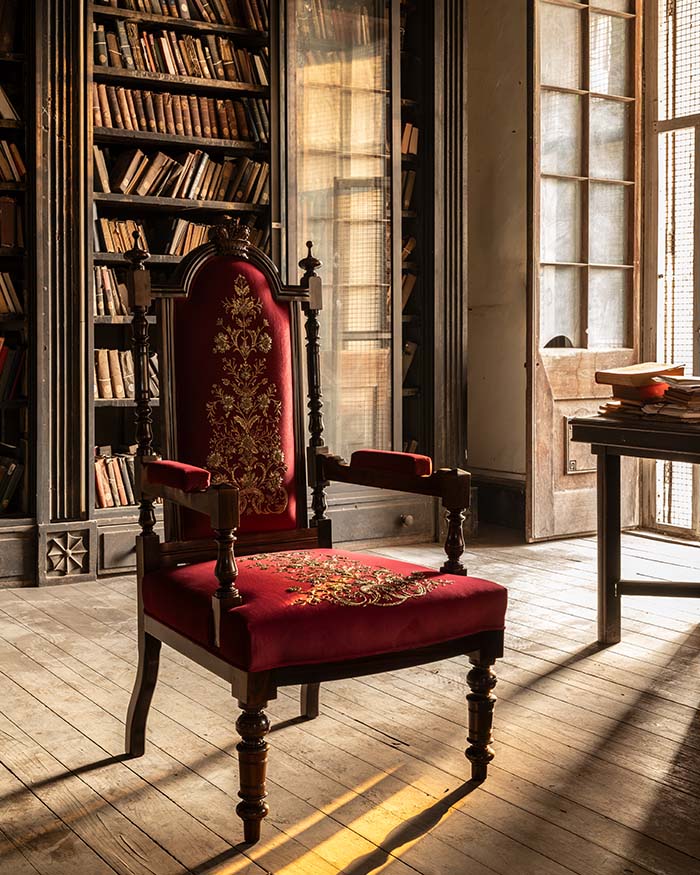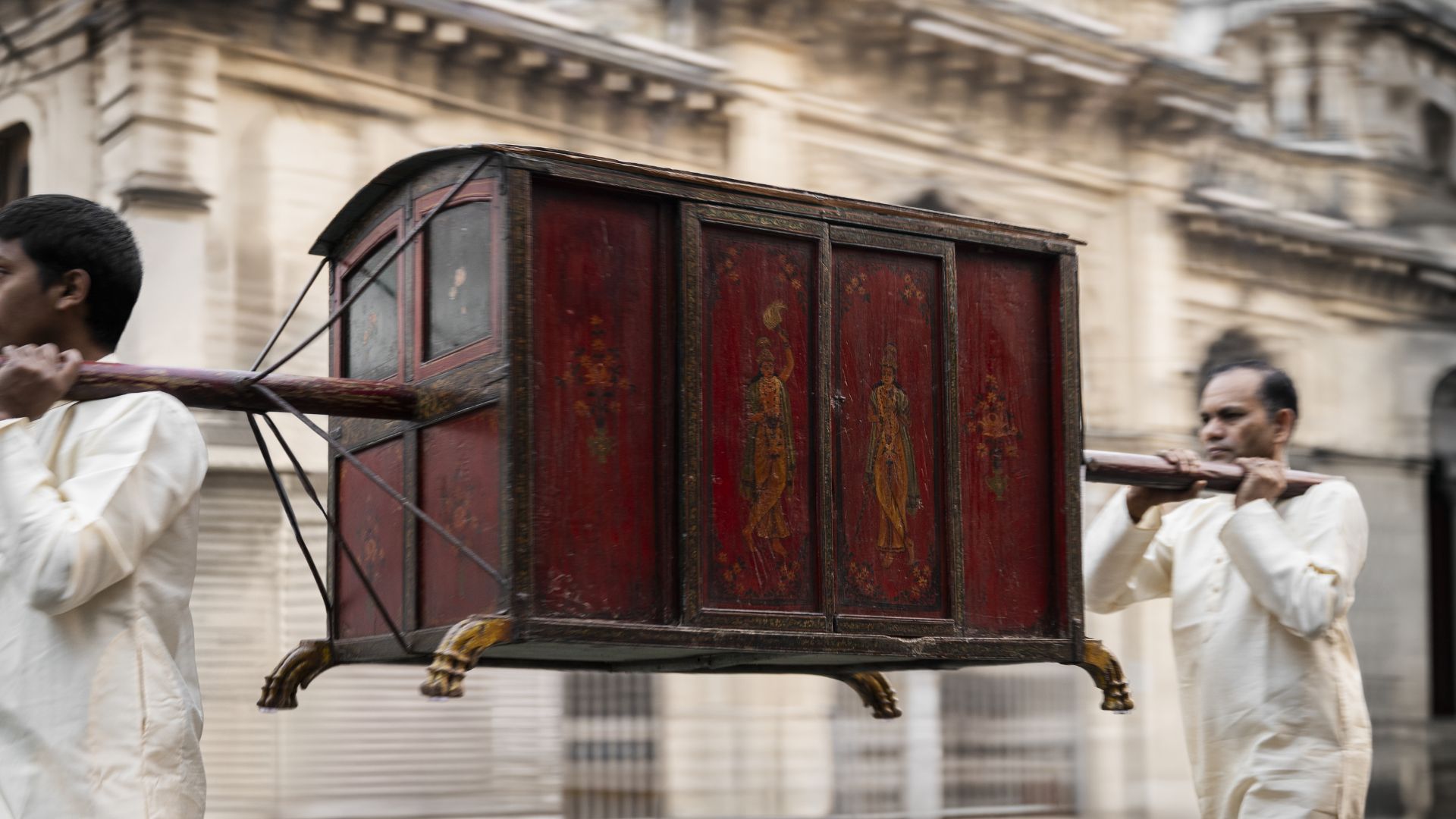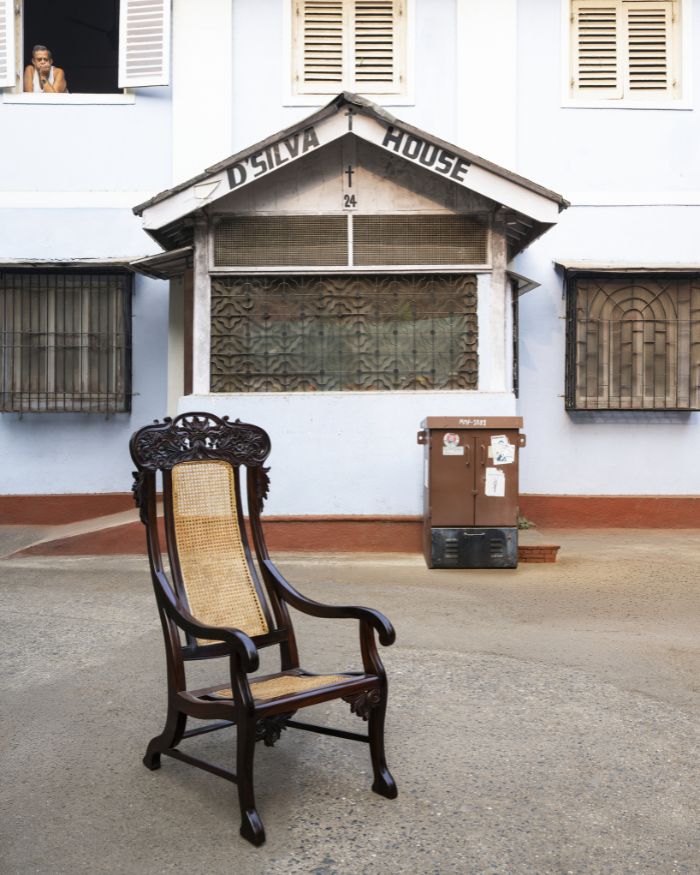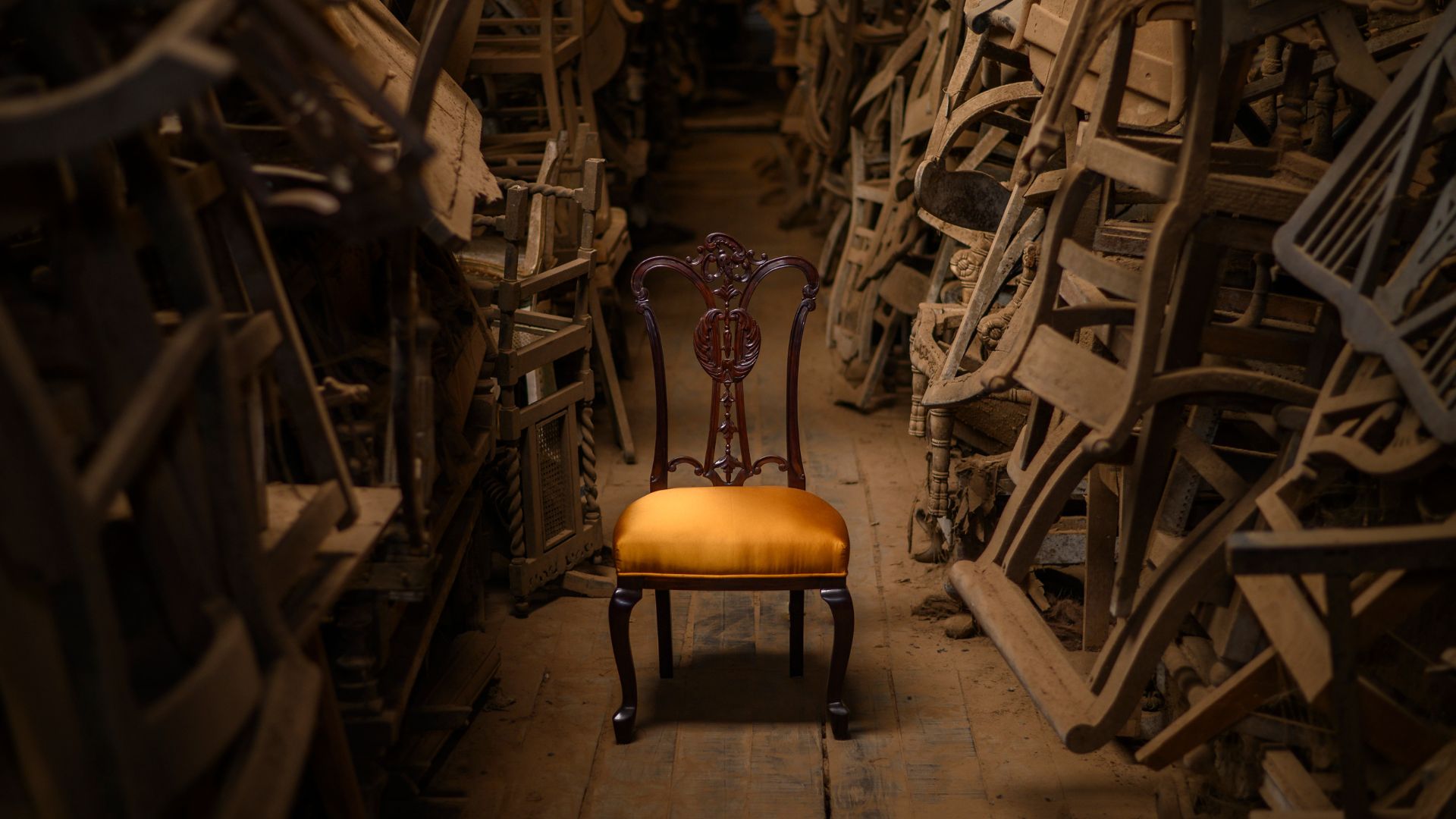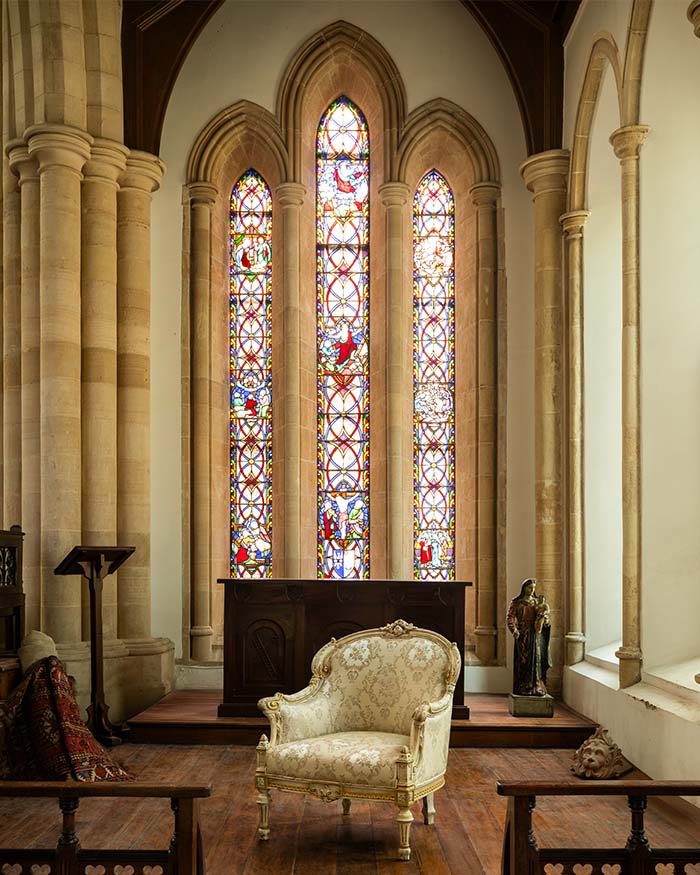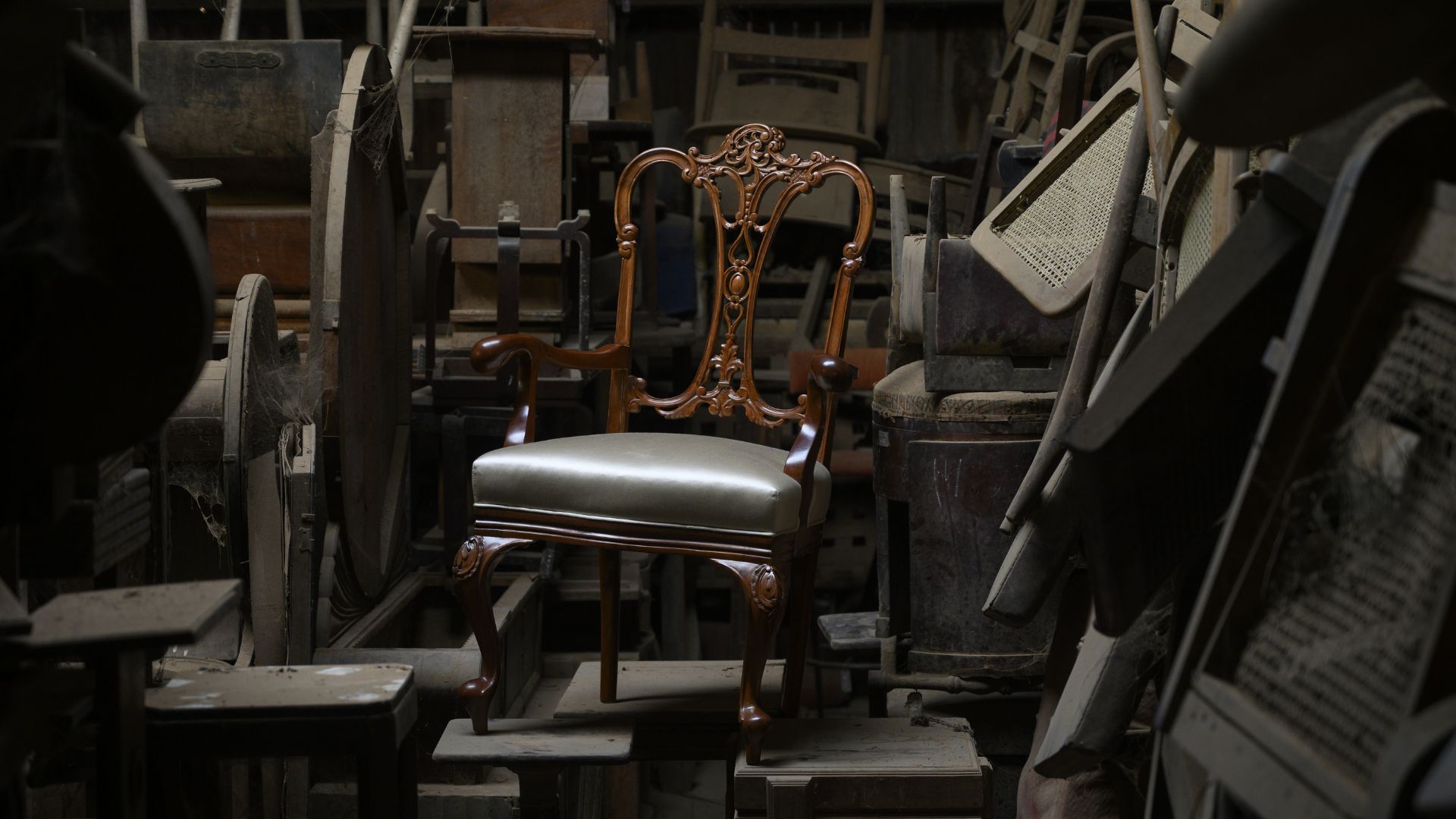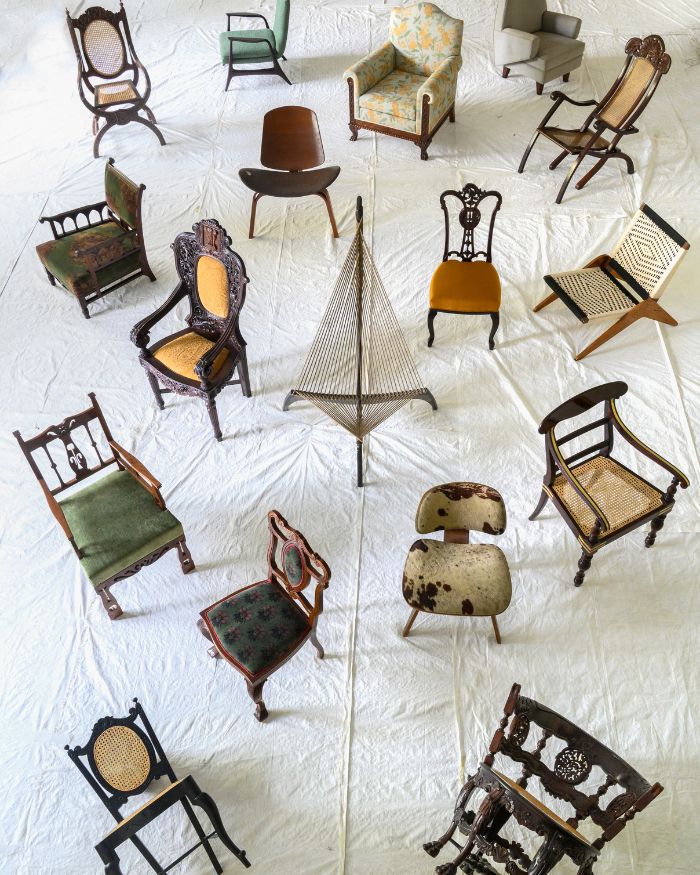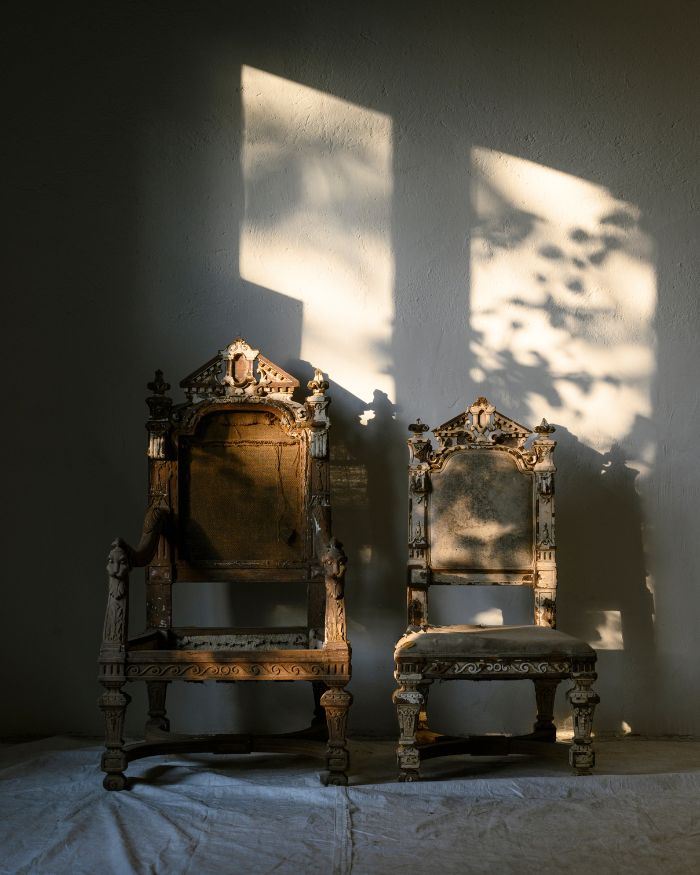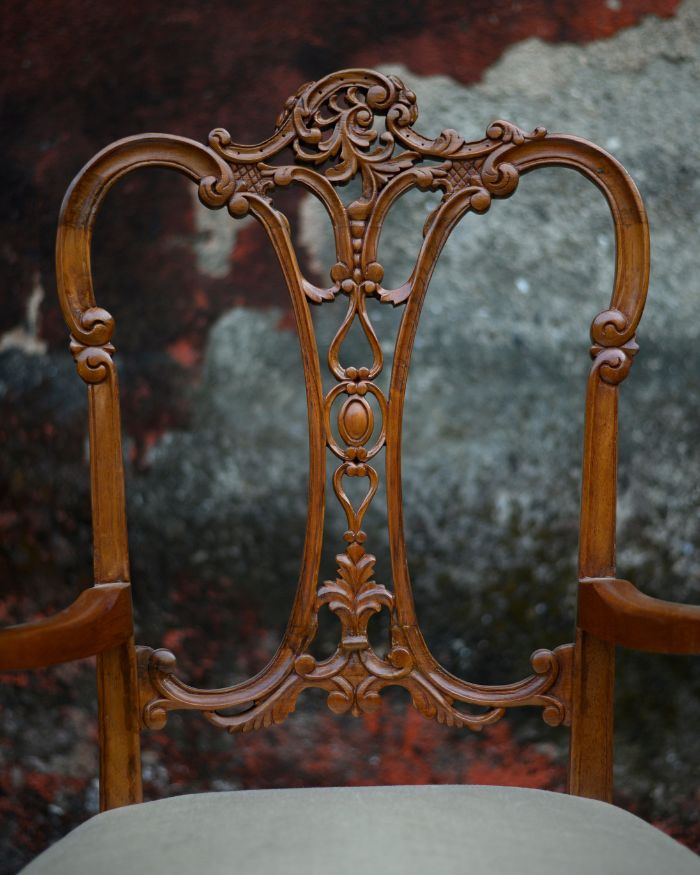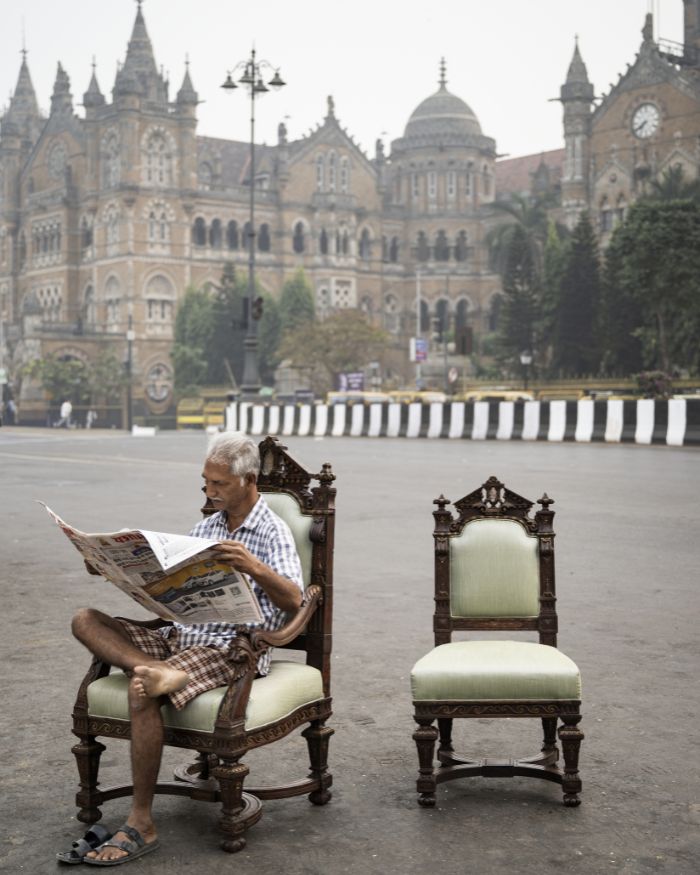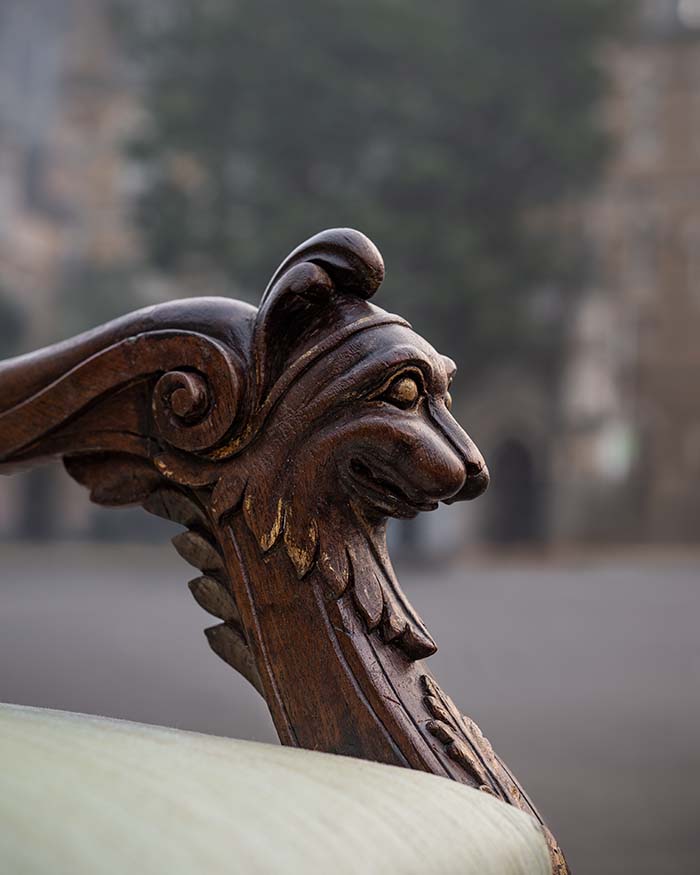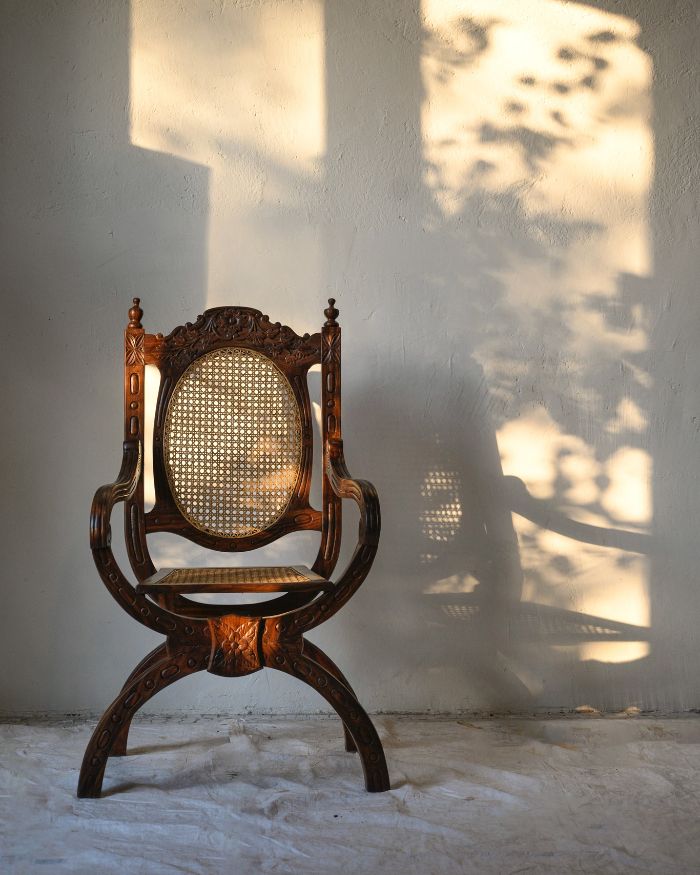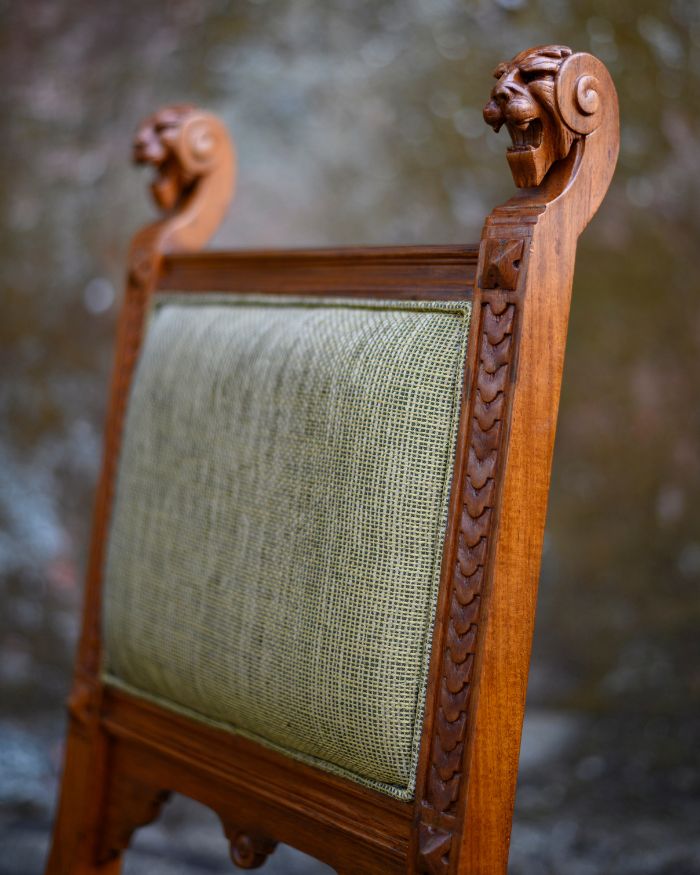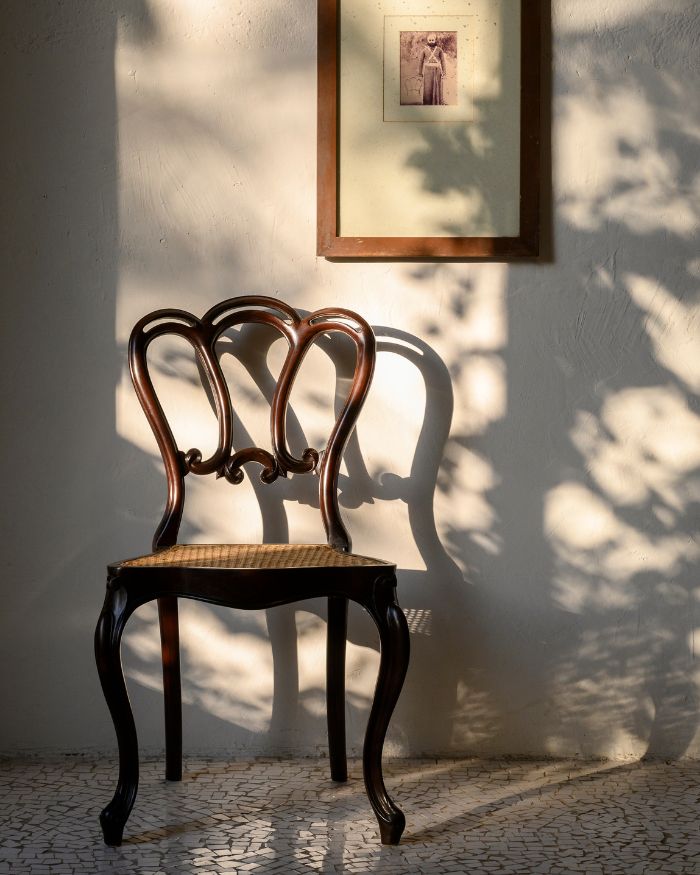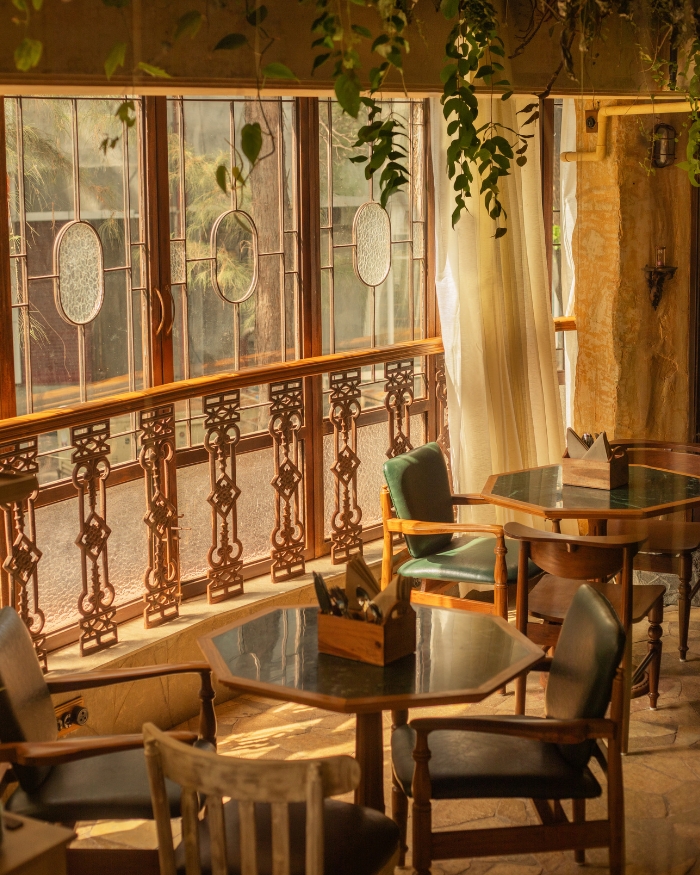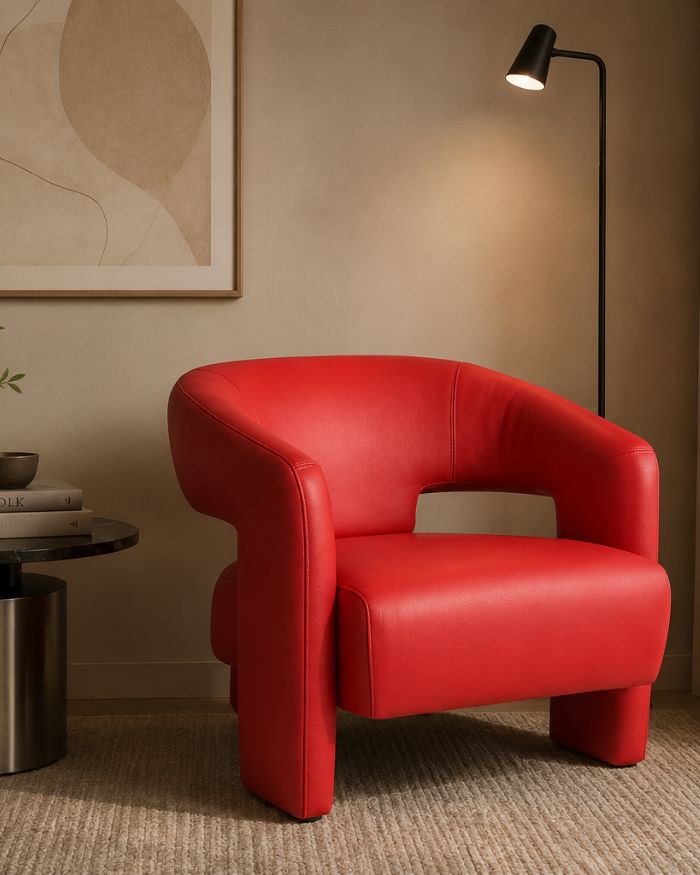
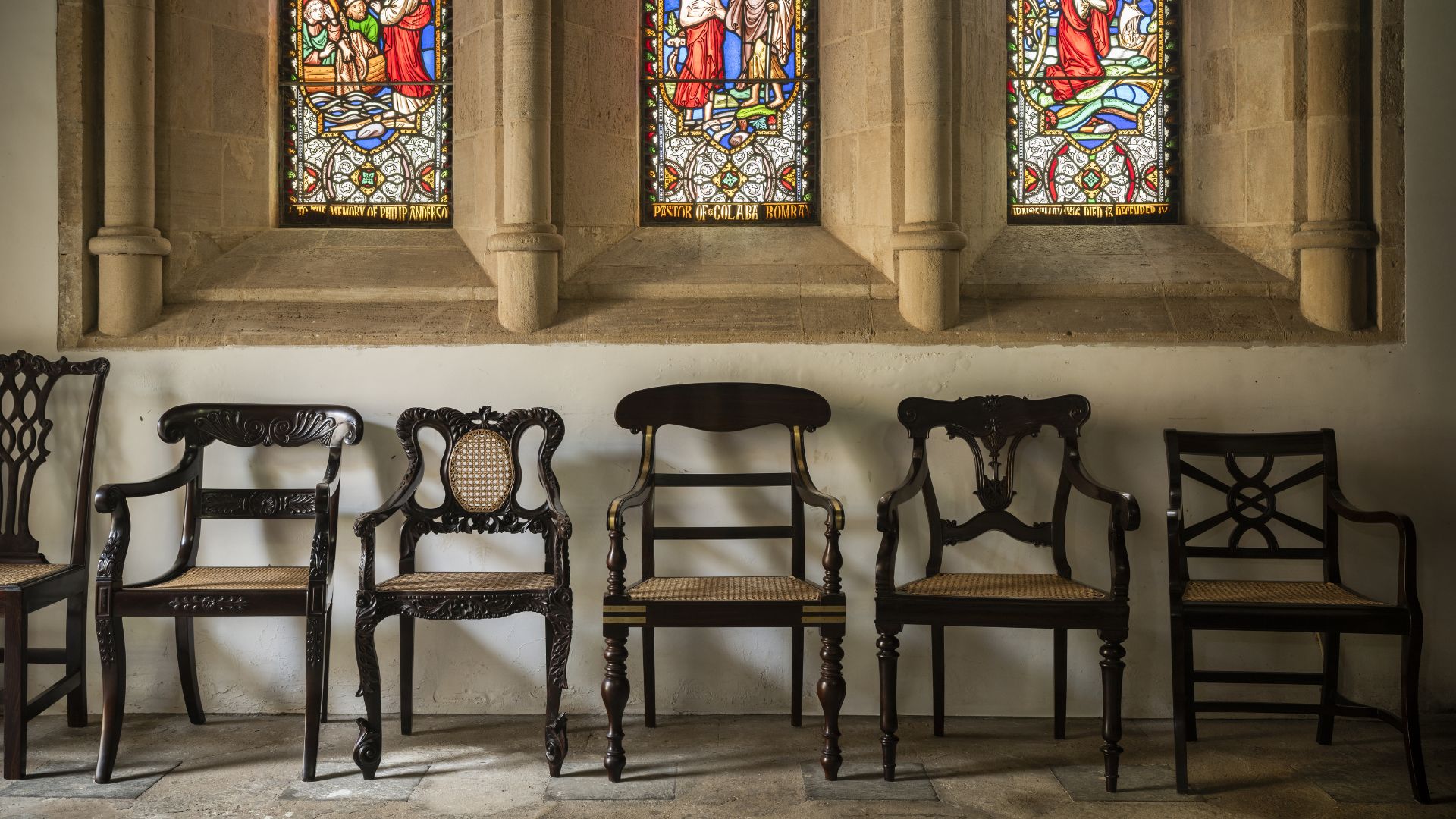
This writer sits on an enamel-finish black wrought iron chair by a sun-dappled, breezy window side, consuming encyclopaedic volumes of text and imagery on the evolution of the many varieties and shapes of chairs around the world, especially India. But why are we talking about chairs? Last night in Mumbai, we walked through the preview of a fascinating exhibition titled A History of India Through Chairs by House of Mahendra Doshi. Their warehouse and showroom in Wadala has turned into a stage for hundreds of chairs that span eras, geographies, evolving political regimes and changing socio-economical hierarchies. We’re told, these antique chairs, mighty and poised in demeanour, in their olden lifetimes have seen pre-colonial India, while some were built in the colonial era, and others birthed post-Independence and Mid-Century Modernist movement. Detailed restoration of each chair remains at the core of the exhibition designed by Supriya Gandhi of the workshop architects with detailed art direction by Vivek Gandhi. The industrial-esque site in Wadala opens with kursis, khaats and bajots, evoking the groundedness of traditional Indian living. Leading indoors, an ensemble of Art Deco, Mid-Century and Arts & Crafts chairs emerges, before one moves back into the open air, where campaign loungers and period-style benches invite you to take a seat like living sentinels of history amidst a green landscape. The progression from intimate floor-level seating to formal, elevated chairs is an important marker of how societies adapt and evolve across time and place.
Back on my screen, as I write and probe the internet, sources suggest that wrought iron was already a popular material in Middle Age Europe for its utilitarian craft. However, it was during the Industrial Revolution in the Victorian 19th century when iron’s true weight peaked. Loosely termed as the Garden Furniture movement, outdoor seaters were seen across households in lawns and patios. In India, though, the subcontinent’s relationship with seaters trusted proximity to the floor itself like woven charpais stretched with rope, carved wooden patlas and reed mats arranged for community-friendly, conversational gatherings.
I wonder, is the ubiquity of chairs its most powerful trait? Like the unassuming plastic chairs that exist in many households like permanent family members — always functional, partly unavoidable. But in the other pockets of urban India where collecting and collectibles are a serious business, material is the king, and so is the object’s rarity; the good kind of oddity that affords it a special, decorative status.