
What would Geoffrey Bawa think of a kolam at the entrance? Tropical Modernism, a movement that emerged on South Asian soil for the South Asian climate, is seldom seen through that lens. But that is not the case for Sandeep Khosla and Amaresh Anand, principals of Khosla + Anand. For them, the philosophy informs each decision in the design process. “It is about folding context and tradition,” says Sandeep, “using vernacular elements and local materials, but articulated through a modern design vocabulary.” When you view this line of thinking in the light of their recent architectural endeavour, the pieces fall into place. The half-acre-wide canvas in Hyderabad is subsumed by greenery and a balmy breeze, acting as a conceptual foil to conventional urban readings. “In this region, one can actually enjoy the outdoors for most of the year,” explains Sandeep.
It is in such contexts that it becomes evident that life between the two latitudinal lines that girdle the earth differs significantly in culture from the cold, rigid environments in which Western Modernism took shape. Vernacular expressions such as verandahs, courtyards and terraces, which have accommodated the seasonal vagaries over centuries, find their way into the language of this home, creating spaces that do not adhere to strict demarcations. On the contrary, it is their fluidity that animates the built form.
“Tropical Modernism is about folding context and tradition. Using vernacular elements and local materials, but articulated through a modern design vocabulary”
— Sandeep Khosla
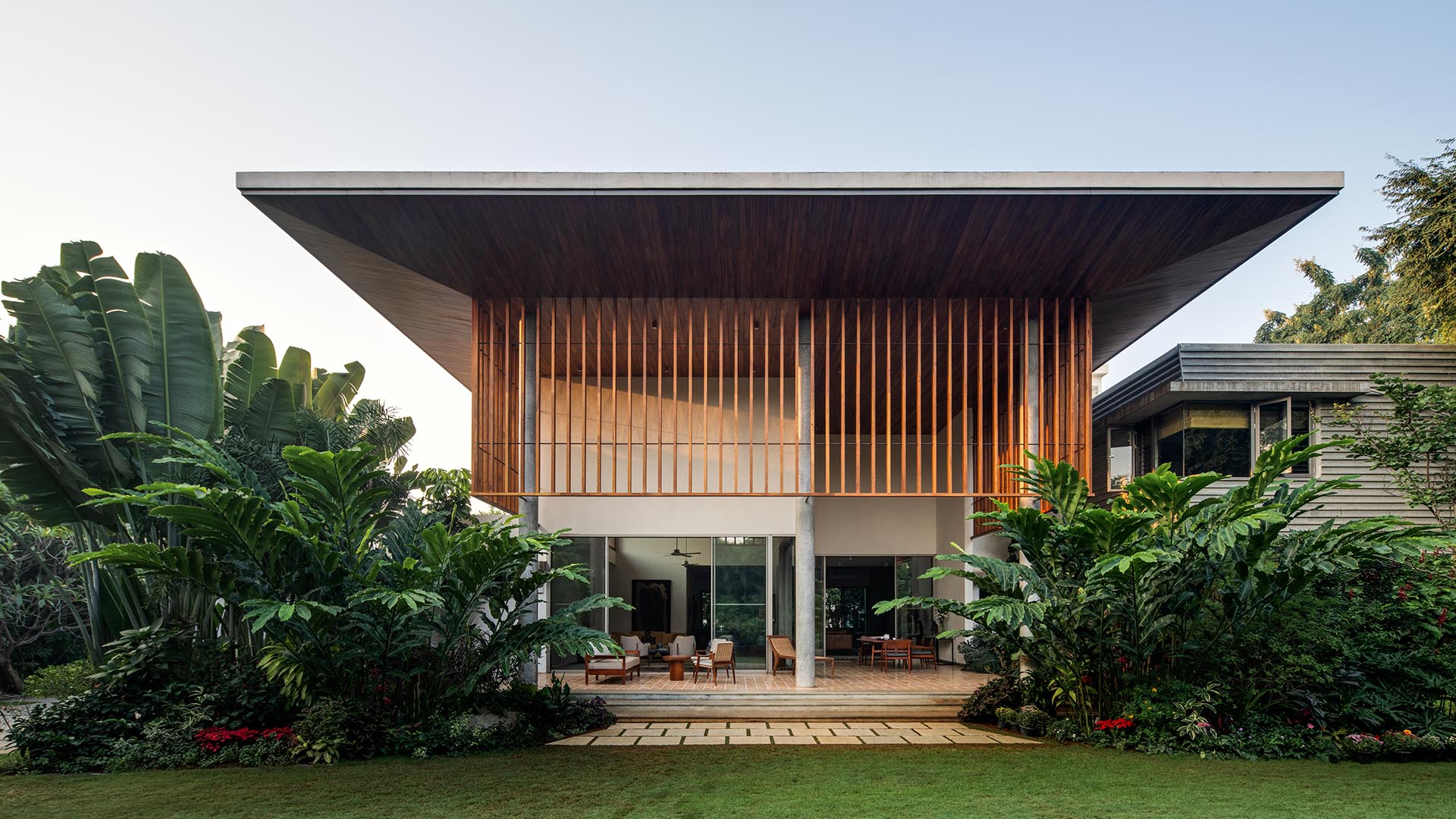
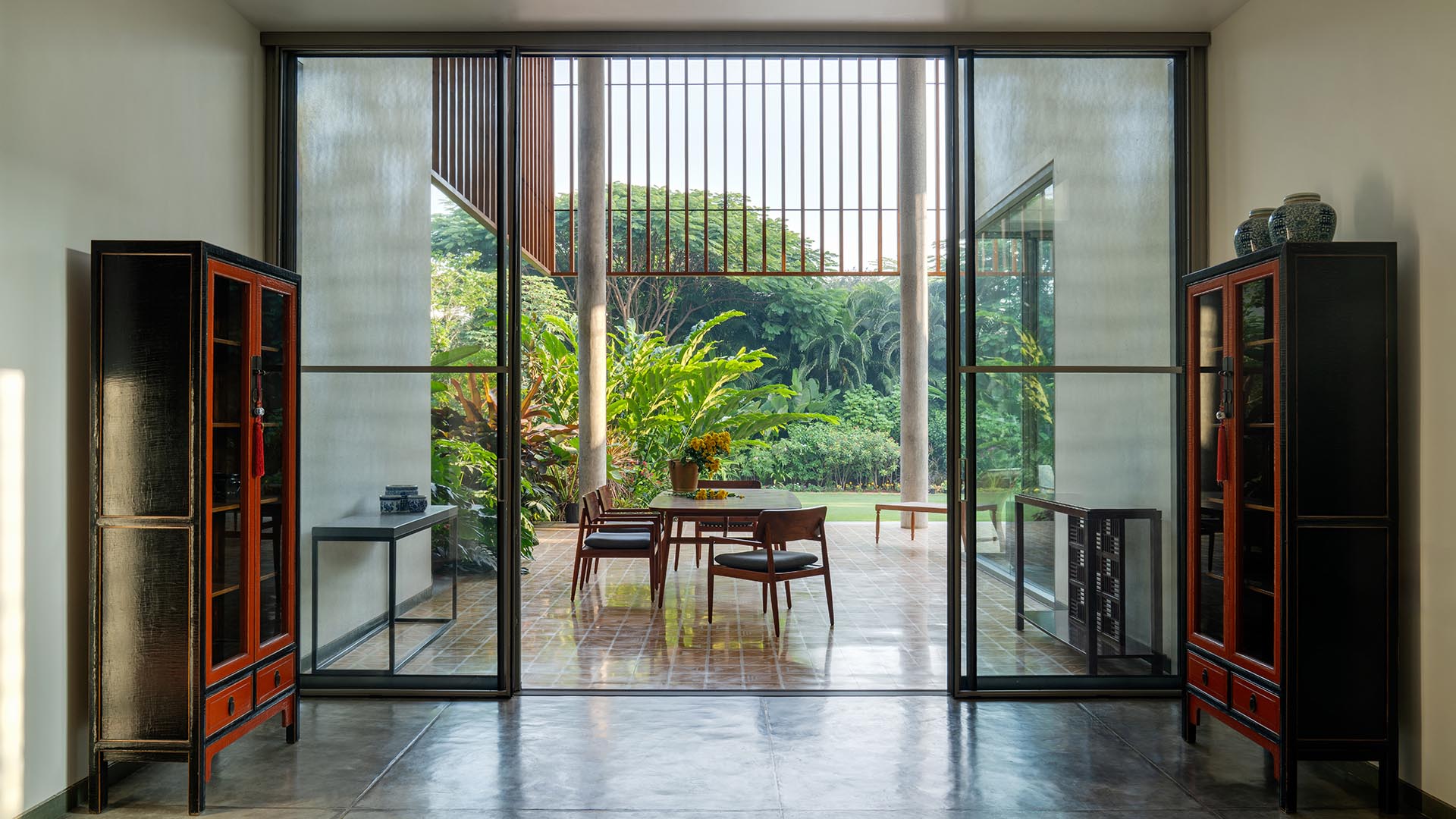
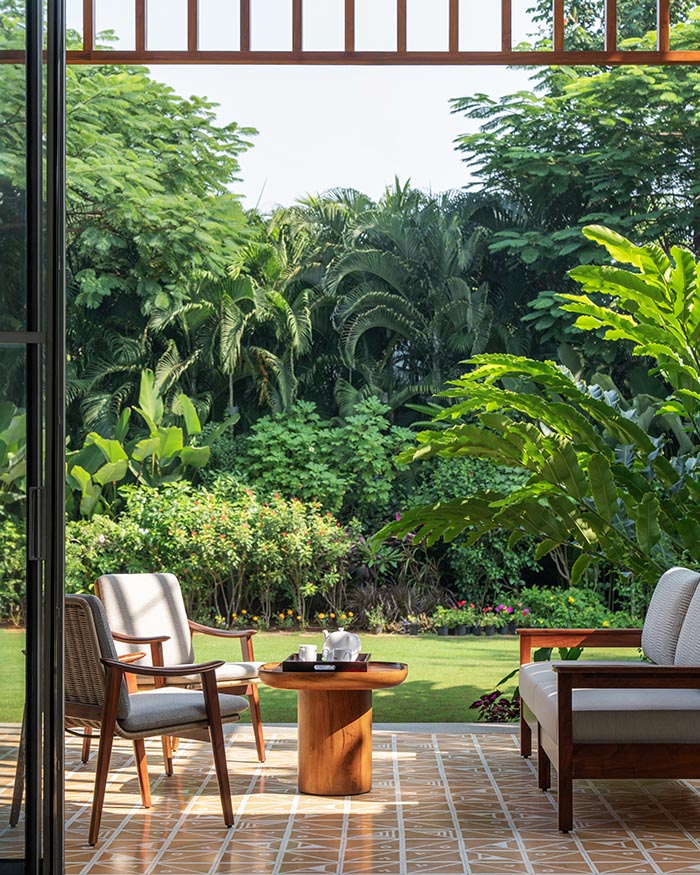
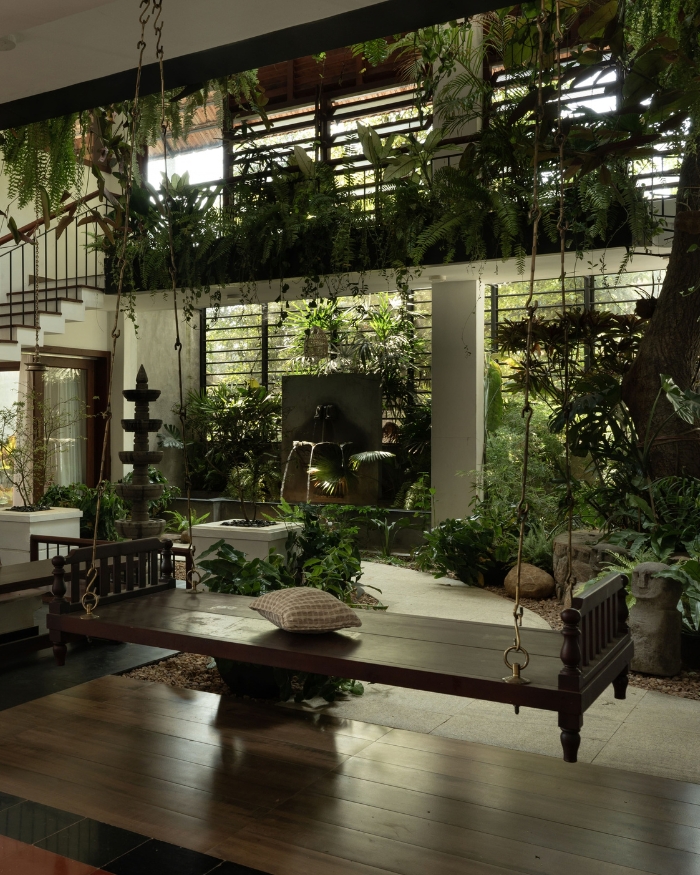
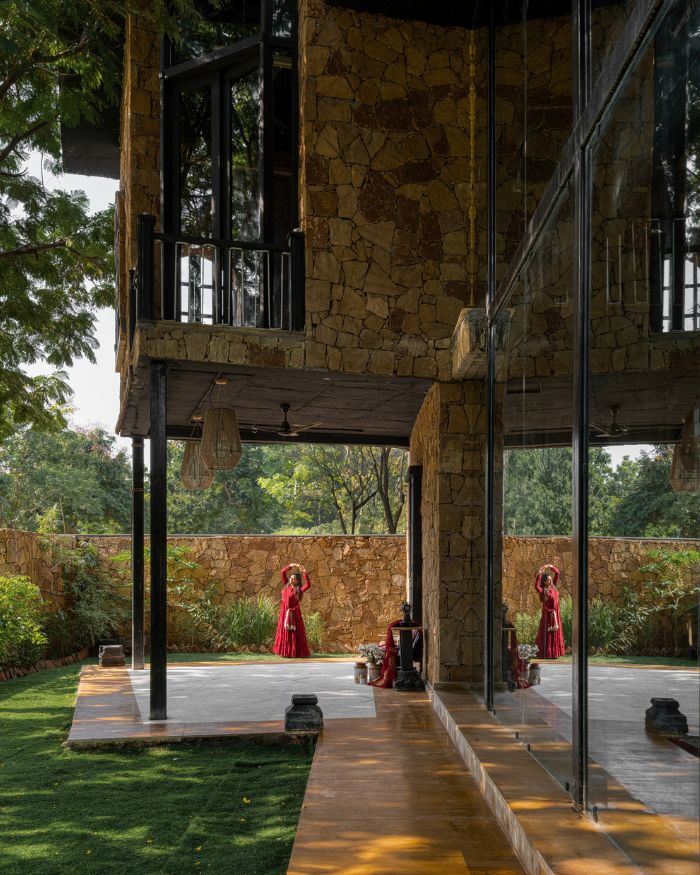
Taking a leaf out of Bawa’s book, whose architecture hinged as much upon the living context as the built one, the home exists as much in the garden as it does in the physicality of space. The double-height north verandah, shaded by an expansive teakwood canopy and filtered through vertical timber sun-breakers, becomes a primary living space.
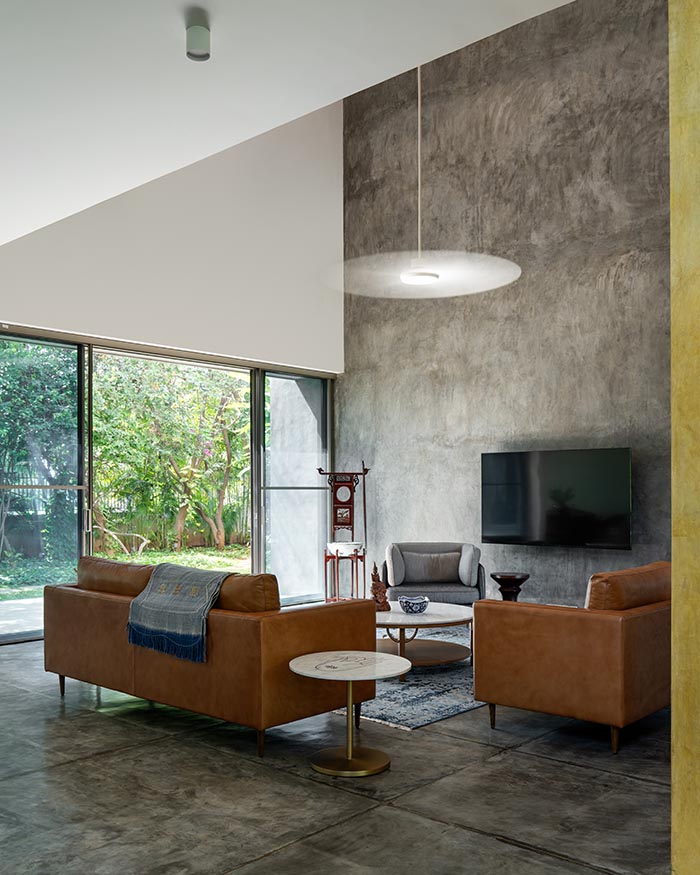
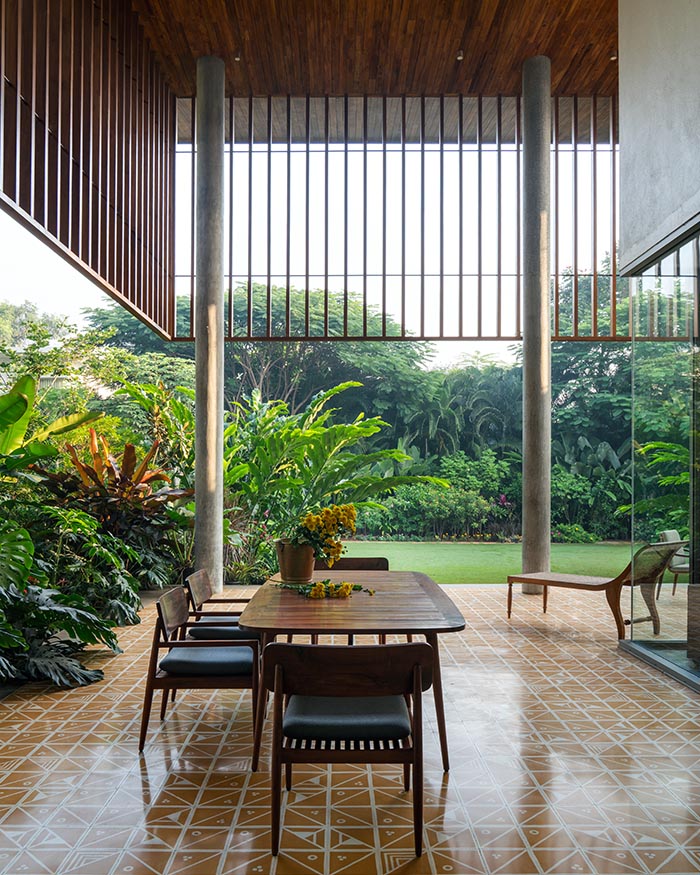
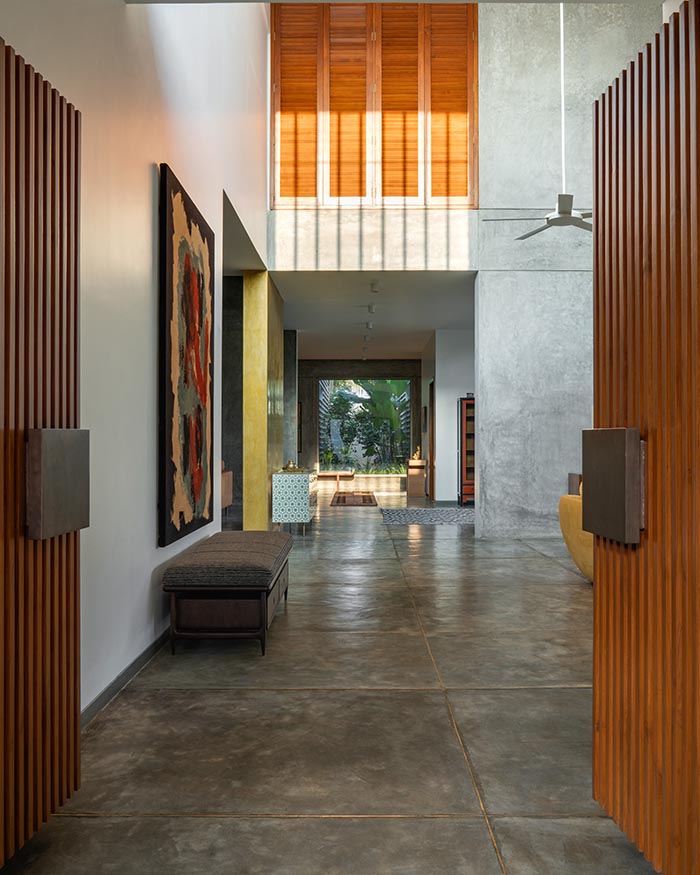
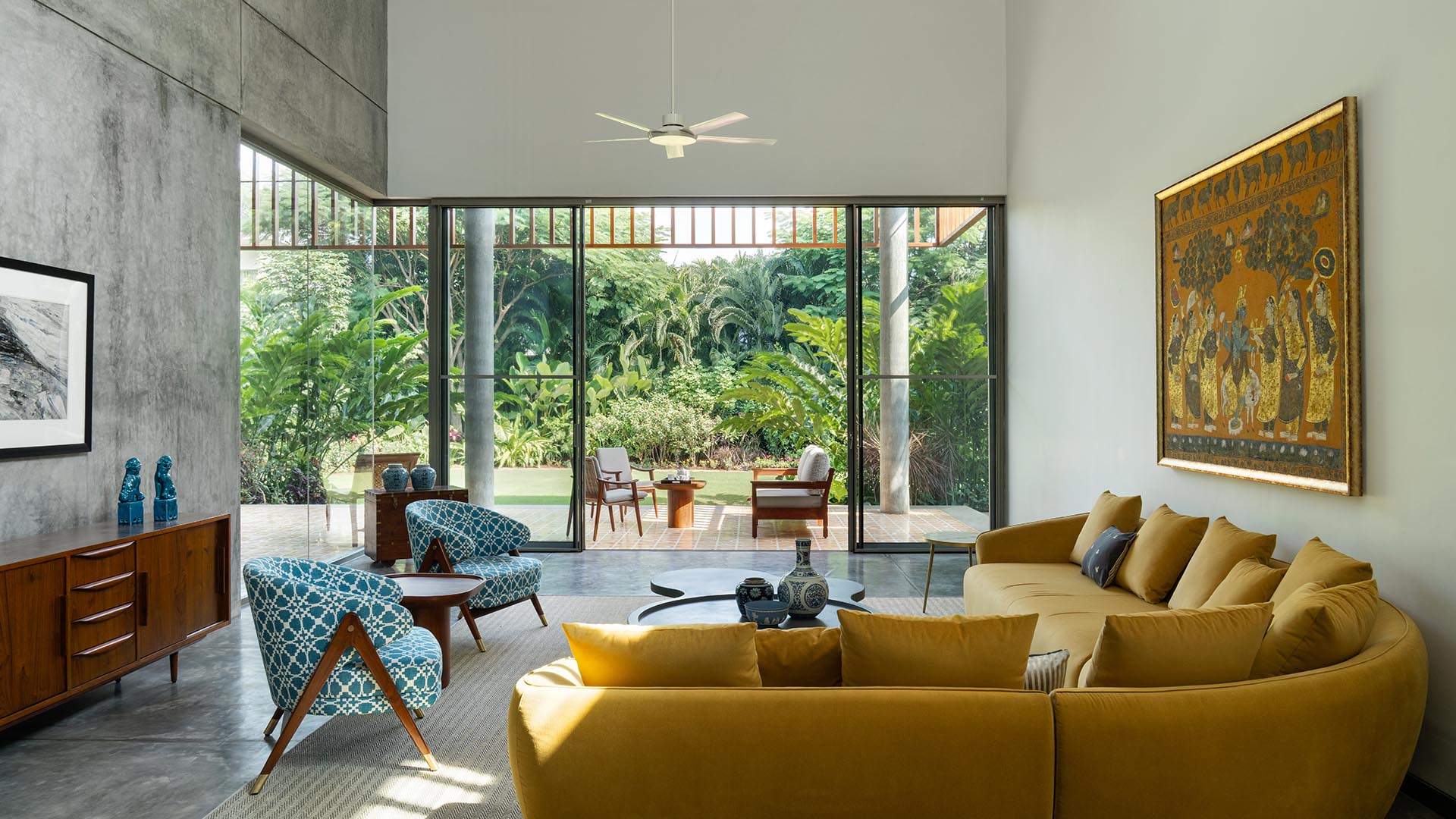
Underfoot, patterned yellow cement floor tiles from the Dash Dash Dot collection, designed by Tania and Sandeep Khosla for Bharat Flooring Tiles, introduce warmth and rhythm, extending from interior polished cement floors to the outdoors. The furniture here is designed in collaboration with Mangrove Collective. This reciprocity with nature is matched by environmental consciousness. Rainwater harvesting and solar energy generation are integral to the studio’s approach. In this instance, the home’s entire water requirement is met through harvested rainwater stored beneath the entrance driveway. The residents grow their own produce, extending sustainability beyond infrastructure into daily life. The home sits within a community initiated by four college friends, designed to privilege proximity and sustained social interaction. This too finds a spatial expression inside. “The layering of living spaces opens up the house, enabling occupants to remain connected across its entirety,” says Amaresh. In the informal double-height living area, sliding doors open onto a bijou south garden.
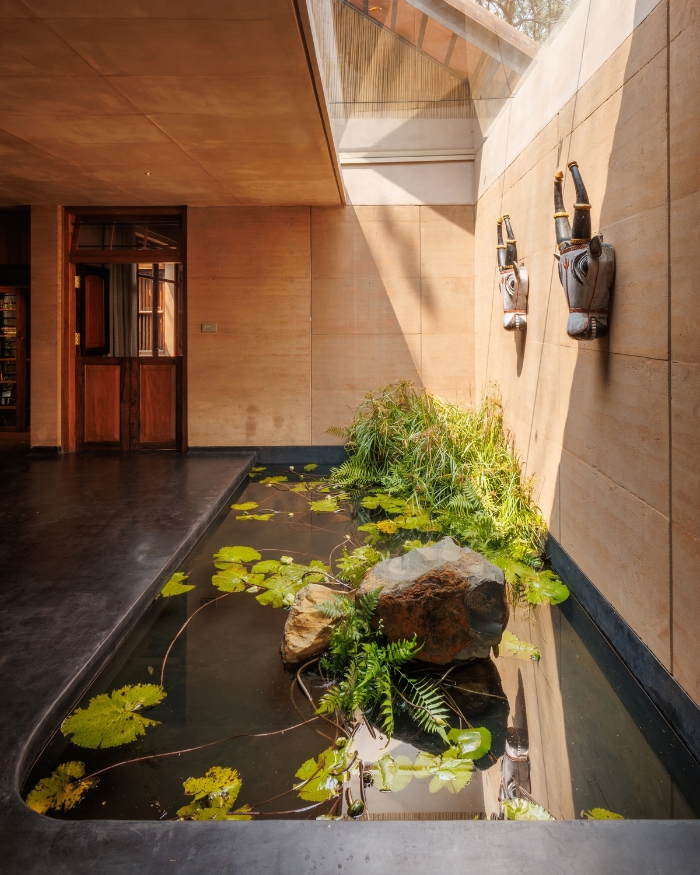
Openness was a social instrument in designing around the life of the inhabitants, “This approach allows their young grandchildren to run freely through the house when they visit,” Amaresh reflects, “And when the couple is alone, the spatial openness mitigates any sense of loneliness.” At no point does the house privilege formal bravura over lived experience. Instead, it appears to track the sun through the day. The east-facing entrance receives the morning light. Owing to the predominantly northward orientation, principal living spaces are shielded from harsh daylight, receiving instead a diffused luminosity that washes the verandah and garden.
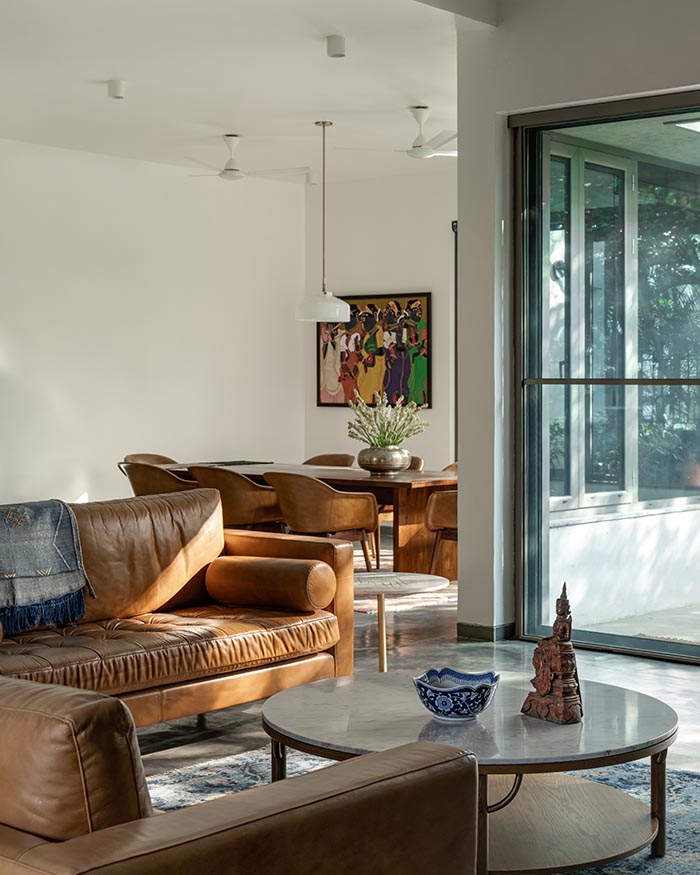
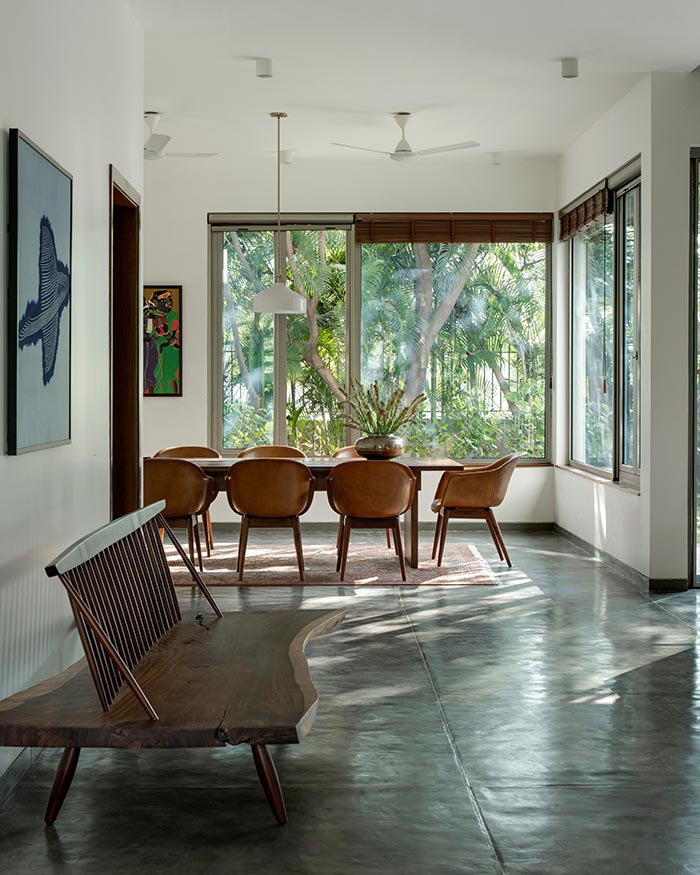
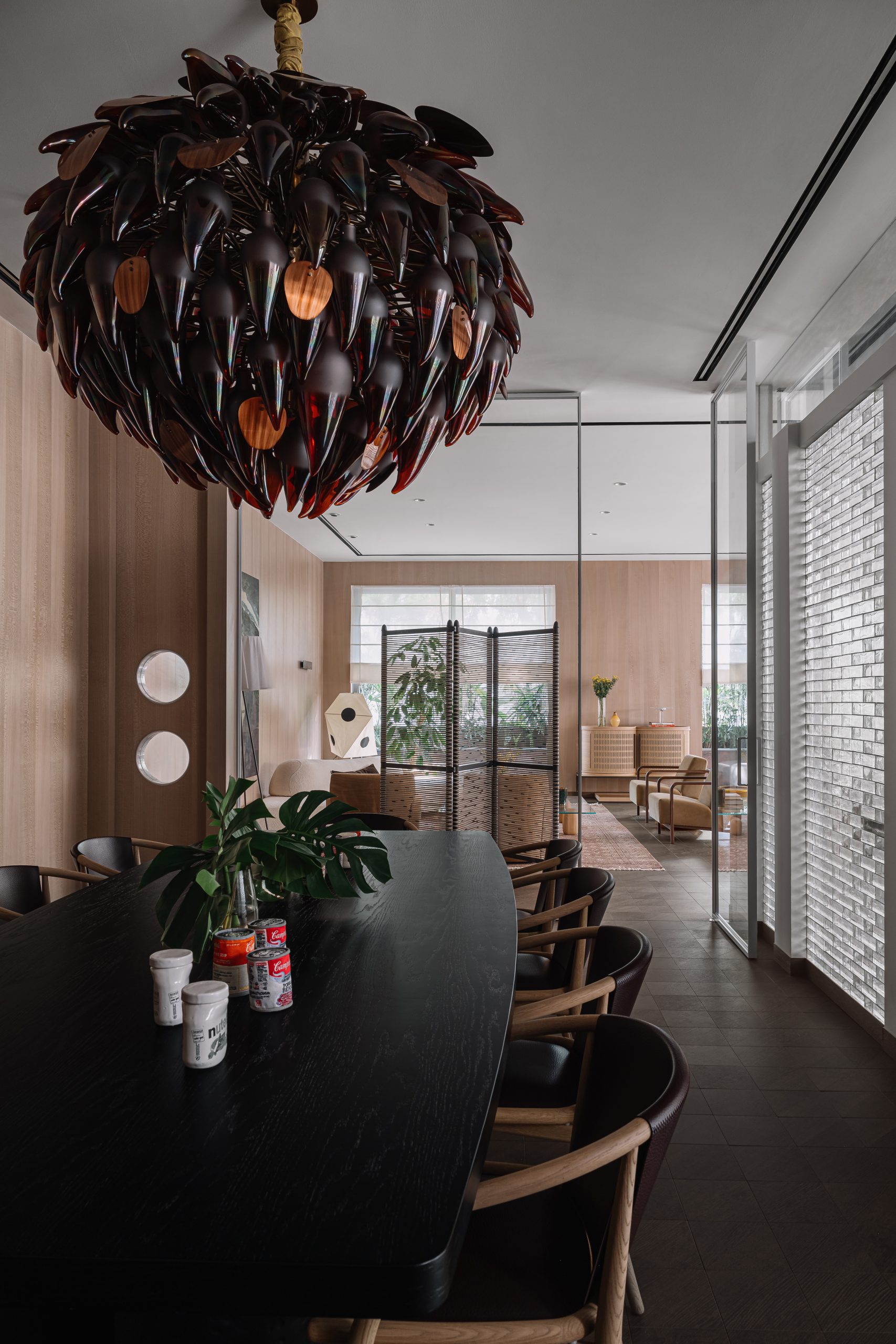
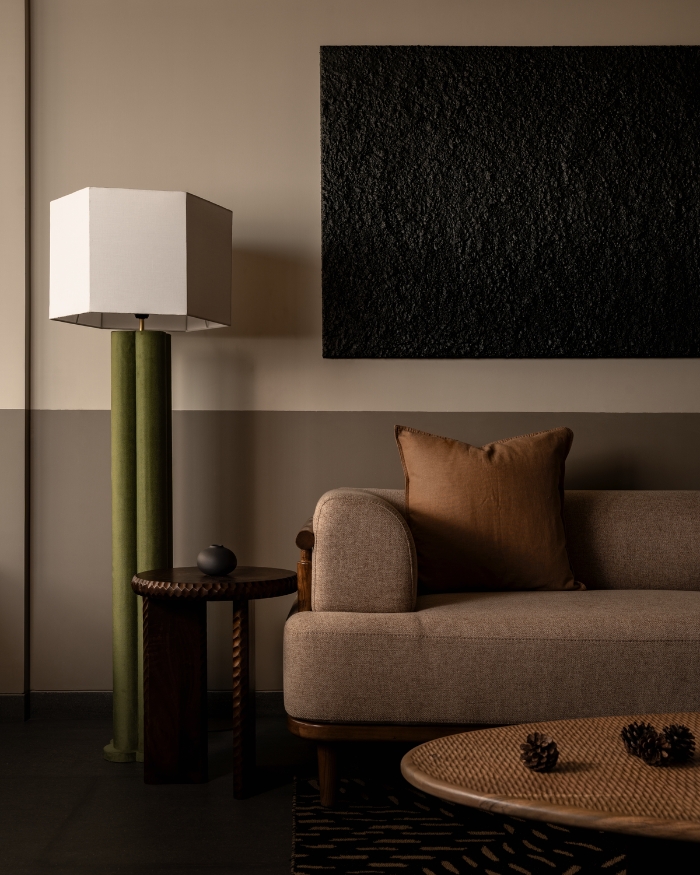
By afternoon, stronger southern light penetrates deep into the dining and living areas. “The mid-century modern furniture in the house was a coming together of the residents’ and our personal affinity towards the style,” says Sandeep.
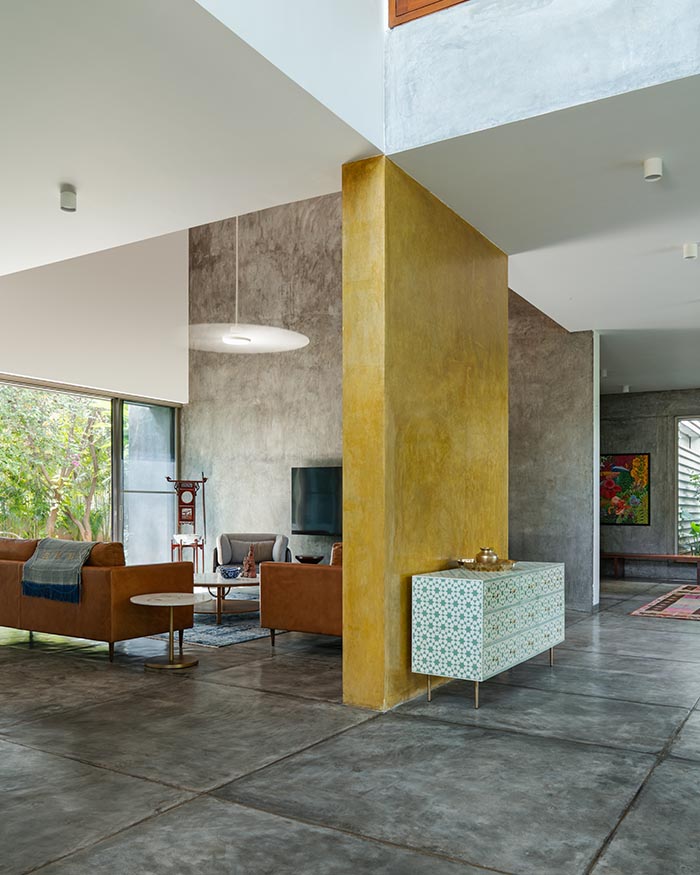
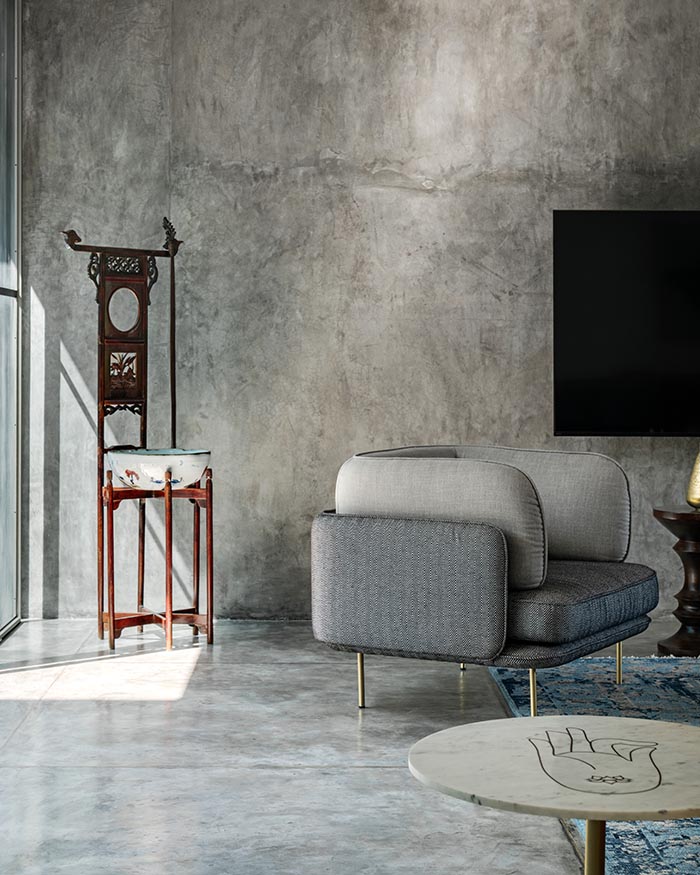
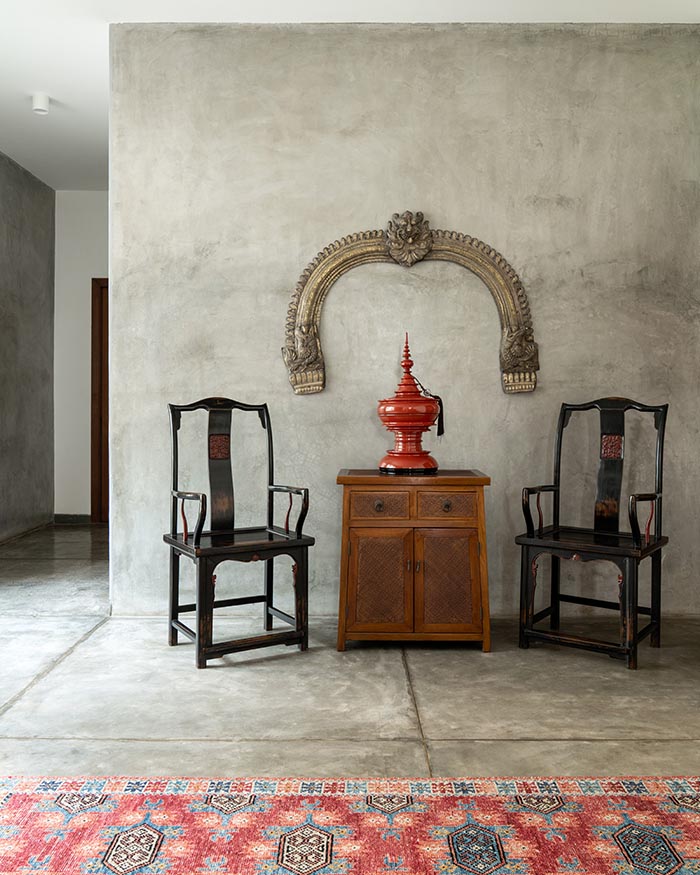
The space is dotted with discoveries such as a George Nakashima-inspired spindle bench and leather-clad dining chairs. Revisited through a South Asian lens, in the entryway, a mid-century modern bench is fitted with a rack to facilitate taking off one’s shoes before stepping inside. “There is an interesting mix of influences that shaped the interior elements in the home, including articles from South East Asia, where the owners resided for many years,” adds Sandeep. It surfaces through oriental Southern Official hat chairs, Burmese lacquerware, a late 19th-century antique Chinese carved wash basin stand and blue pottery objects. These elements from their personal memorabilia gathered over the years, including a tribal Mexican textile draped over the sofa back, form the pulse of the visual grammar. These artefacts coexist with Indian textiles like Ajrakh and Bandhani and Pichwai paintings, alongside antiques like a brass prabhavali from Souk, anchoring the architecture within the country’s craft culture.
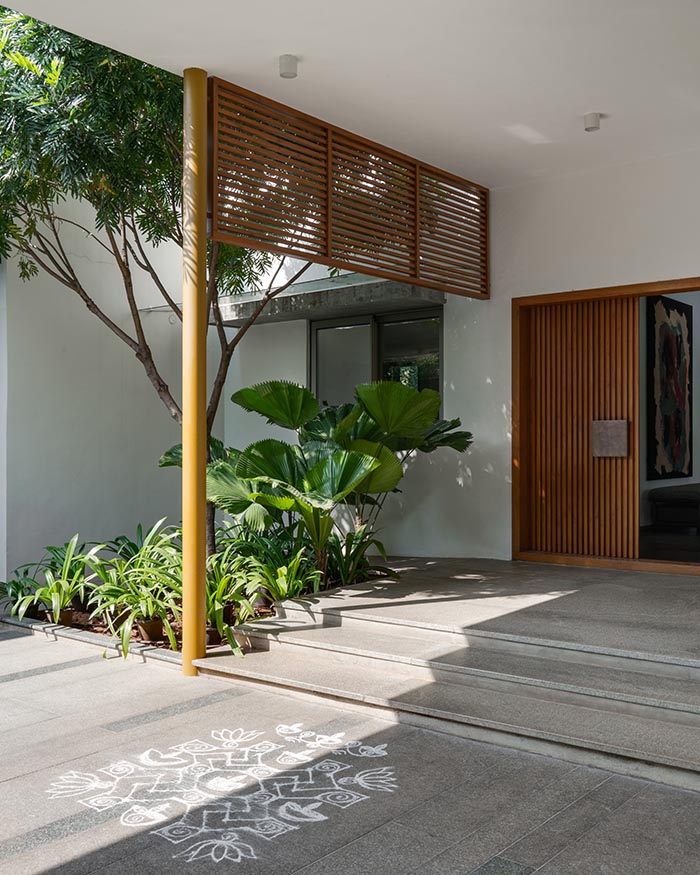
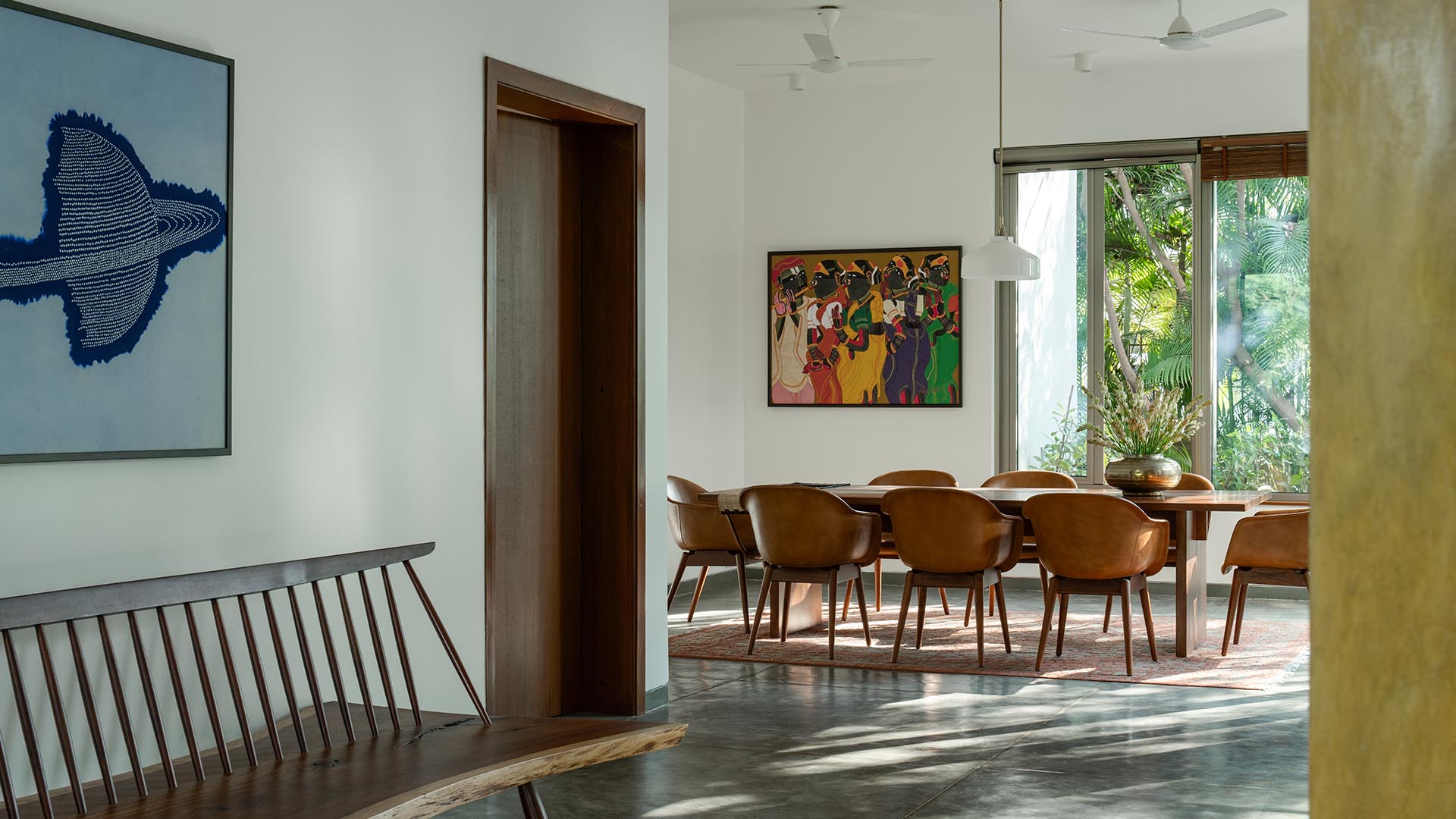
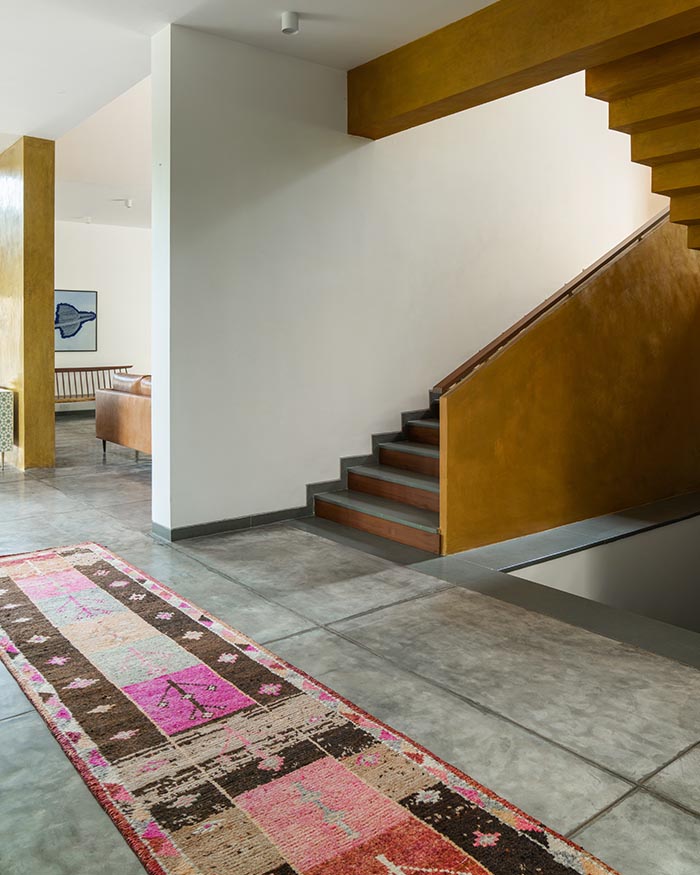
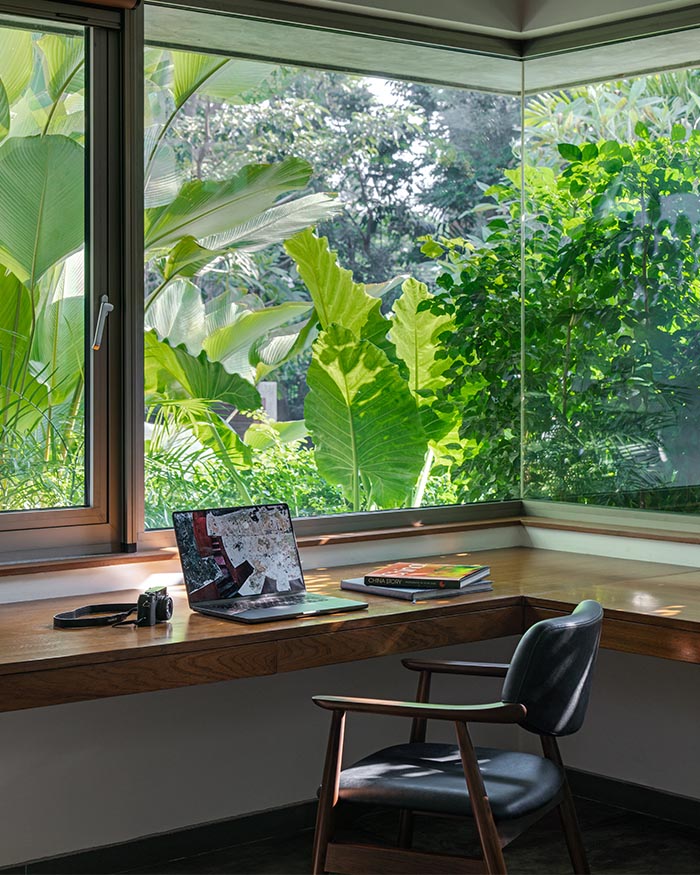
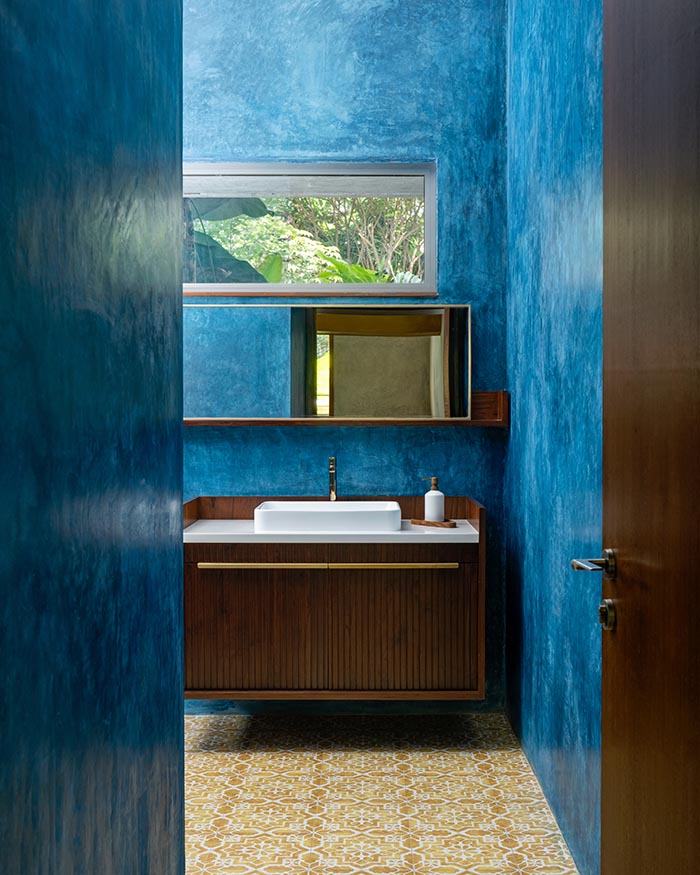
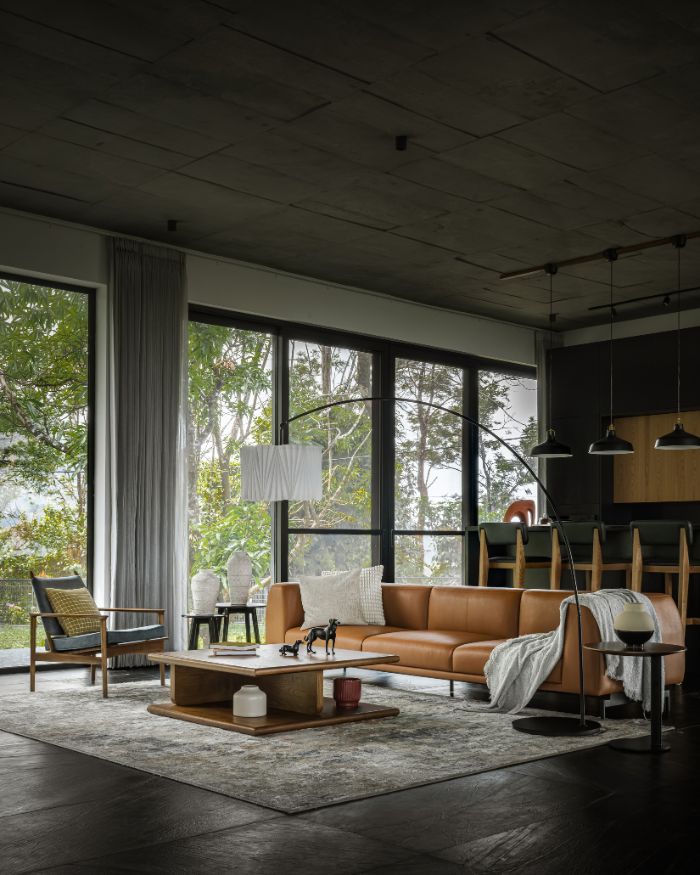
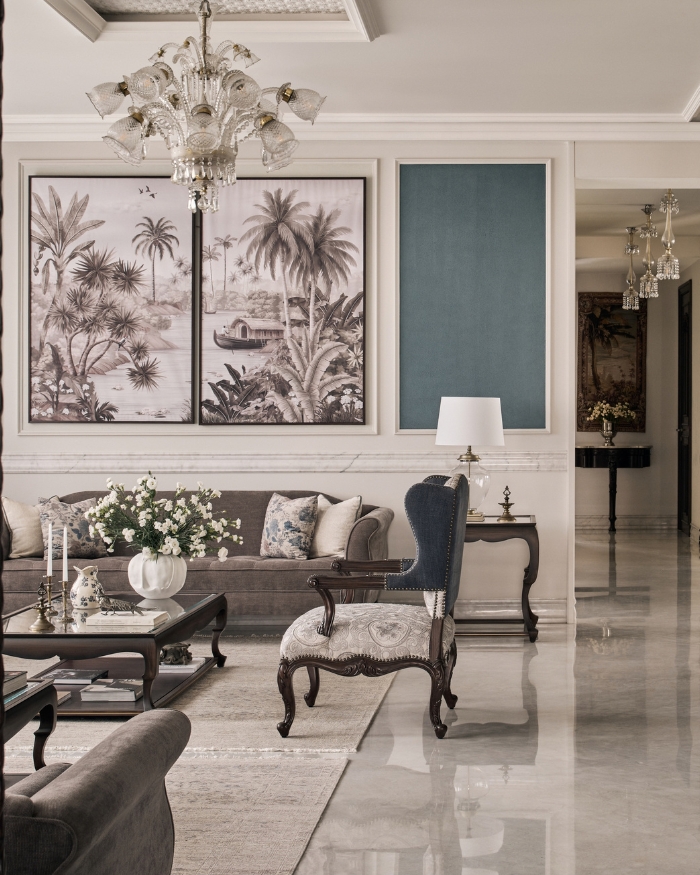
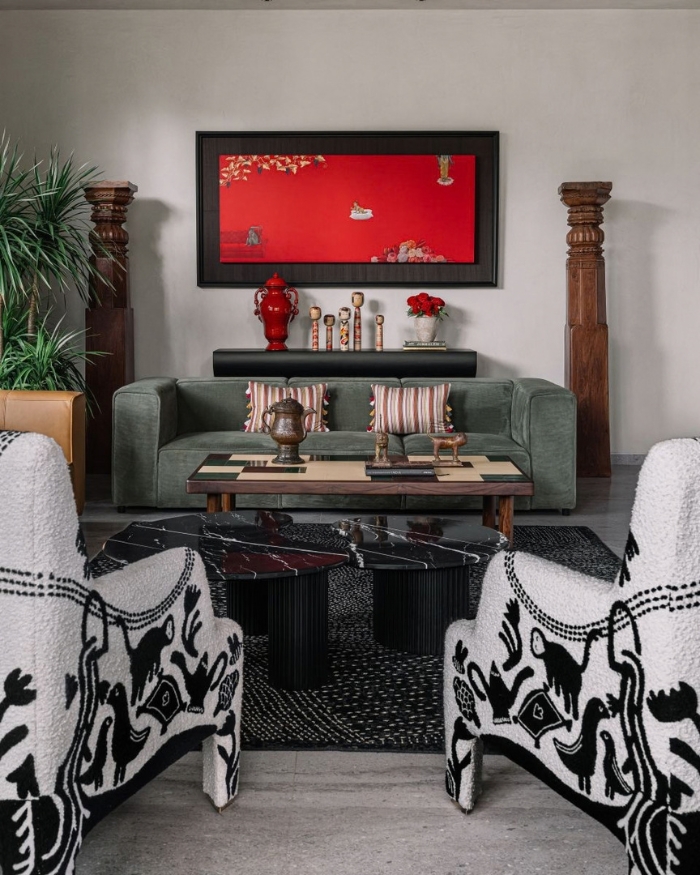
Throughout the 9,000 sq ft space, chromatic restraint is punctuated with moments of colour. Executed by a group of artisans from Puducherry, the yellow polished cement oxide walls and staircase introduce warmth within the otherwise monochromatic shell. In the powder room, the oxide takes on a brilliant indigo hue, contrasted with a yellow-and-white tiled floor. In the formal living room, the yellow finds an echo in the sofa, accompanied by patterned armchairs, making for an intriguing foreground to view how greenery outside ebbs and flows in response to light. “When I was working with Charles Correa, he often spoke of the beauty of sitting under the shade of a tree,” recalls Sandeep. As carefully as they mapped the trajectory of the sun, shade is accorded equal architectural weight. And it is in the grace of the louvred screens that cast elongated shadows across the verandah or overhangs that extend the footprint outward, the space welcomes generous inhabitation.
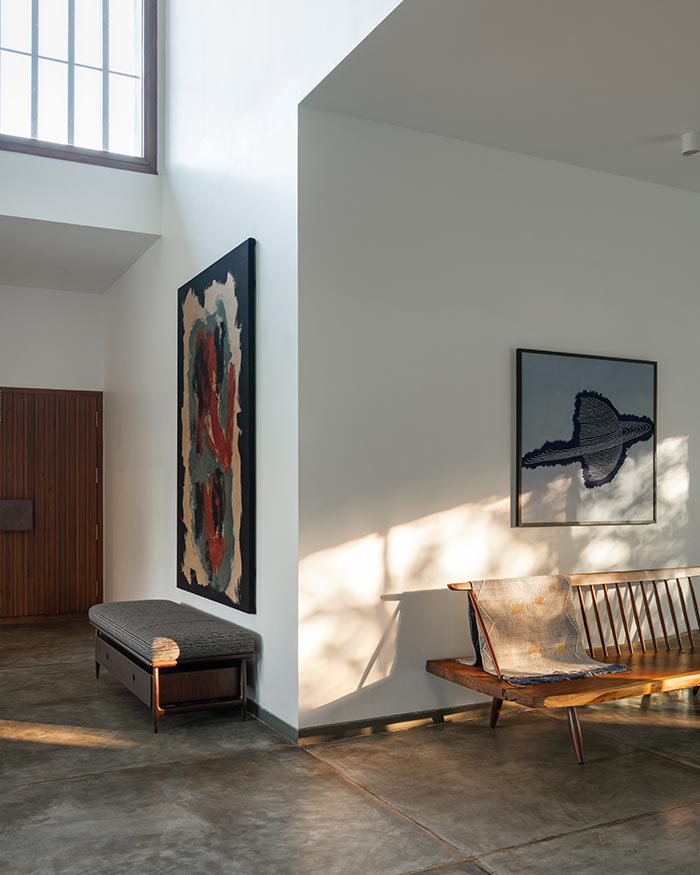
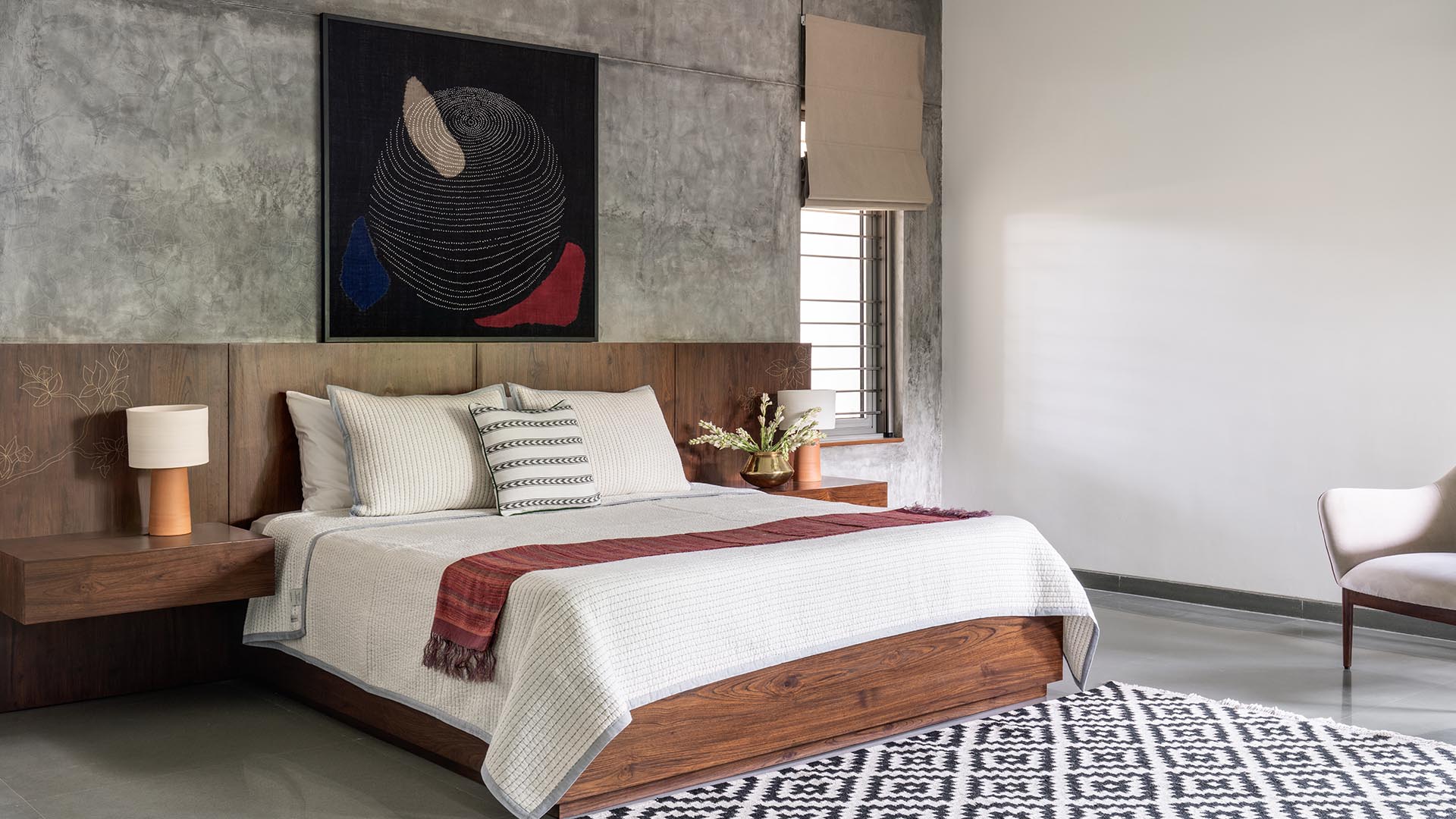
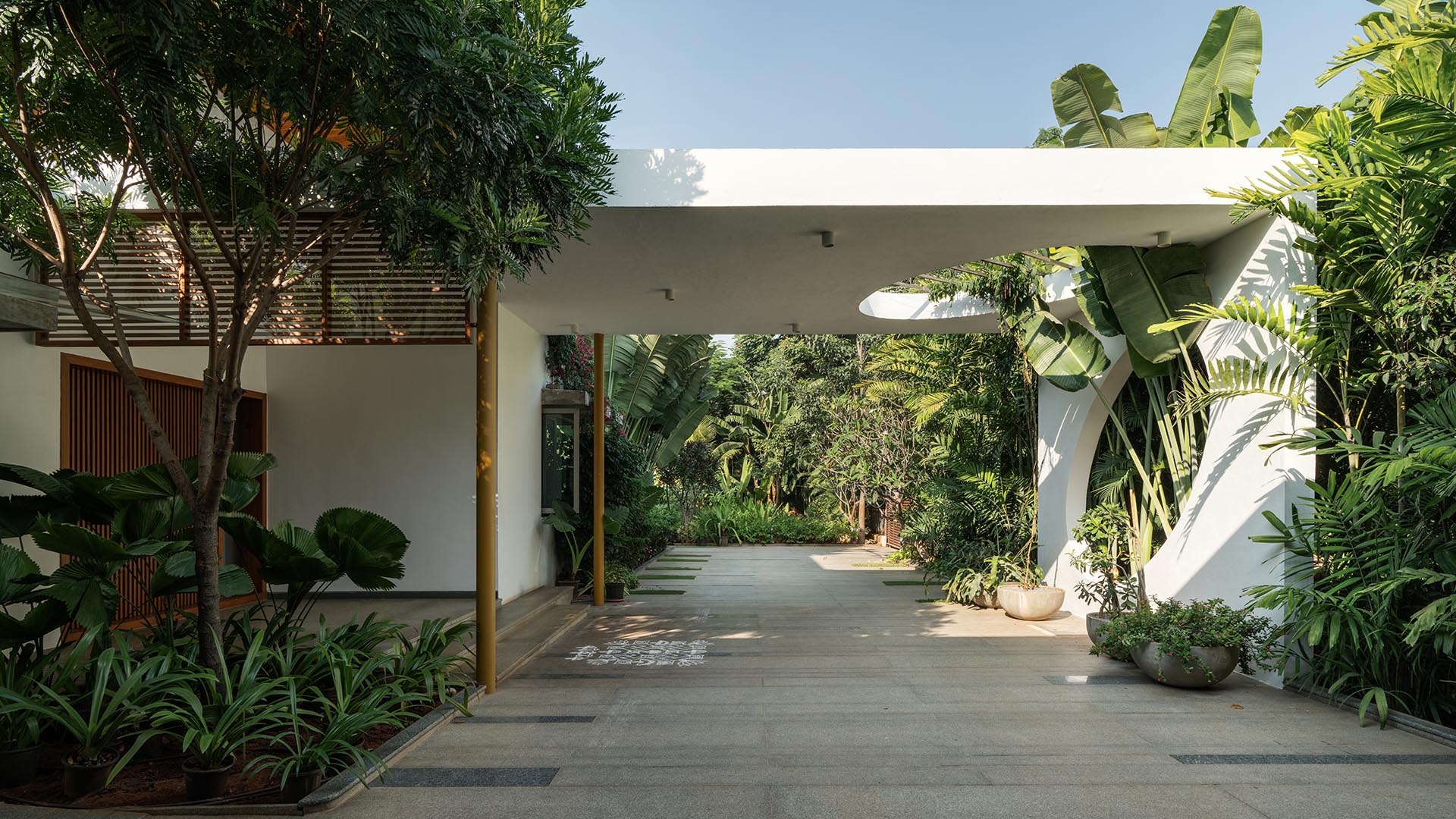
An invitation to linger in the verdant landscapes, to ponder if, in the oft-quoted fervour around Tropical Modernism today, do we risk losing where it came from and what it stands for? A way of life that does not stop at the edges but blooms in the interstices. Like the kolam at the threshold, created in the first light of the morning, inviting birds, defining an intangible boundary, nudging a temporal presence through the day, only to disappear by nightfall. A cyclical and symbiotic existence with the context, negotiated by
directing attention to the ineffable.
Read More : Real, rugged and imperfect in Navsari
No results found.