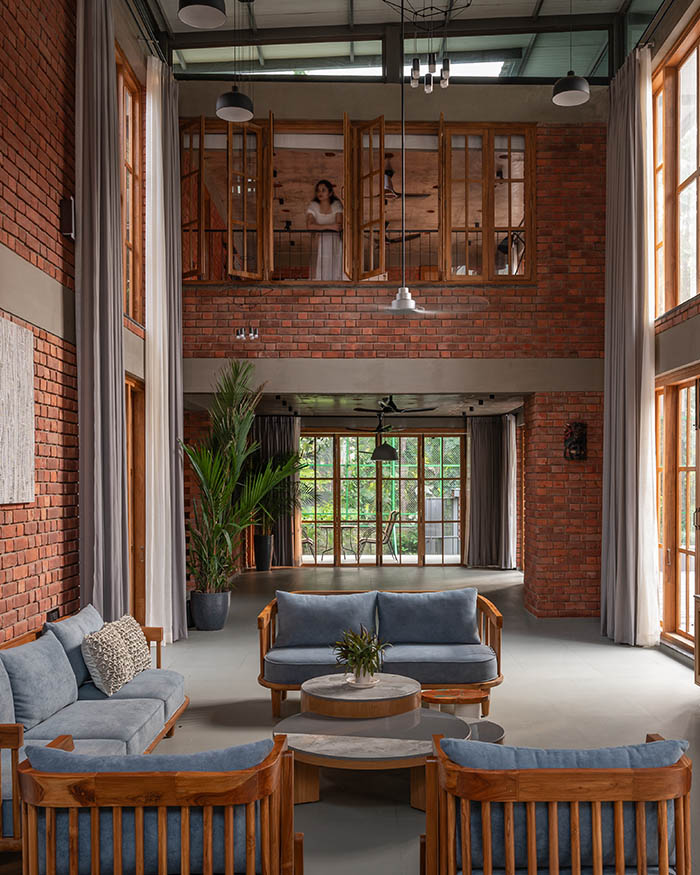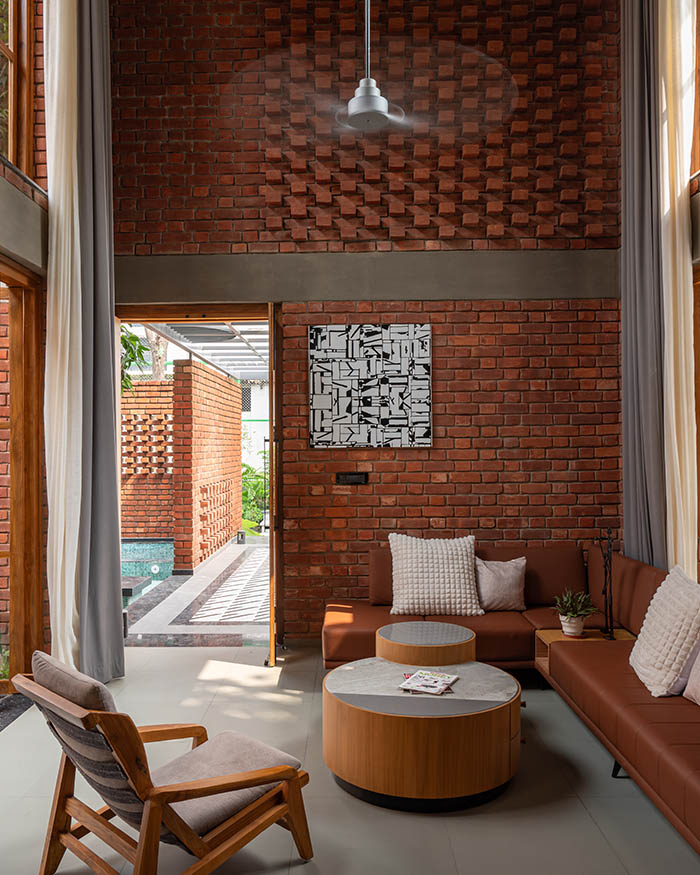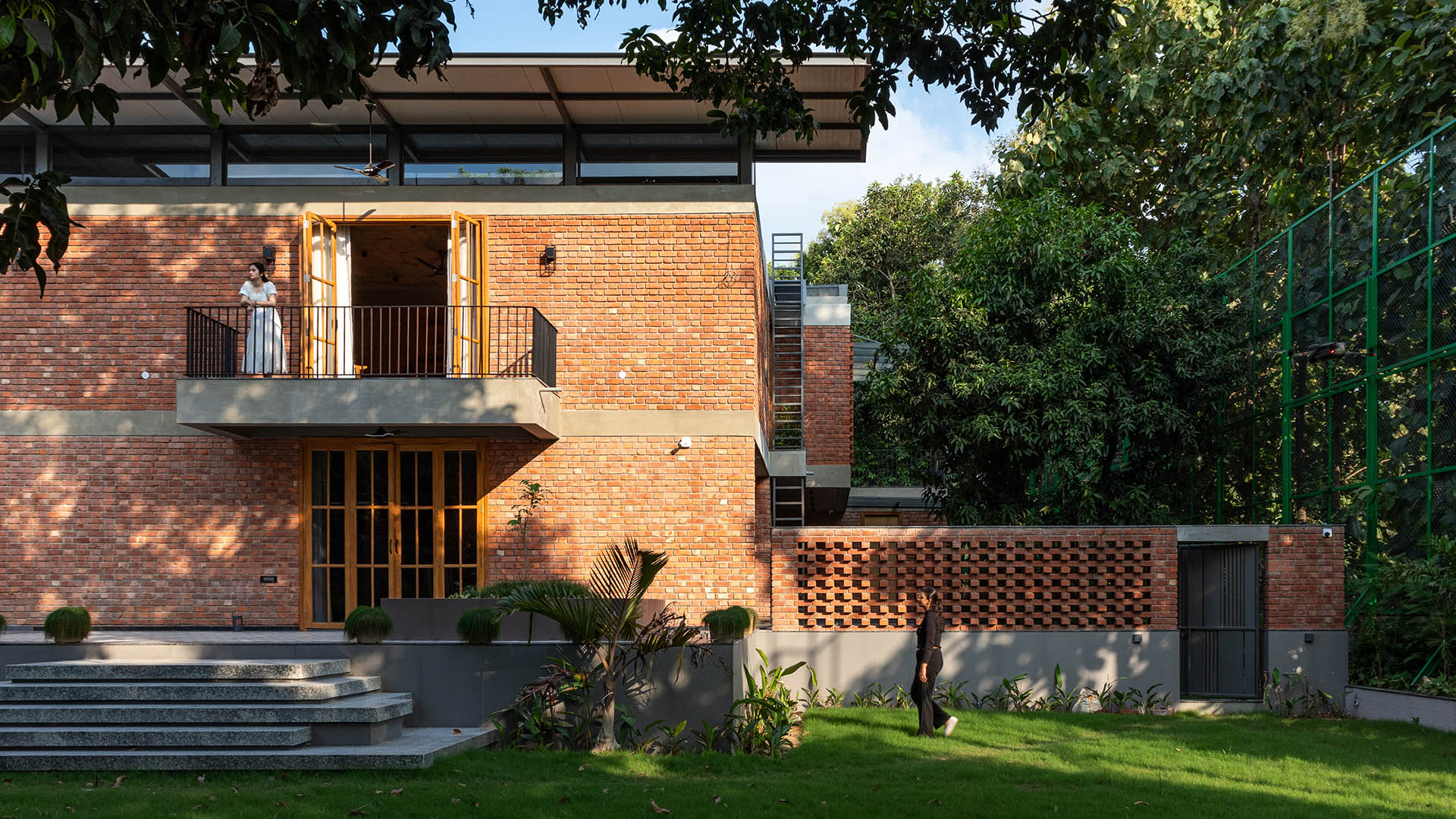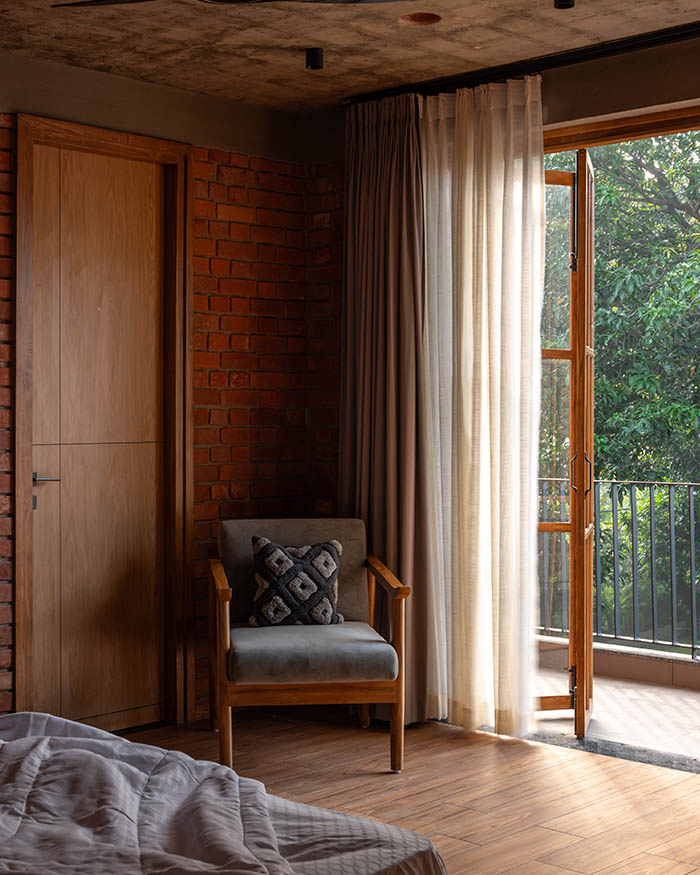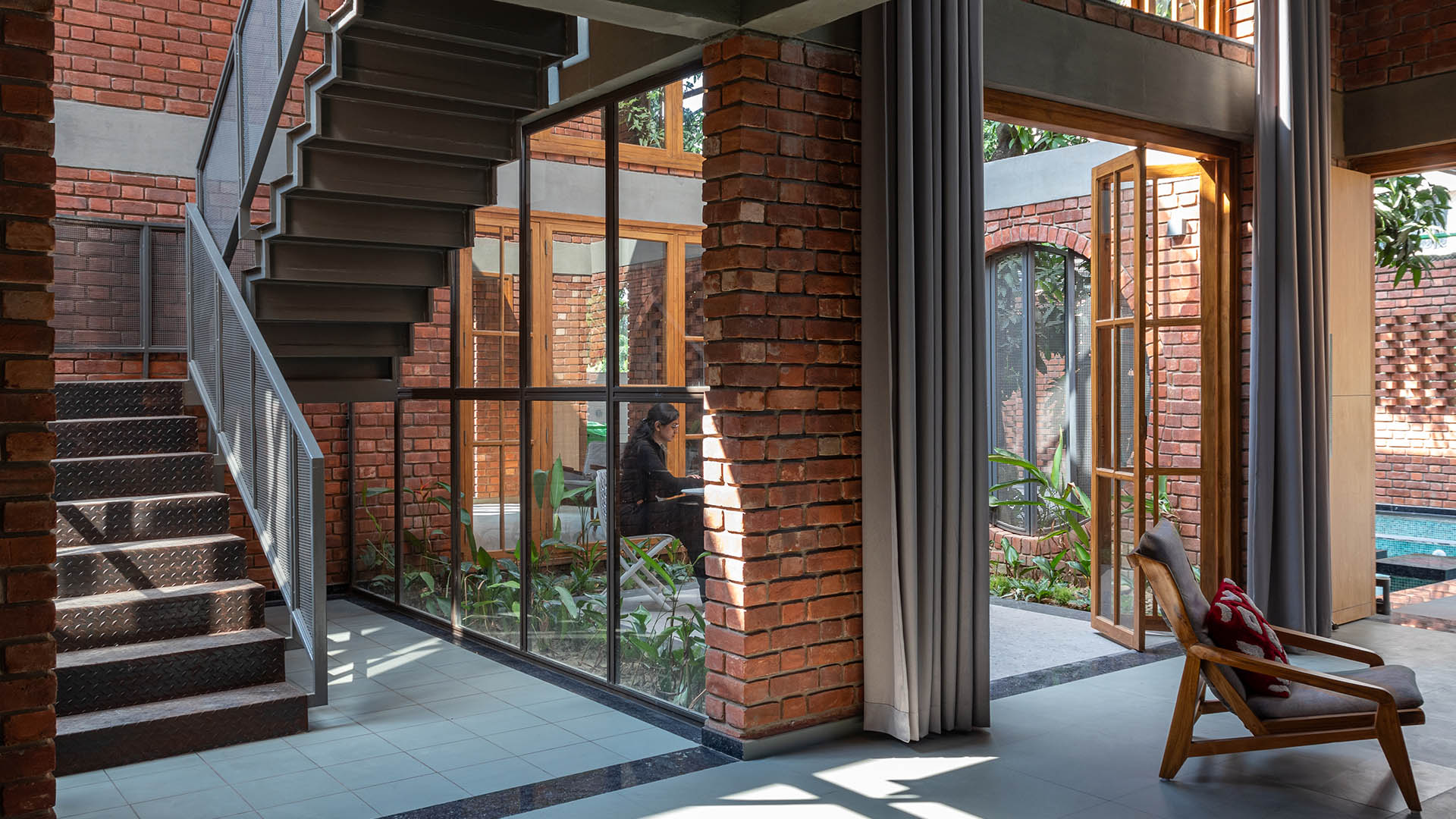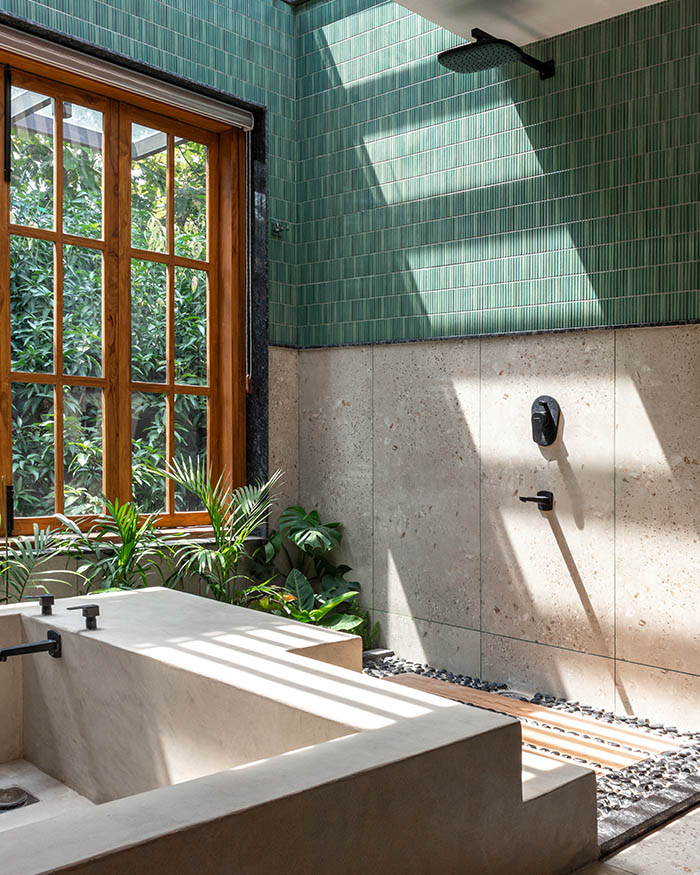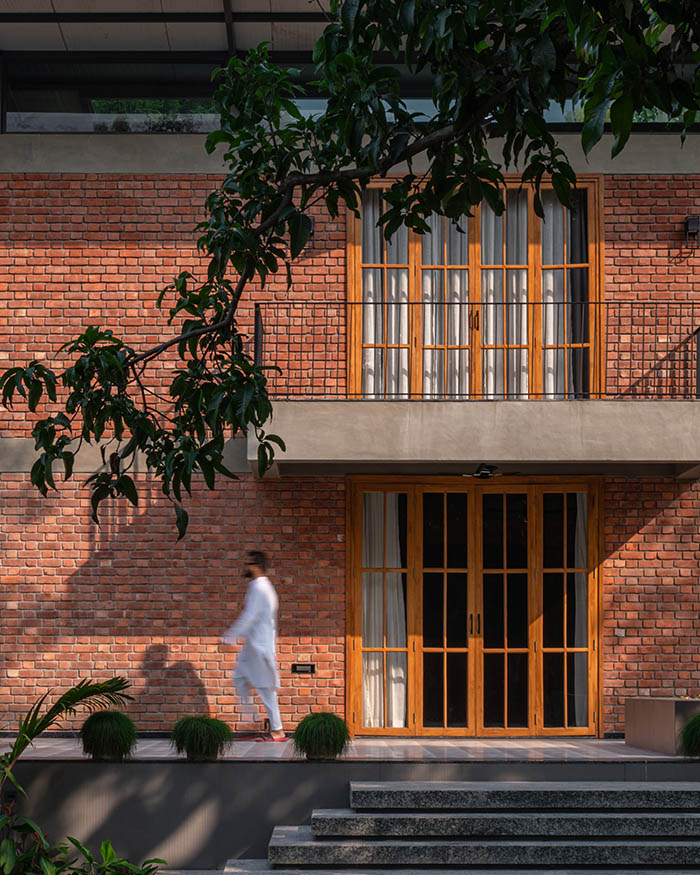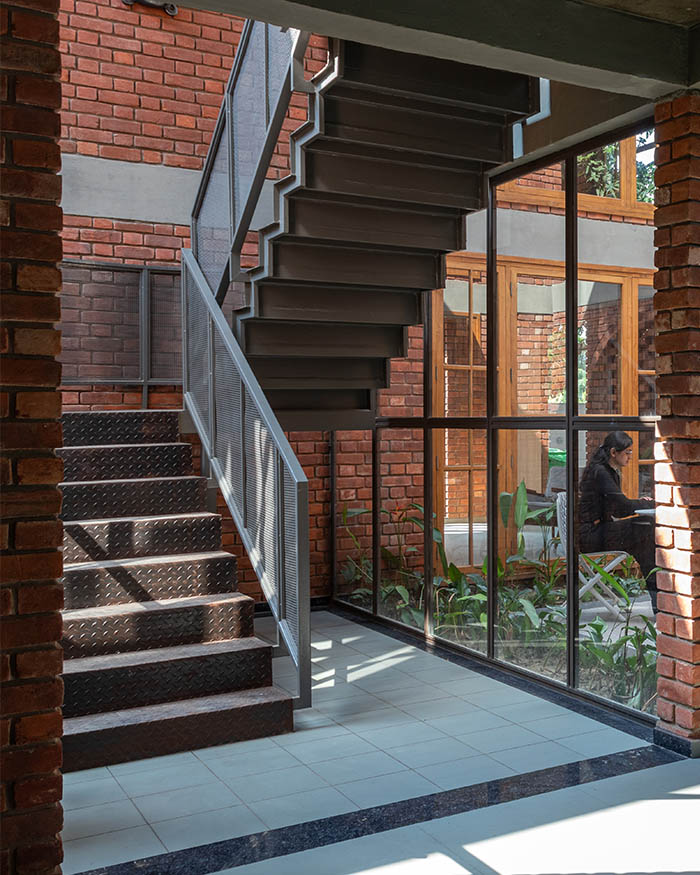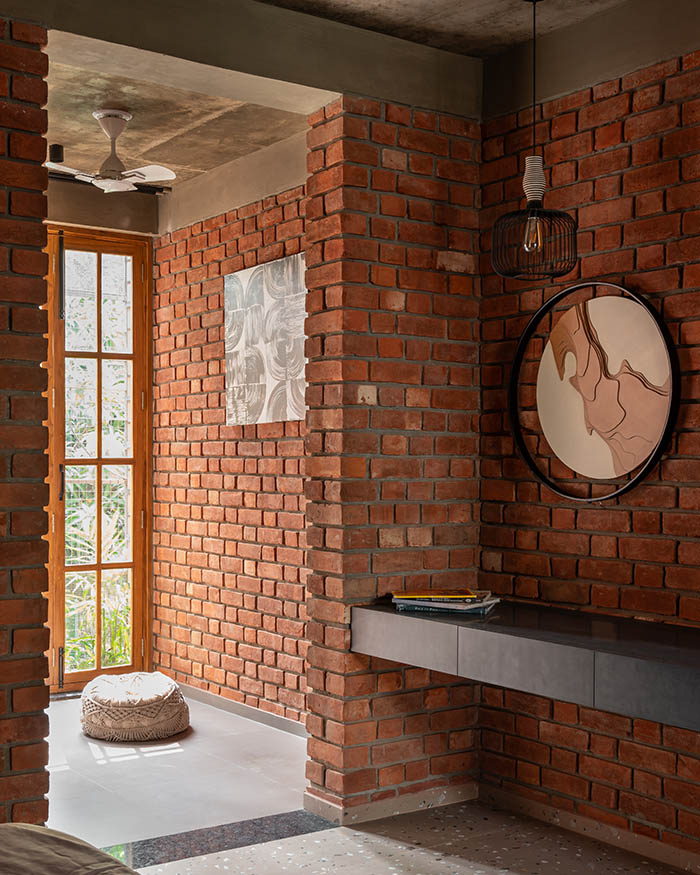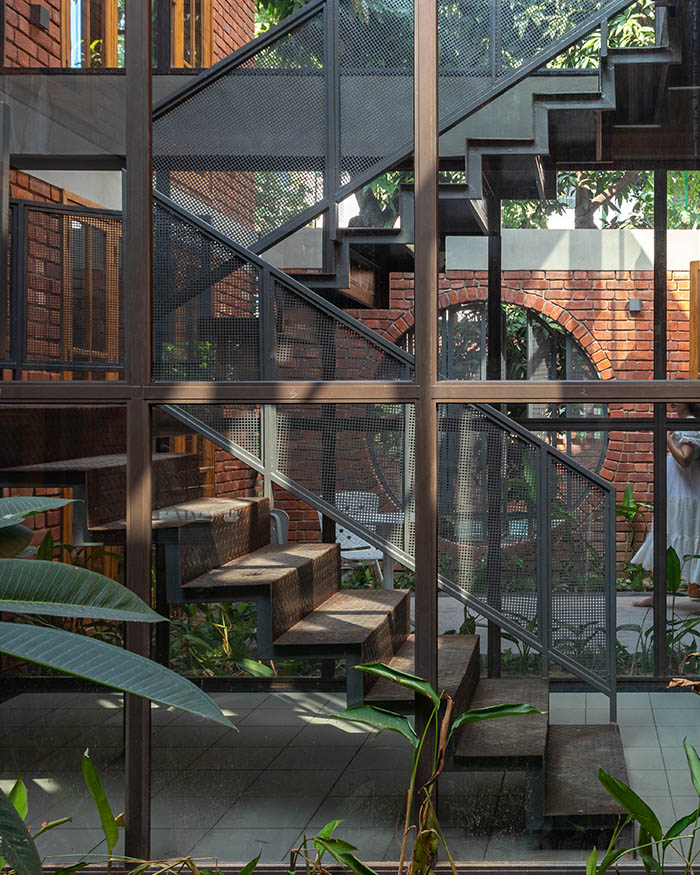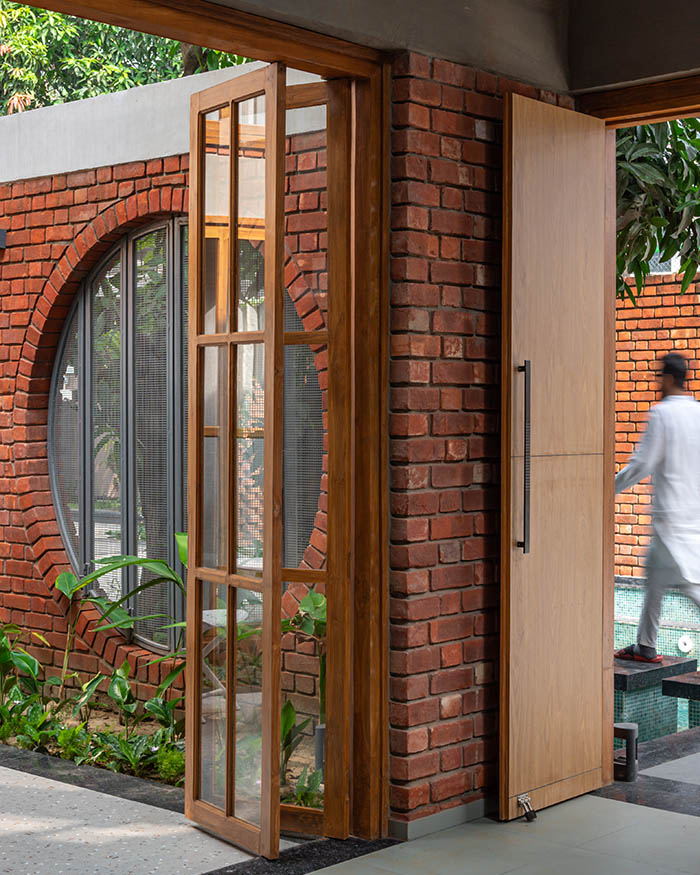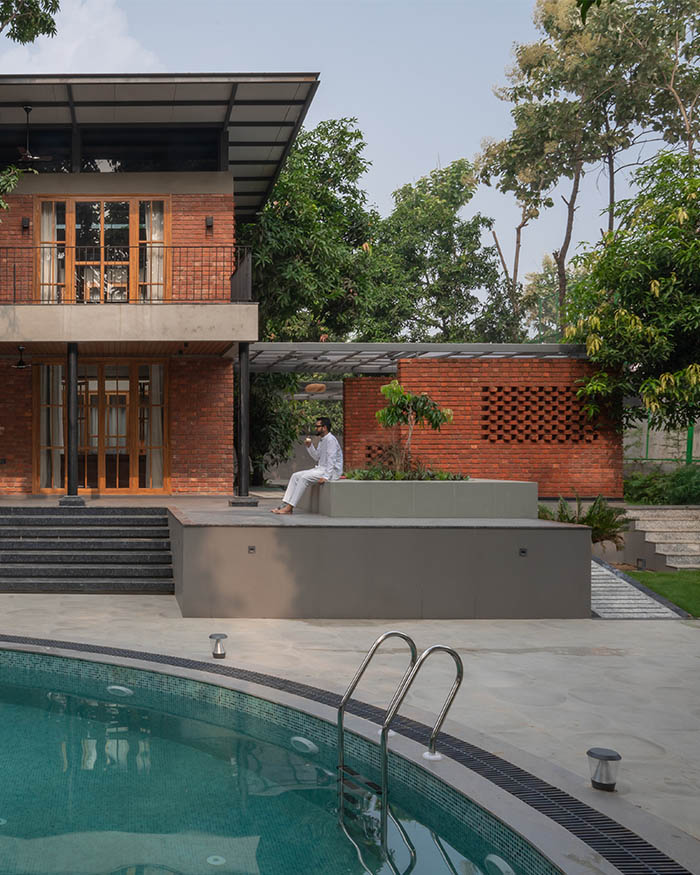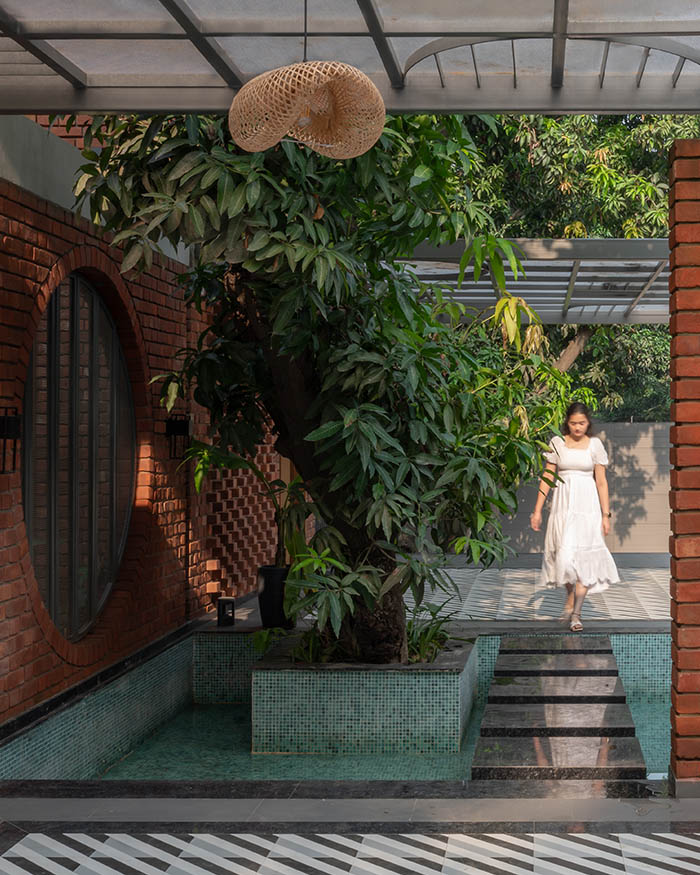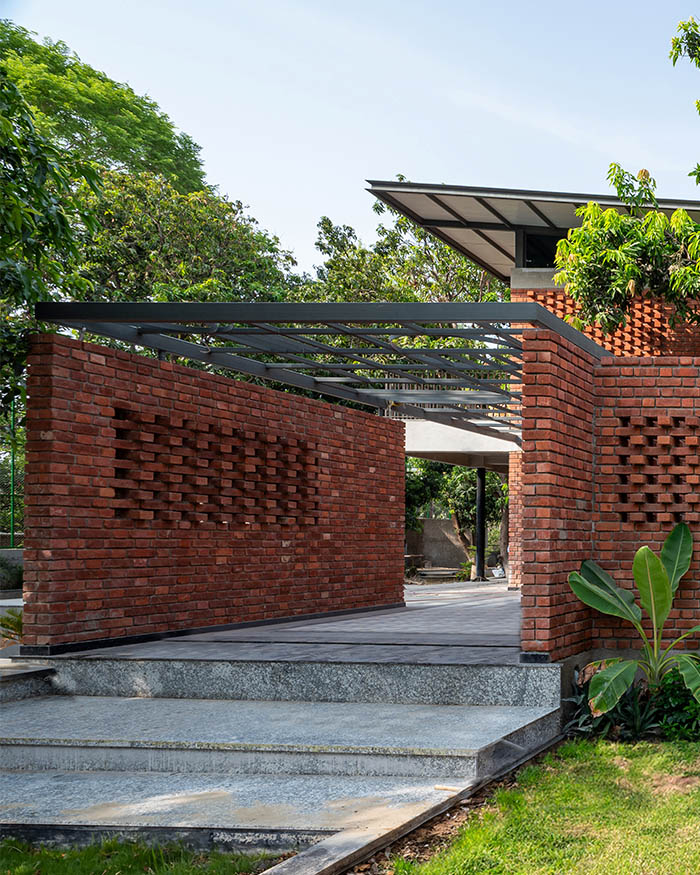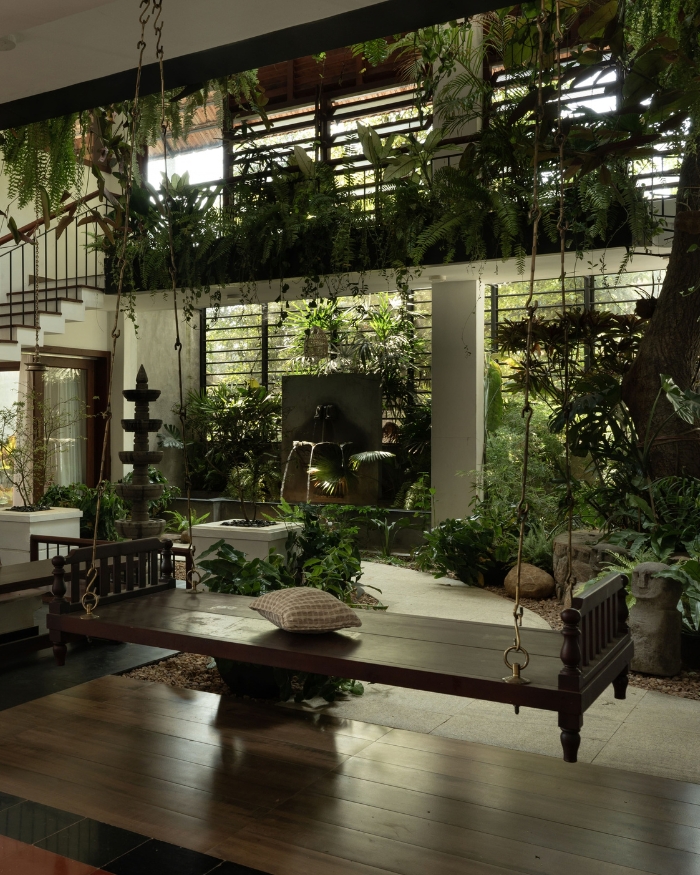
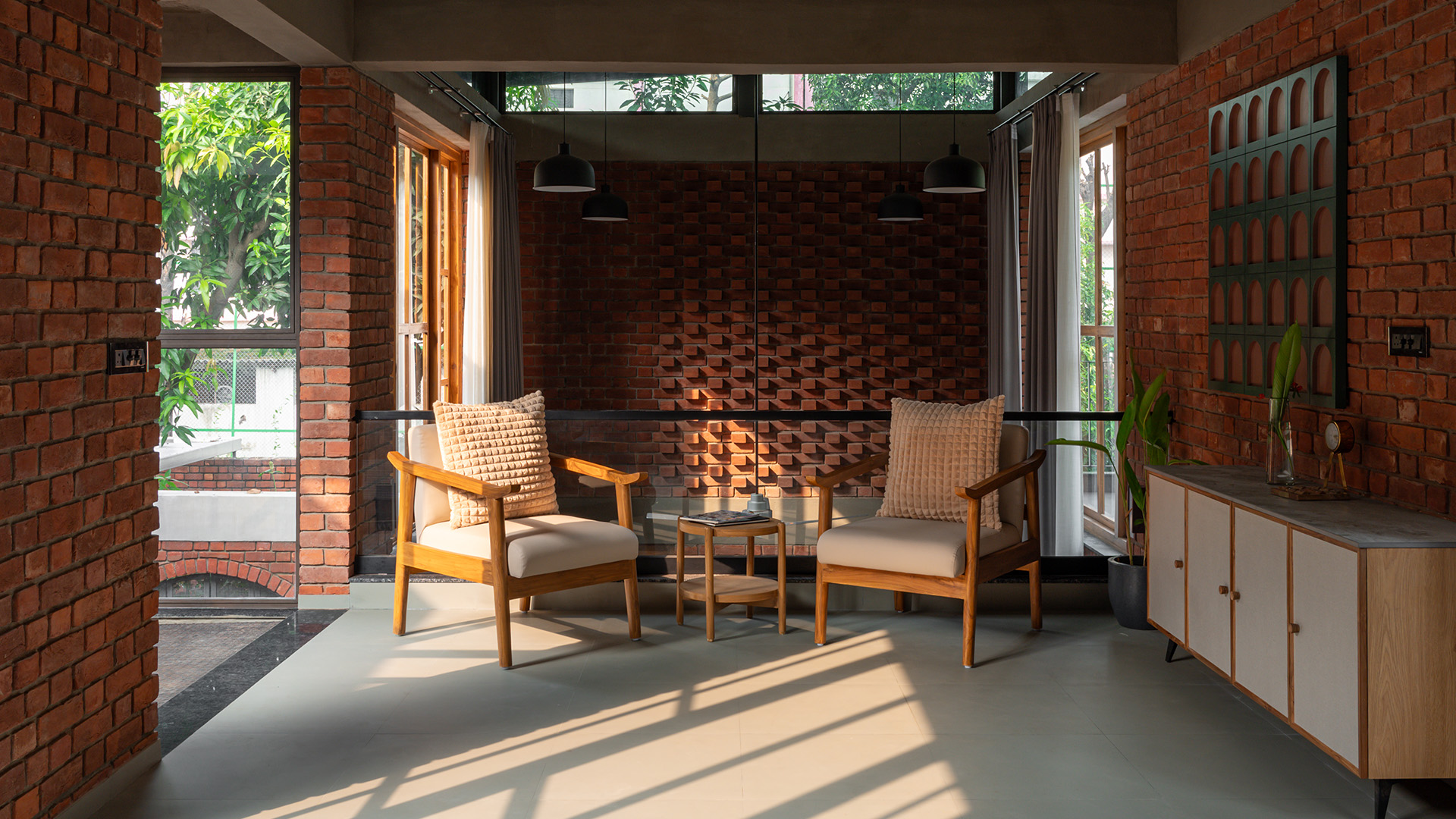
Its evident when an architect loves a place as much as the idea of building on it. The Gorakhpur farmhouse by Prakhar Ranjan of W5 Architects wears that affection lightly. Spread across 3,275 sq ft and hemmed in by a 20-year-old mango-teak orchard, this home negotiates with the land it’s built on. Every existing tree is left intact, shaping the plan rather than being shaped by it. This is a home that feels grown into place, an organic extension of its surroundings. Exposed red brick walls form the skeletal framework, left unclad, while double-height volumes allow light and air to move freely. There’s a deliberate slowness here: the kind that comes from letting wind decide circulation paths and daylight dictate the rhythm of a day.
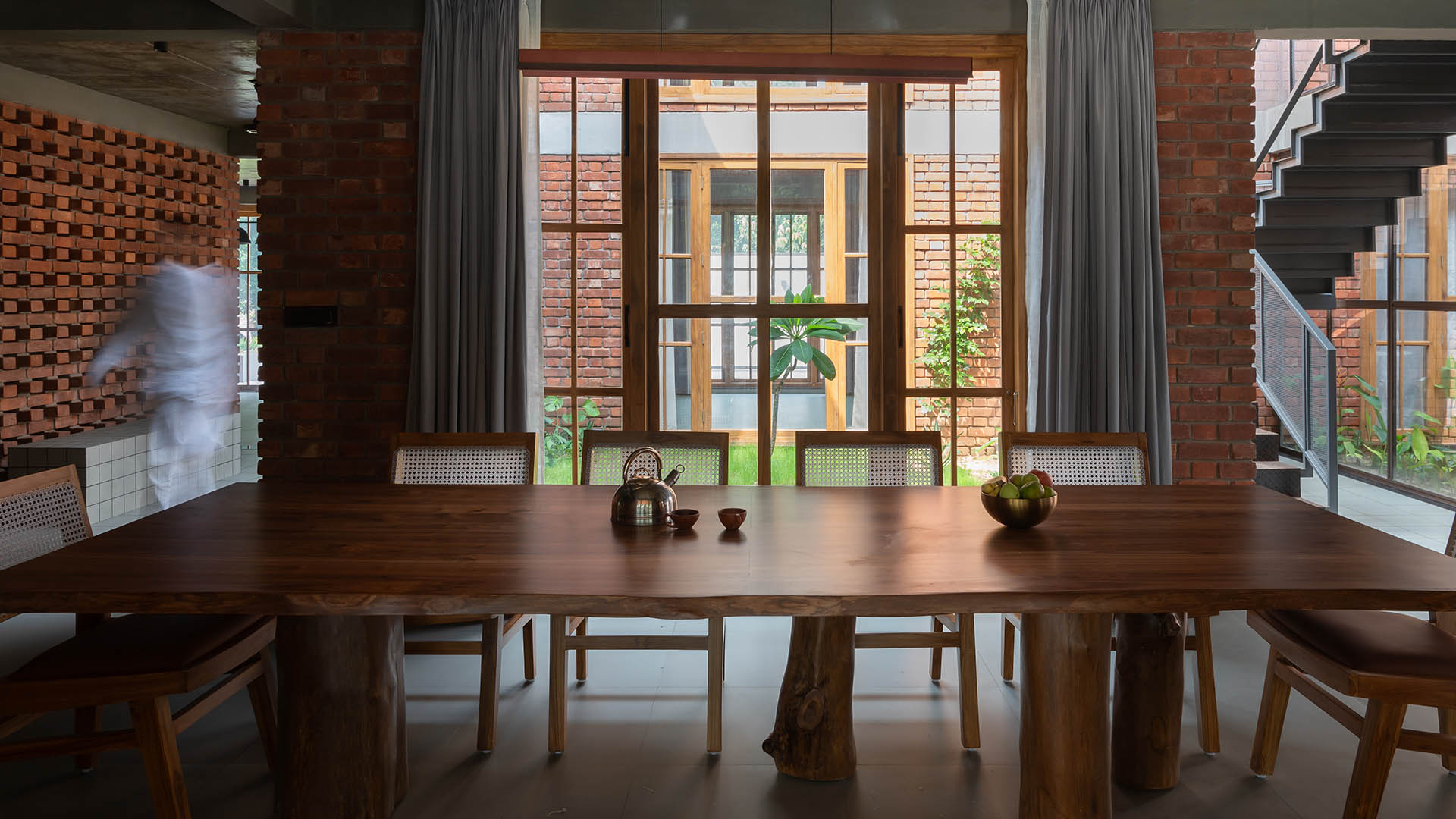
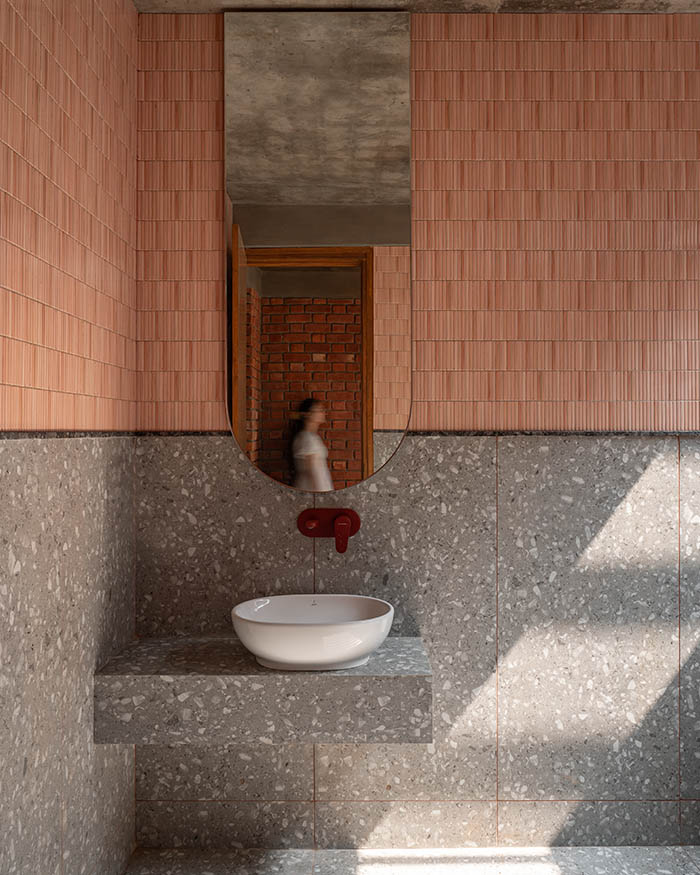
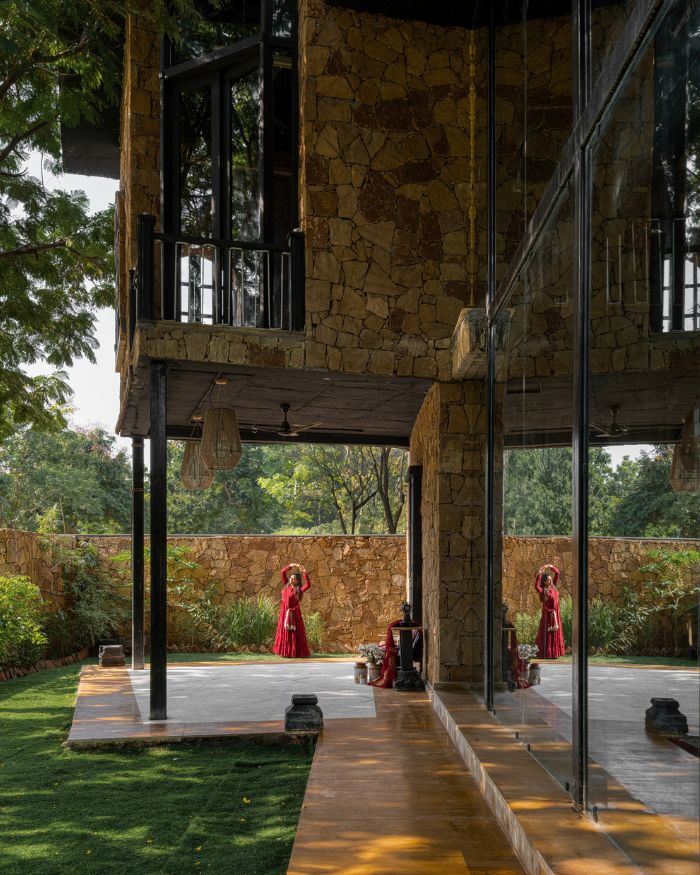
Each brick comes from a local kiln and carries the weight of where it’s from. Teakwood salvaged from the orchard has been reincarnated as doors, windows and furniture, hinting towards a sustainable practice. Inverted terracotta tiles line the ceilings, a nod to Gorakhpur’s vernacular craft while also reducing concrete and adding a warm, earthen tactility overhead. The home’s masonry was led by local women artisans, an almost understated detail that deepens the narrative of making. Outside, exposed brick facades rise from a simple green lawn, while stone cut-offs find second lives in amphitheatre walls and wood scraps reappear as wall-mounted artworks.
“Thematically, the project celebrates ideas of slowness, craftsmanship and porosity. Light and air are central to the experience of the home”
- Prakhar Ranjan, Principal Architect, W5 Architects