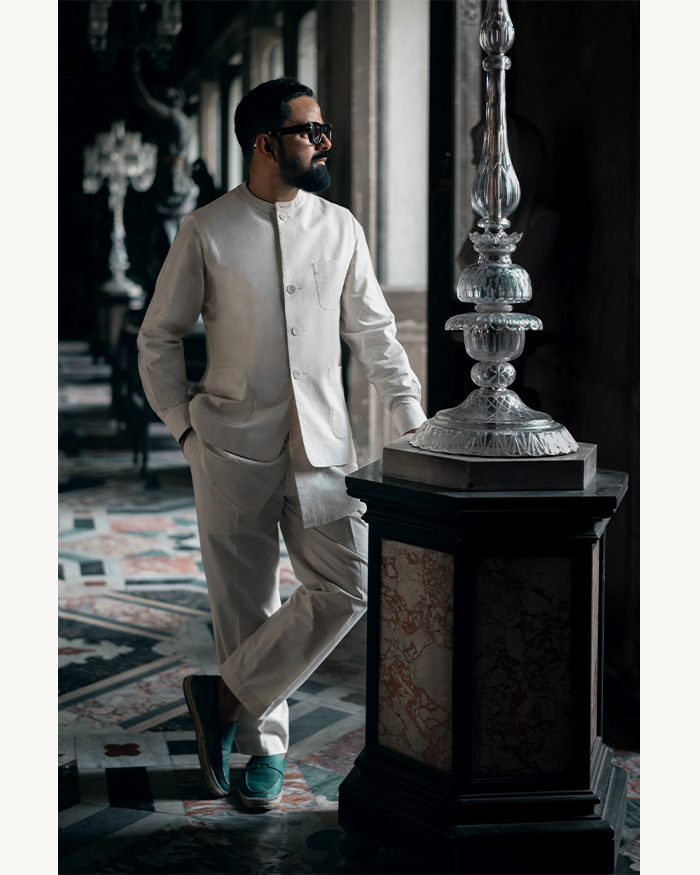
Anniversary issue: Mayank Mansingh Kaul

He writes about the human experience of textiles through assemblage, organising and art-making

BY

The idea of maximalism is often seen against minimalism. It is a binary that I reflect has deep biases, much like other such binaries which originate in West-centric approaches. But if you see how a massing with textiles takes place — whether in interiors or public spheres — not only in India but across Asia, Africa, and indeed many other parts of the world, we see how what we may perceive as minimalism has aspects of what we may perceive as maximalism, and the other way around. The Indian experience lies somewhere in between, and beyond, in the liminal spaces and interactions that take place not only in the relationship of objects, but in how they relate to the spaces they occupy and are occupied with. This apparent diversity creates a natural seamlessness of opposing and contrasting elements. We may also see this as some kind of balancing act, but it has its own logic and intelligence which is also beyond. I see what we refer to as such maximalist tendencies in the use of textiles then, as a great non-hierarchical way of assemblage, of organising, of art-making even, where the eye does not stop. One can reach a point of satiation, but there is always room for more! This is a lot like the Indian thali. Unlike a regulated system of courses in a Western meal, this offers someone eating the endless possibilities of discovering their own permutations and combinations based on individual preferences. We may think of this as excess, but I don’t see this in the wasteful way that we often view decadence in.

“It is also so when we choose how to use such fabric: to adorn, to decorate is an innately human impulse. It offers a way to communicate, to make things our own. It is also a way to venerate, to make something special, to give it ascribed meanings”
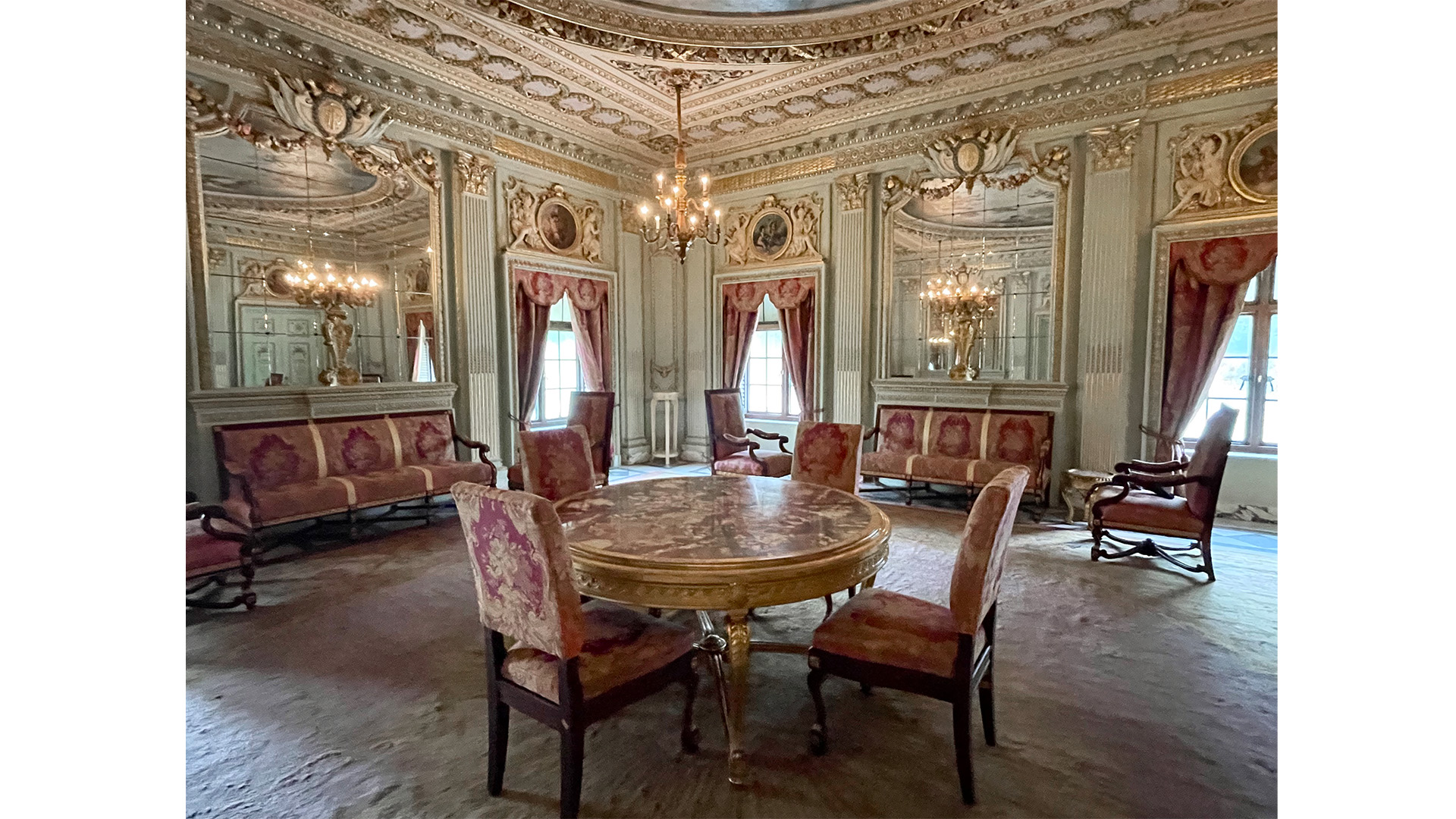
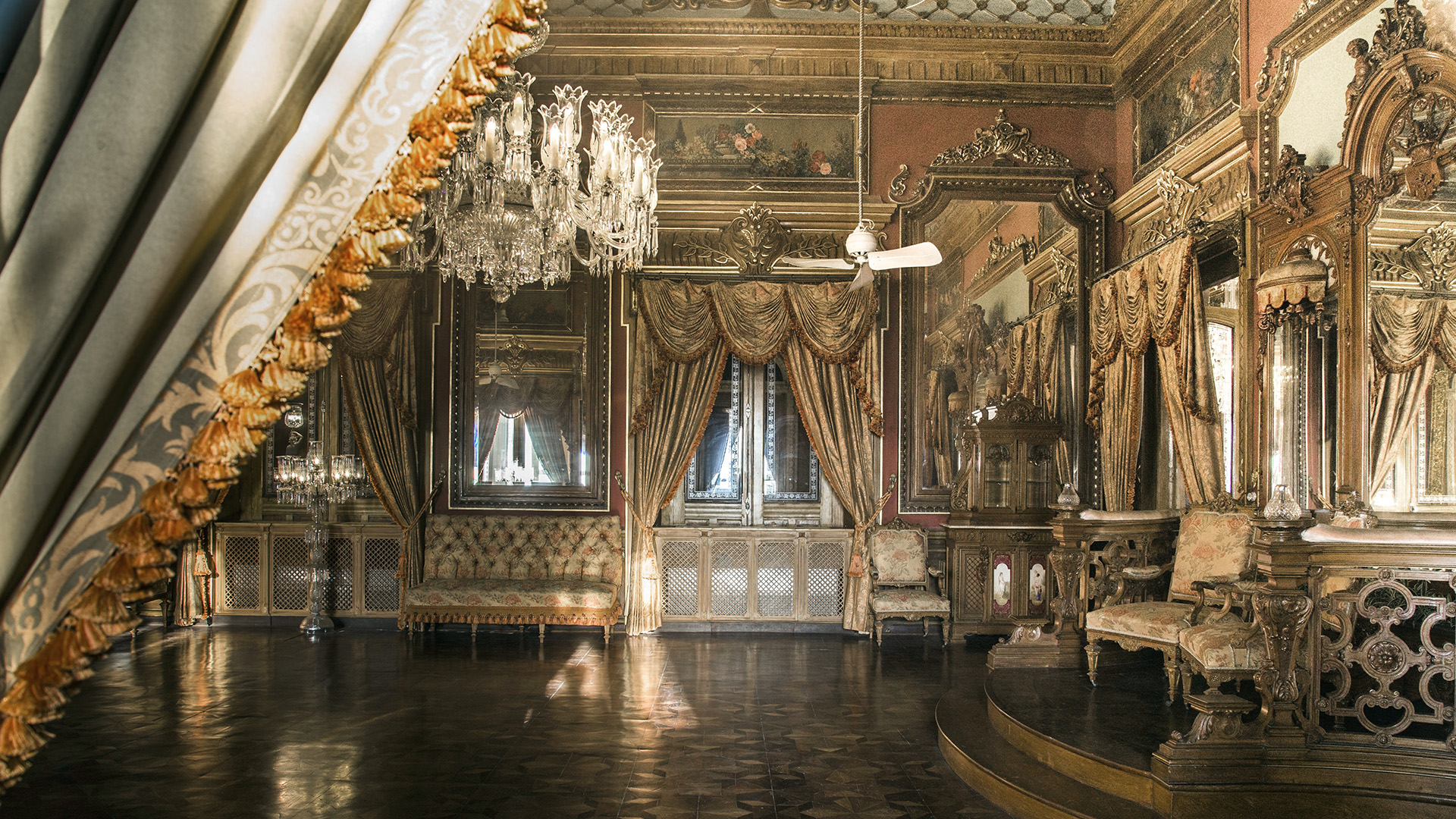
Custom woven fabric for Lalbagh Palace where each weave and design was meticulously documented by Abha Narain Lambah Associates and perfectly replicated by M/s Chrysaalis Silks Pvt Ltd for the project under the Government of Madhya Pradesh and World Monuments Fund India collaboration project supported by Indigo Airlines Foundation. Photograph courtesy Kruti Garg for Abha Narain Lambah Associates

It is the same when we think of notions of functionalism. We see this as a matter of physical usage, but who is to say that how something makes us feel aesthetically or emotionally is not a function of our human experience? And yes, textiles in their primary ability to offer us protection, a second skin, offer us such material comfort but are also a source of multi-sensorial wellbeing. It is difficult to pin this down in words, but cloth offers us something elemental, for it brings together the heart, mind and the body in both its making and applications in surprising ways. And perhaps therefore, we cannot get enough of it.

So, we may venture out to the local bazaar to find a few metres of fabric, but this experience of purchase is never complete if we do not encounter multiple choices. Going over them in one shop, we find ourselves asking — are there other options? Invariably, a thaan would have just arrived from a source just then, or some other yardages lying in storage forgotten for a while will surface. We may move through markets with several stores selling similar things, but our eyes will eventually be trained to see through the bales of fabrics and display gimmicks to settle on exactly what we want or are looking for. The satisfaction of this purchase is guaranteed by the best price offered, sure, but also from the delight of a known special chai, chaat or edible treat in the neighbourhood!

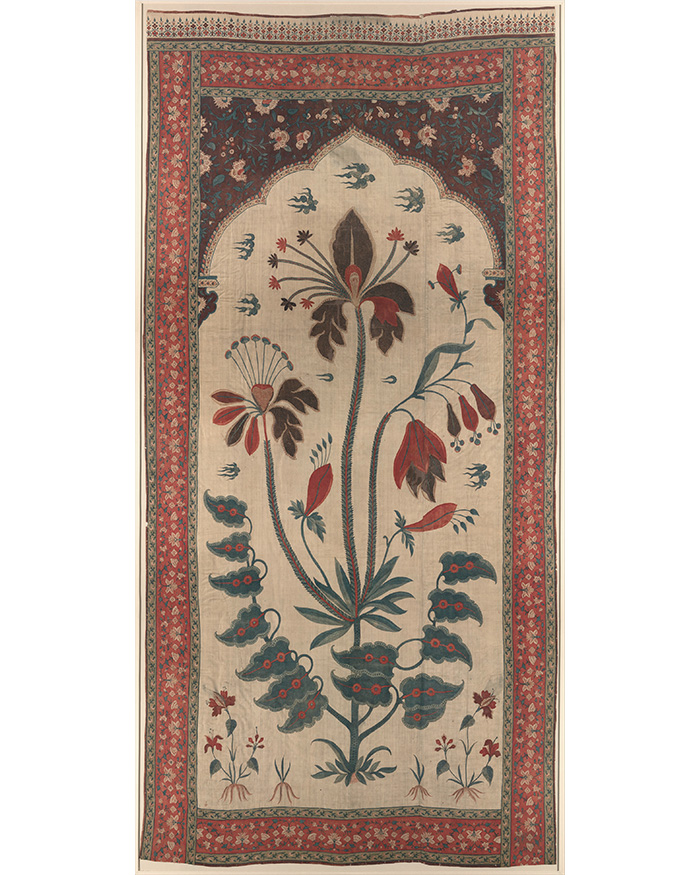
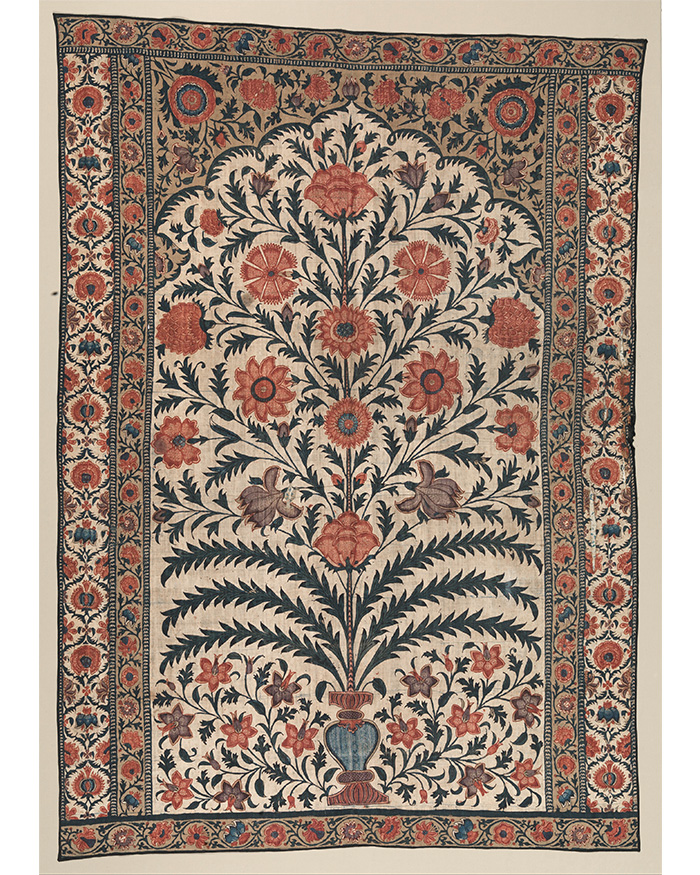
Panel from a Tent Lining (Qanat) in India, dating to the 17th century. Rogers Fund, 1931; Image courtesy of The Metropolitan Museum of Art, New York
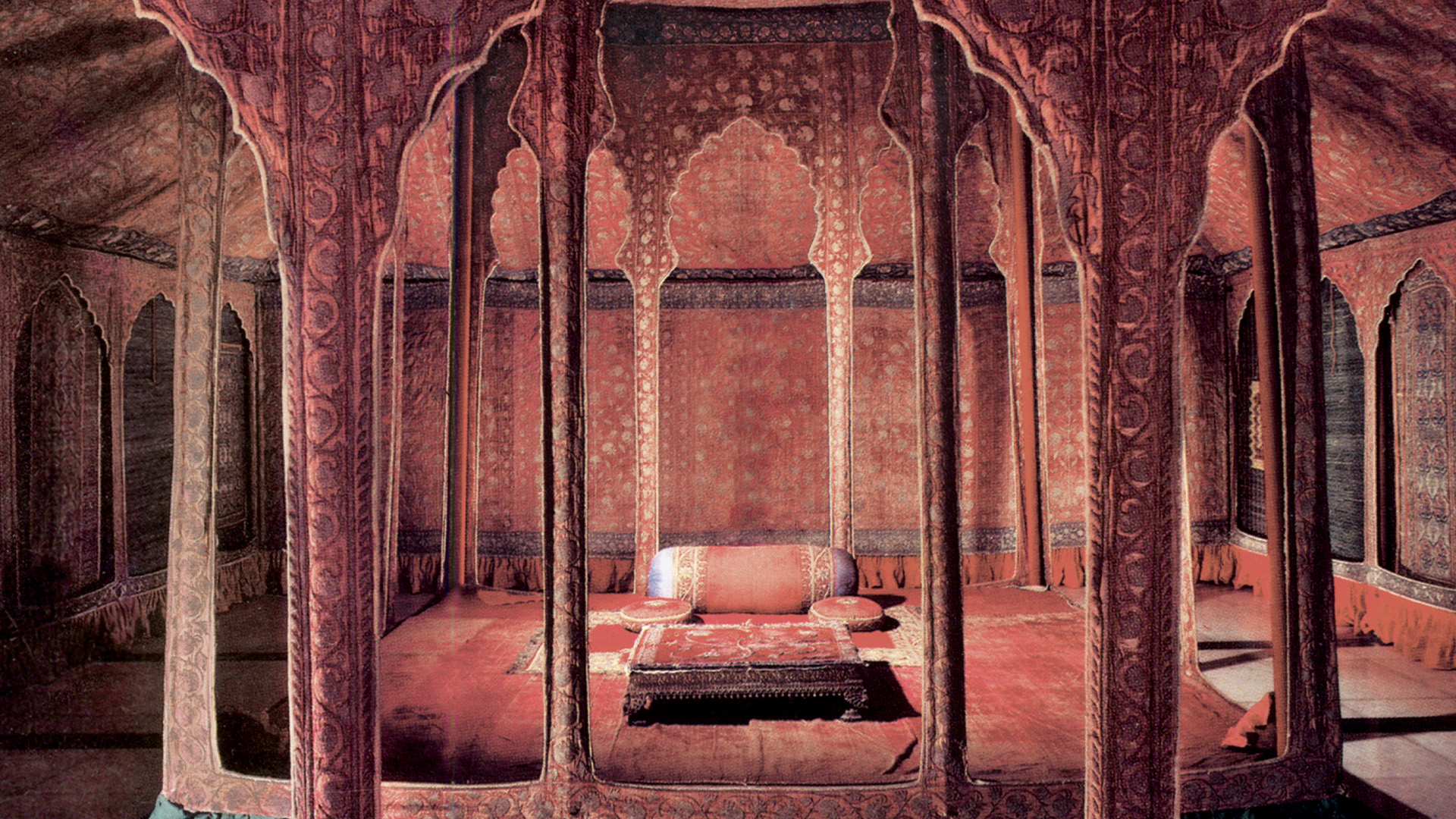
This kanat, worked in silk velvet and silver-gilt thread, formed the richly layered walls of the Lal Dera, the only surviving Mughal tent ensemble in the world; Photograph courtesy Mehrangarh Museum Trust, Jodhpur, Rajasthan, India, and His Highness Maharaja Gaj Singh of Jodhpur

It is also the case when we choose how to use such fabric: to adorn, to decorate is an innately human impulse. It offers a way to communicate, to make things our own. It is also a way to venerate, to make something special, to give it ascribed meanings. In this way, it is a manner of expression which is known to go back further than settled civilisation in history, when humans began to come together to form community, to gather in groups, to cultivate, and to build ways of living together. In this sense textiles have been a form of collective knowledge, in which ideas of coding, transmission and customs manifest as forms of what we call decoration, ornamentation and embellishment.

Isn’t it interesting then, that textiles don’t often feature in the study and histories of art or architecture itself? From the earliest of times, we know of cloth acting not only as architecture, recorded through creations like travelling tents, but also as a tool for extending the use of buildings. Let’s take bazaars across India even now, for instance. Awnings which cover the entrance to shops on narrow lanes often provide a means to block out the sun’s harshness in summers, as much as they protect against the elements in the monsoon. In monuments dating centuries back, we still see metal rings and such devices along the walls of their exteriors and interiors which are testimony to how blinds, curtains and canopies would be attached to create semi closed spaces.

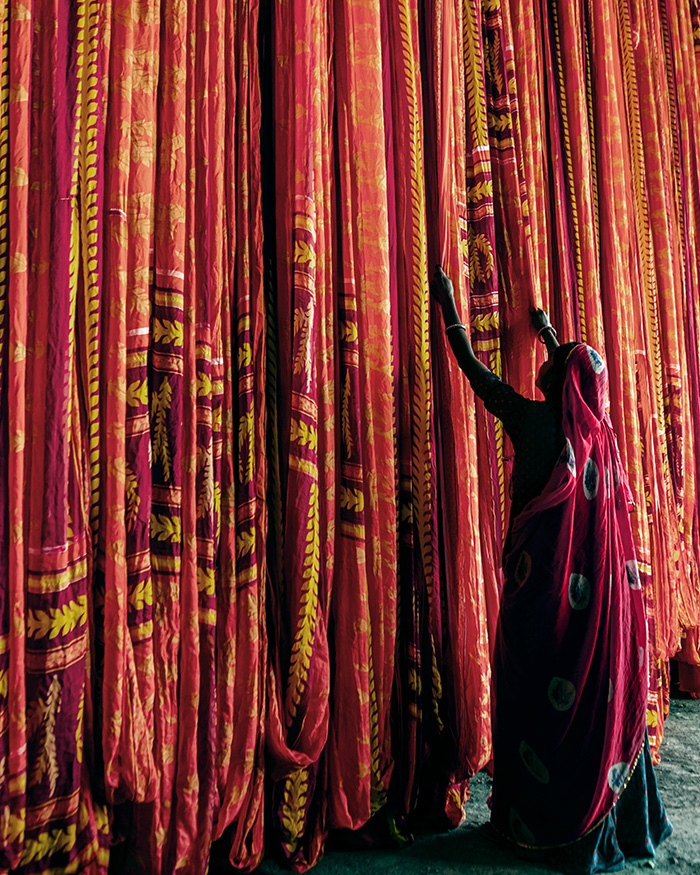
Textiles create soft walls that momentarily reimagine space where repetition and colour accumulate into a kind of architectural maximalism; Photograph by hadynyah
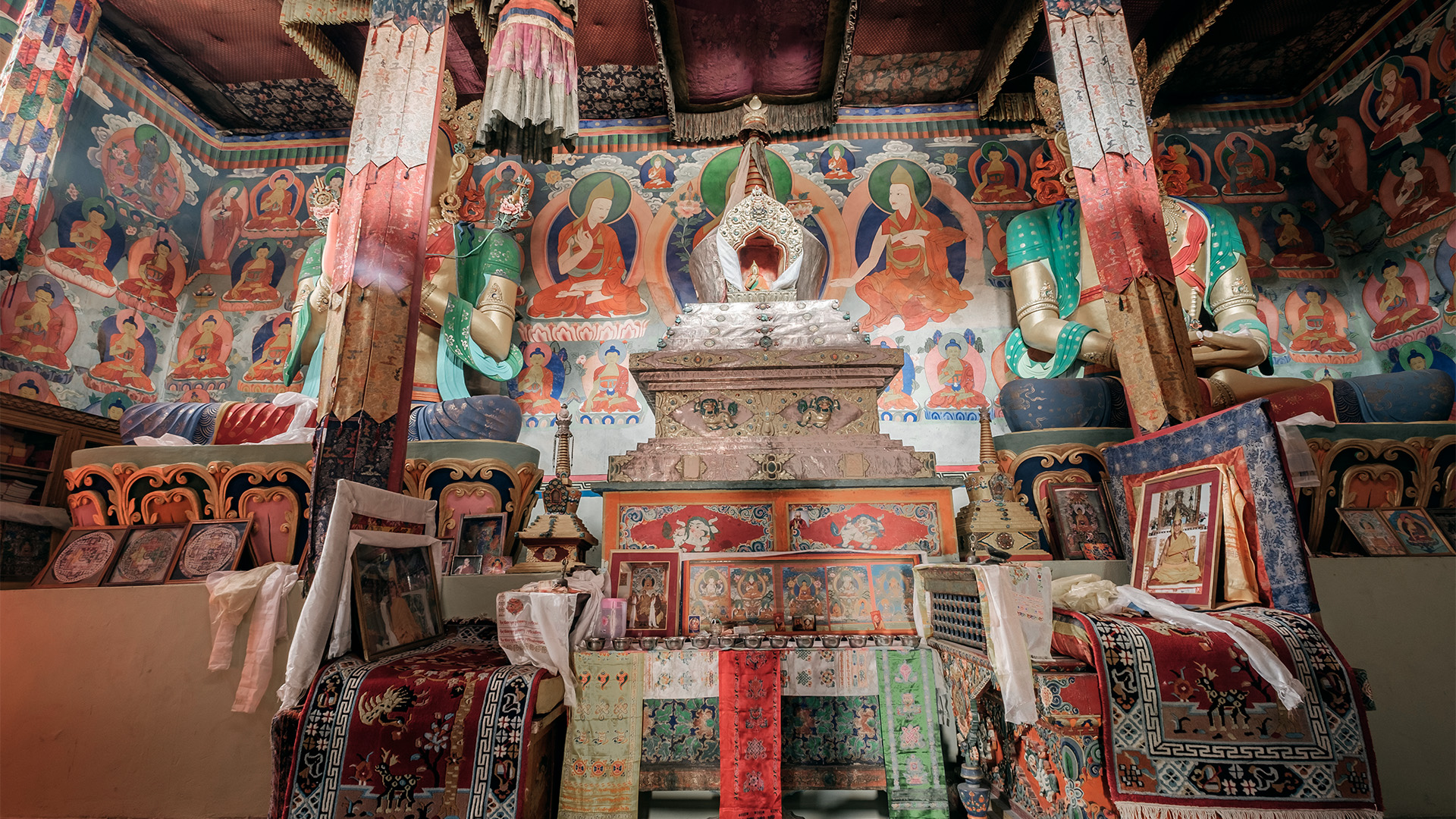
Samtanling Monastery, Sumer village, Ladakh; Photograph by designbydx

These acted both as a way to soften the lived experience of architecture from the inside, but also as a way to expand on the outside, accommodating an increase in the number of people in open spaces. This ability of fabric to create temporary spaces extended to modifications required with changing seasons as well. Both luxury and relatively modest interiors were often laden with fabrics — from floor coverings, drapes and curtains, to permanent and temporary furnishings. Across India, objects and electronic gadgets are often kept in their own custom covers made from cloth that itself becomes a conscious, decorative element. Stacks of cotton mattresses and durries are kept ready for unexpected guests who may pass by, and ask for a night of rest. As often as they expand to accommodate a large number of family members in small domestic spaces. Such uses reflect the versatility in ways of living, as textiles are quick to adapt and improvise as per our needs: in most parts of our country we have some traditions of quilting which make for furnishings, like kantha, kheta or gudadis, which are made with used sarees. In Rajasthan, the quintessential jajam is not just a floor covering. Extras are brought out suddenly when the need arises, creating a surface for a group to gather. In this way, it also becomes a metaphor for the community, for social interactions and gatherings.

It is seen in how we dress as well, isn’t it? We layer with fabric not just for physical protection but to express ourselves and to create meanings — for ourselves as much as for others. We dress as acts of self-love, adoration and adornment, signalling individualisation or even to belong, to relate to or to form our own affiliations… In the past such layering and massing of clothing may have conveyed status and wealth. But it also offered the chance to move between roles and identities with ease.

Panel from a Tent Lining (Qanat) from Burhanpur dating to 1725–50. Purchase, Friends of Islamic Art Gifts, 2011; Image courtesy of The Metropolitan Museum of Art, New York
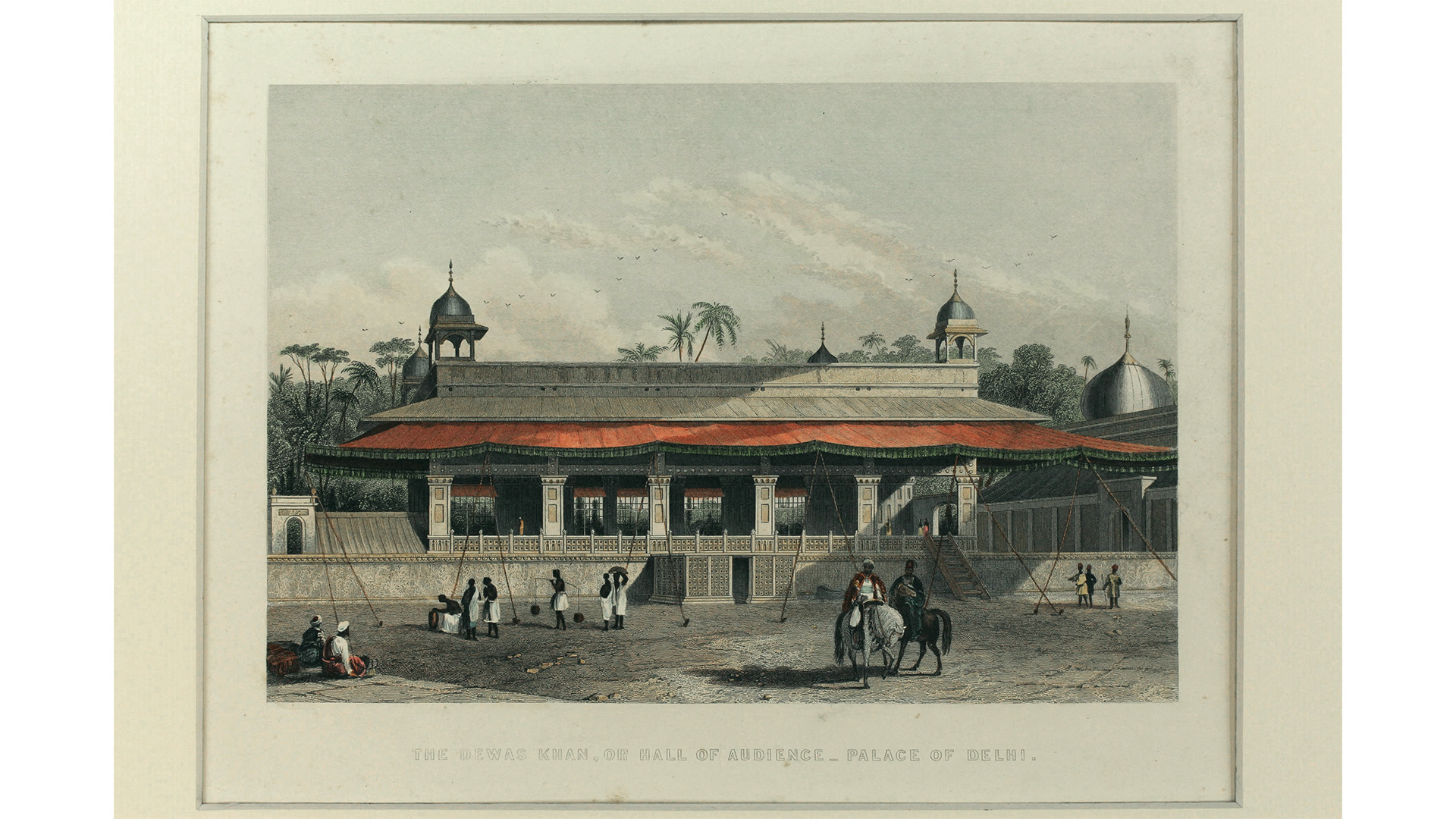
The Dewas Khan, or Hall of Audience, Palace of Delhi (Diwan-e Khas, Red Fort, Delhi), 1858, Unidentified Artist, Hand-coloured engraving © Sarmaya Arts Foundation. (2015.3.10)

As the world dresses increasingly the same, we may find in such expressive qualities of cloth a way to also resist the global tendencies for uniformity and reducing complexity to the essential. Offering such resistance is where the role of craft lies. While it exists in such a variety and spectrum of definitions and meanings across the world, textile’s diversity needs to be acknowledged. In my view it suggests the possibility of something handmade which offers a creative, material and cultural possibility which cannot be replicated by the machine. At a time when so much of the world we live in is fast mechanising and digitising, we have to think of handmade textiles as a means to bring the humane together in a way that surpasses the affordances of artificial intelligence. Many Indians are still denied participation in such technologies, and the handmade continues to employ a number of people unparalleled on a global scale, giving it enormous economic and political implications. But it is in our ability to shape society, creativity and culture that we must find its more fundamental expression.

Read more: How GV Sanjay Reddy is driven by responsibility and cultural ambition

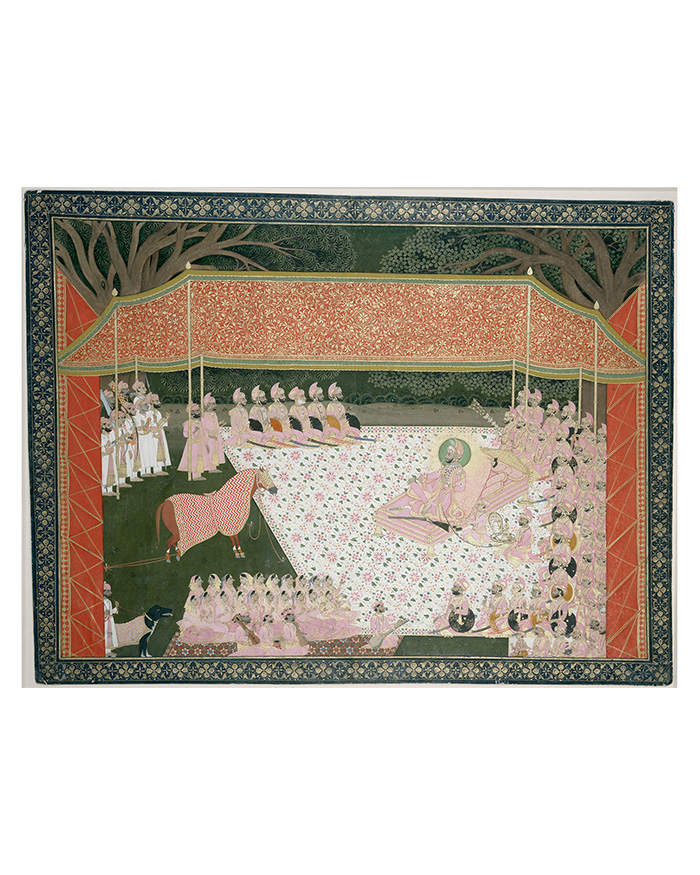
Maharana Sarup Singh Inspects a Prize Stallion by artists Tara (Indian, active 1836–1870). Cynthia Hazen Polsky and Leon B. Polsky Fund, 2001; Image courtesy of The Metropolitan Museum of Art, New York
SHARE THIS ARTICLE

You May Also Like

Watch

No results found.

Search
Close this search box.