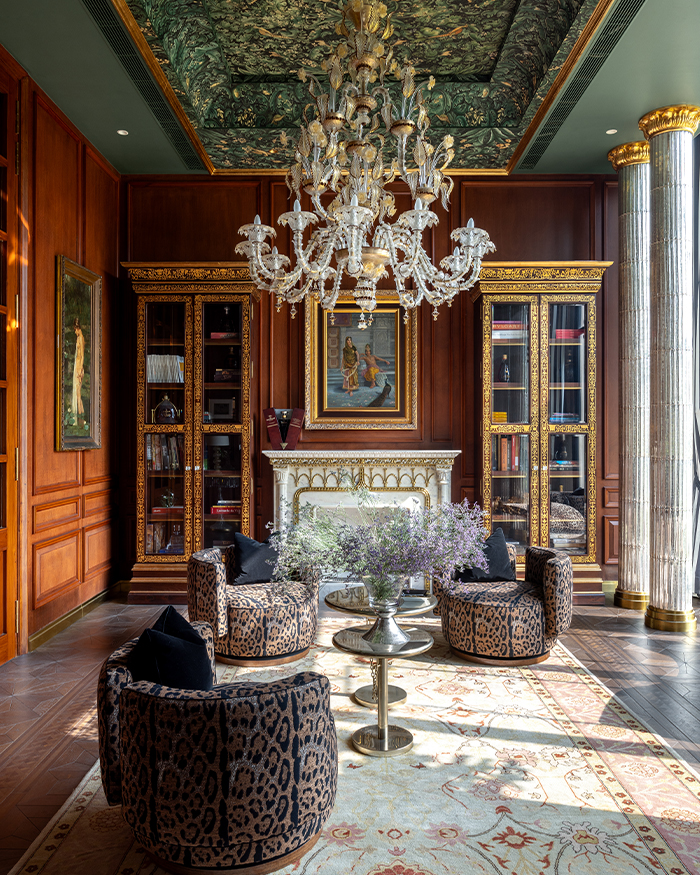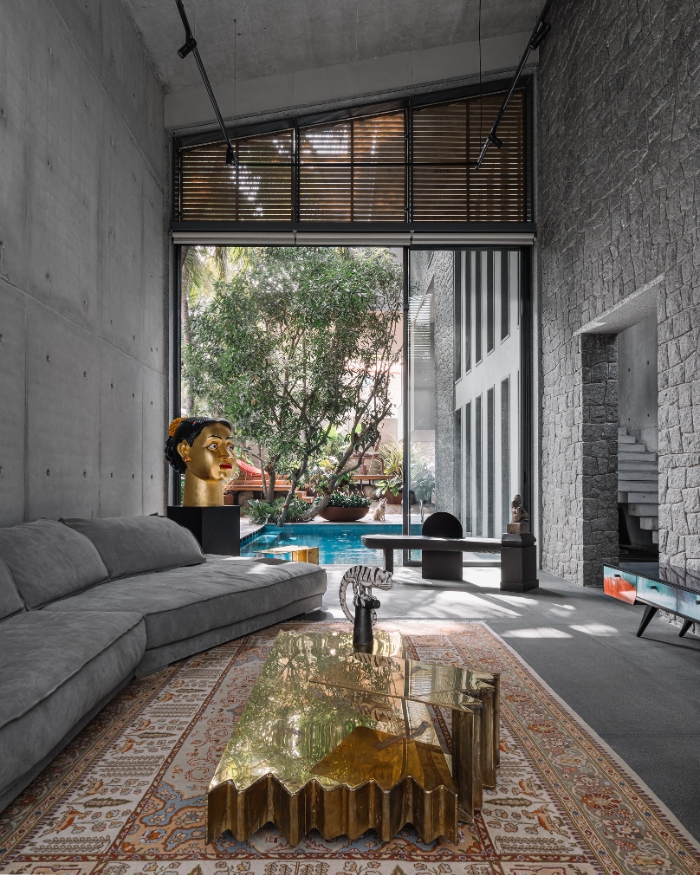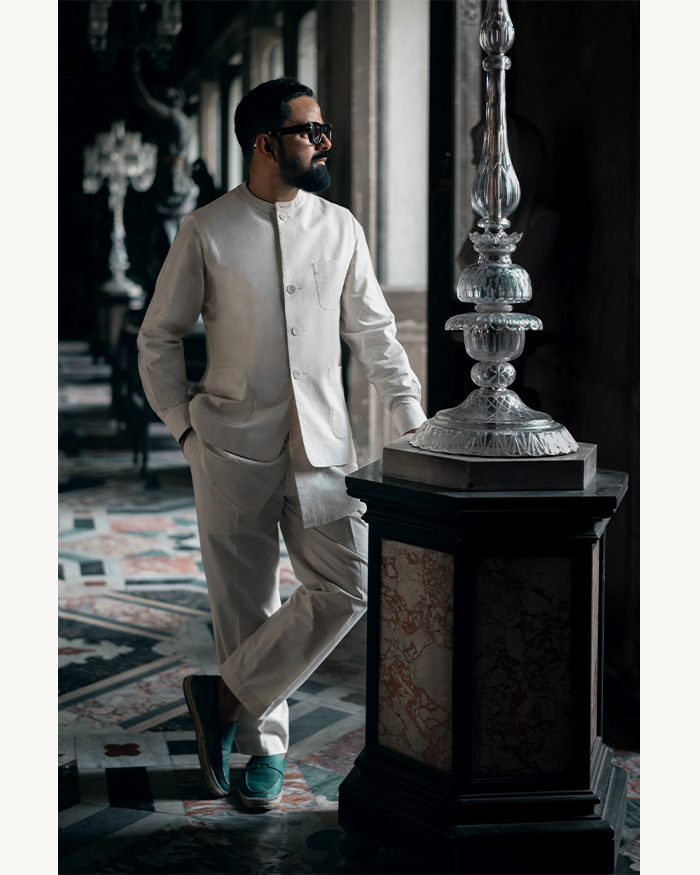
When I look back at my childhood, often spent with my grandmother making papad and achaar, what remains with me is not just the taste but the process itself — the choreography of women working under the winter sun, our palms dusted with flour, the dough kneaded in wide paraats, papads laid out on the terrace, chillies slit and salted for achaar, fingers stained with turmeric and the scent of crushed spices in the air. I used to witness this pattern of maximalism every November. In a traditional Indian rasoi, maximalism is omnipresent. It is the large reserve of utensils (colloquially called bartan) that make up a kitchen’s library. It is seen in the assortment of masalas, herbs and condiments that command shelves and cabinets. It lives in the thali lined with katoris, each carrying different textures, colours and flavours. Maximalism in an Indian rasoi is also the many hands at work, almost obsessive and completely disciplined at every step of culinary processes in the country.

I was born in Calcutta, but by the time I was 10, we had moved to Delhi, my naani to Mumbai and my aunts around the country. One thing that remained untouched by geography or time was our winter ritual of making papad and achaar. In India’s grammar of abundance, this was my family’s version of maximalism. My grandmother would journey from Mumbai to Delhi with all our aunts in tow. Our terrace would become the theatre for the papad and achaar to slip into a methodical performance. I’d take the lead as the head helper. Papad and achaar, a household name during every meal, are two of the oldest, unconquered protagonists of every Indian thali. One is unmistakably crispy, salty and umami; the other is spicy or sweet, fermented and unapologetically fragrant. Papads drying in long rows with delicate but solid glass jars of achaar sun-soaking in the peak afternoons — it is this formulaic, lived-in act of preparing endless supplies of papad and achaar, which tells me that Indian food doesn’t need spectacle to be maximalist. It is already ingrained into our everyday routines. Big paraats filled with dough, moong dal, hing and black pepper for one batch, and another variety called lapad, swathed with red chilli powder for the grown-ups. Papad has always been deceptively simple: a mixture of lentils, spices and salt kneaded to a dough, rolled impossibly thin, sun-dried and perfected over centuries.
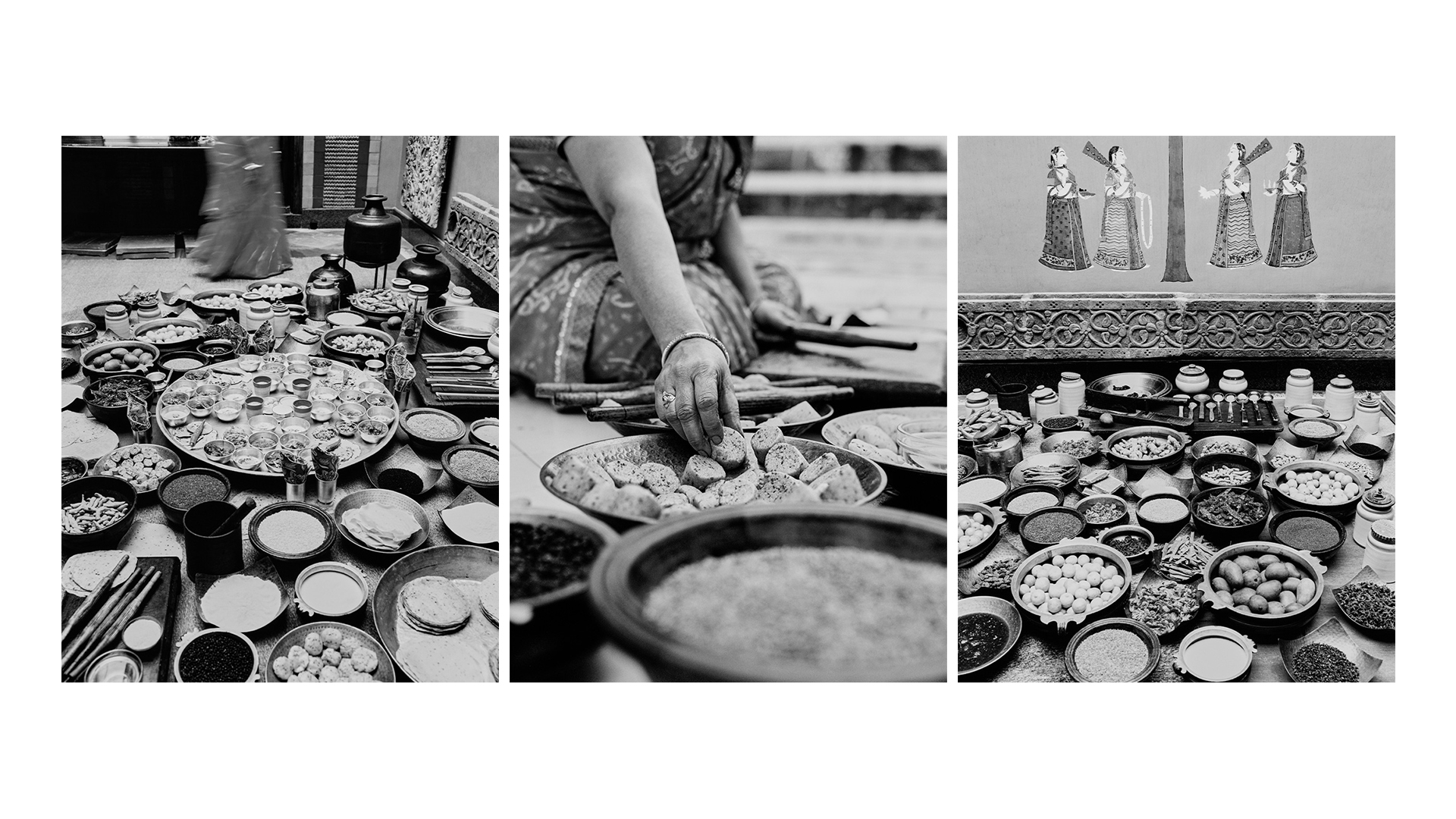
Photography by Bikramjit Bose

Papad is known to be mentioned as early as the 4th century in Jain and Buddhist food literature, and in Sanskrit it is closely related to parpata, a word that suggests flattened discs. Its evolution around India is one to note, too: from Gujarat’s rice flour khichiya and Rajasthan’s moong papad to Uttar Pradesh’s aloo papad, Maharashtra’s sabudana papad and Kerala’s urad dal pappadams. Back at my terrace with naani, I was allowed to knead the dough, even though I mostly made a glorious mess of it. Rolling it out was the real trial; mine always ended up like the map of the United States. But those were saved just for me. I think it was also a form of meditation for all of us: constantly watching the papads, changing positions if the sun’s heat or the wind became too strong. God forbid if a crow ever came near them! I used to complain endlessly that my wrists hurt rolling out the papad or why I could not go back to my Enid Blyton books instead of hearing all the cackle. But today, I would give anything to relive those afternoons, sitting crosslegged on a chatai, counting papads, while my naani narrated stories of her childhood.

I remember, our signature red and green chillies for achaar would travel all the way from Jaipur. The preparation of achaar is one of the few kitchen rituals that still insists on excess, not frivolously but functionally. The ingredients are seasonal, the labour is intensive and the final recipe is meant to be preserved and savoured for months. Historically, achaar has been referenced in Ayurvedic texts as a way to extend the life of seasonal produce. Every stage demands layers: chopping that must be precise but plentiful, spices that are weighed in kilograms and not in teaspoons, oil poured in unapologetically, the intensity of sun and the many weeks it takes to cook at its own speed. My grandmother measured nothing; her fingers knew instinctively. The flavour only birthed when everything was allowed to mingle and dissolve together at once. This process never looked tidy because it isn’t meant to. It is maximalist more so because the recipe is often territorial, guarded by families like heirlooms, with steps and ingredients that accumulate over generations. One must not simplify achaar. One must not edit it down. These papads and achaars then became the non-negotiables of our daily meal. Our maharaj, Bacchu; a cook, a philosopher and sometimes an unwilling babysitter, would assemble our thalis with military precision as soon as we returned from school. Stainless steel thalis laden with kadhi or moong daal, depending on the season, aamras or bajra raab, rice with ghee, a dry green vegetable like parwal or torai (types of gourds), and always a potato dish because any Marwari will tell you that it is the backbone of the community’s appetite.

Rice for lunch, never dinner. Phulkas puffed and glossed with ghee. But the irreplaceable royalty were always papad and achaar. There is something very grounding about sitting down for a meal which mirrors the one that your grandmother organised, and your maharaj scolded you over. Life now is different. Thalis appear only to impress guests. Groceries are ordered online. Meals depend on meeting schedules, not on Bacchu’s inner clock. The idea of a full thali with five or six katoris, phulkas made over open flame, homemade papad and achaar feels impractical, almost indulgent. But that is the paradox of India’s food culture. Maximalism can feel excessive until you realise it is actually a form of care, a recipe for nostalgia.

Read more: https://elledecor.in/abhishek-poddar-book-of-maximalism/

SHARE THIS ARTICLE

You May Also Like

Watch

No results found.

Search
Close this search box.