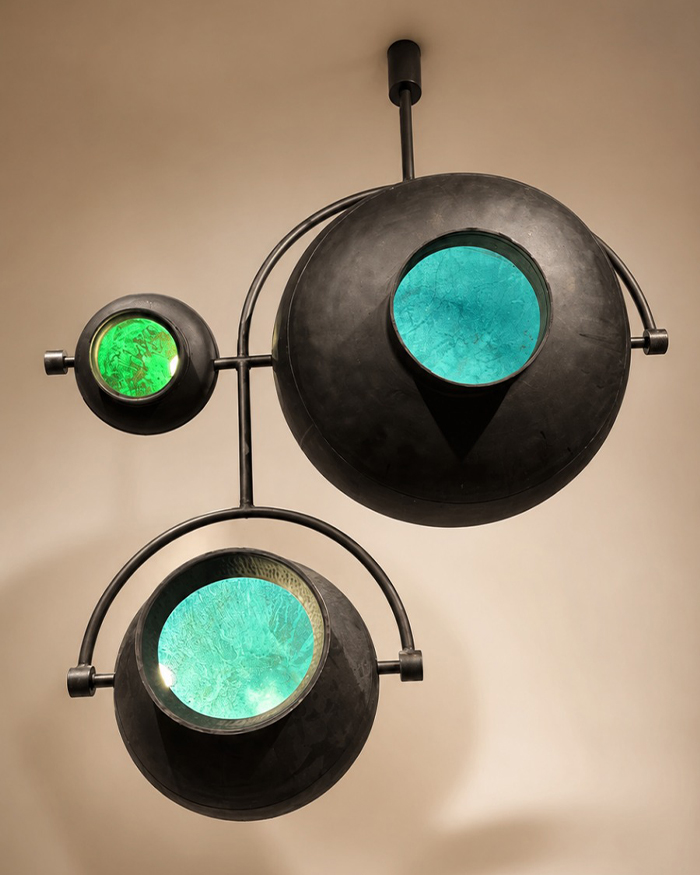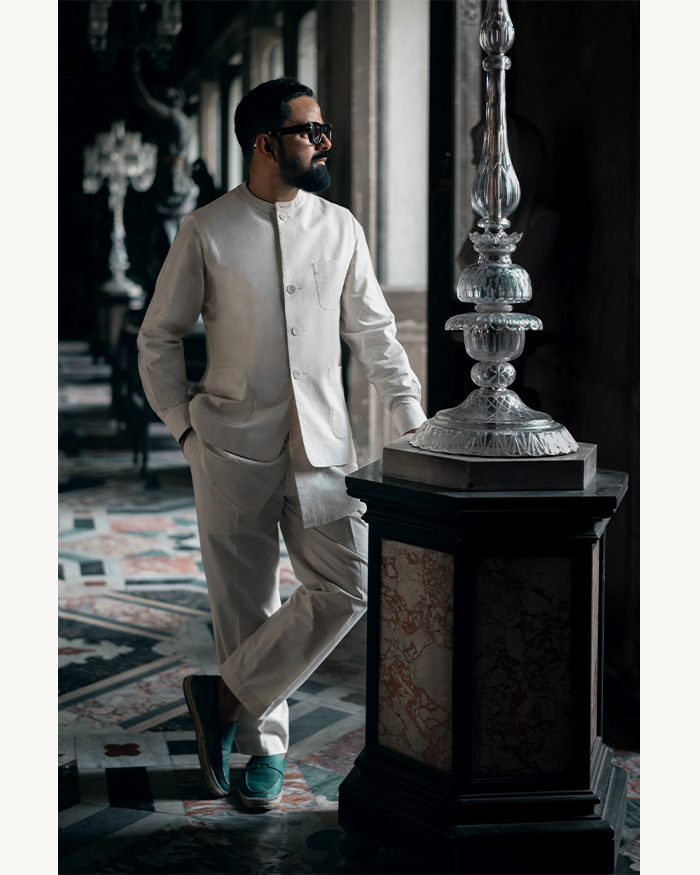
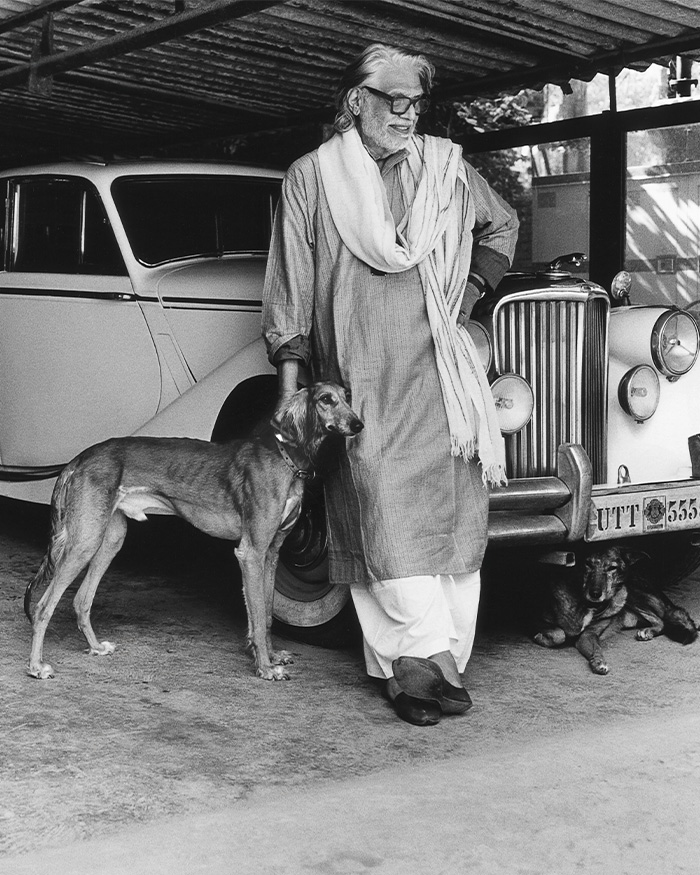
Some cities train the eye to look for monuments. Lucknow trains it to look for conduct. A slight pause before a reply. Humour folded into a sentence. The courtesy that makes room for another person. In Lucknow, refinement is culture, built slowly, transmitted through language, music, dance, poetry, demeanour and craft. Muzaffar Ali’s work carries that inheritance. His maximalism is not the maximalism of scale. It is the maximalism of depth: a world where poetry, costume, choreography, light and silence speak to each other, and where a pause can hold as much power as a flourish. If maximalism today is routinely reduced to surface, Ali reminds us that India’s richest form of more has always been made from meaning. In the conversation that follows, he speaks about Lucknow as a sensibility, cinema as composition, and refinement as a form of cultural intelligence.

How does Lucknow cultivate maximalism?

It has a deeper sense of understanding and feeling situations. The deeper the feeling the greater the sense of the maximal. Here one thing leads to another, till you create an anjuman, a congregation of people and ideas. These feelings are getting eroded by consumerism and film can be one way of recreating them for everybody.

What is Lucknow’s most prominent contribution to Indian maximalism?

I would say dance. Dance includes everything, poetry, music, costumes. We need to celebrate and conserve dance before it is degenerated by crass commercialisation in films and stage shows.

Your films challenge the idea that maximalism equals excess. What does refined, detail-driven maximalism look like on screen?

Elements and technology that enrich a frame with truth is a patient search. Understanding and creative use of light and colour is the artistry of tomorrow and the foundation of genuine maximalism. The art is what not to use to give power to what has to be used. Being specific is important and a necessity. Creative use of light comes from understanding details which tell the story, adding meaning to the layers that have purposely been used by the artist. It touches the audience differently in each exposure. This makes art addictive and creates repeat viewing.
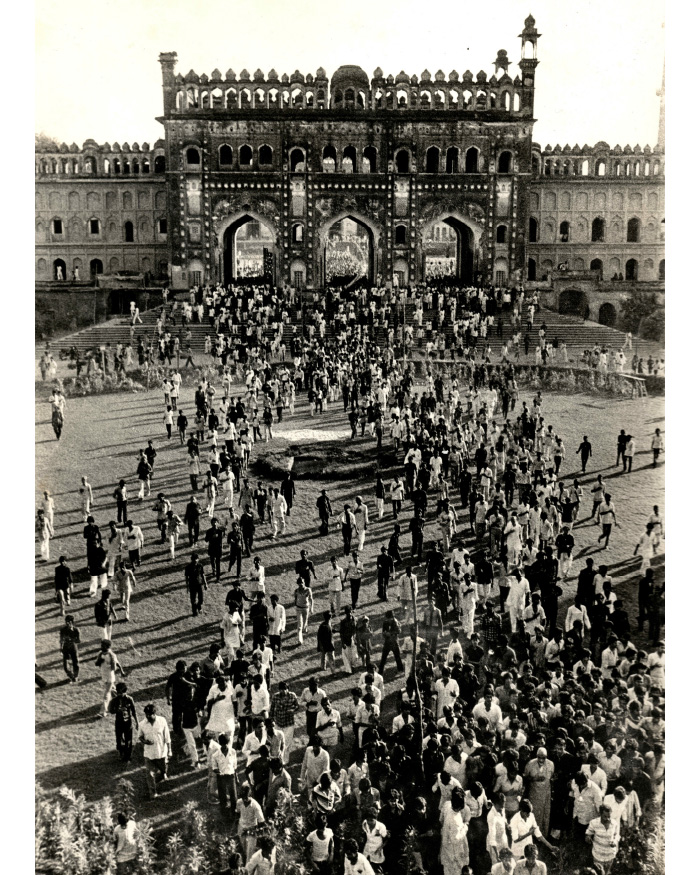
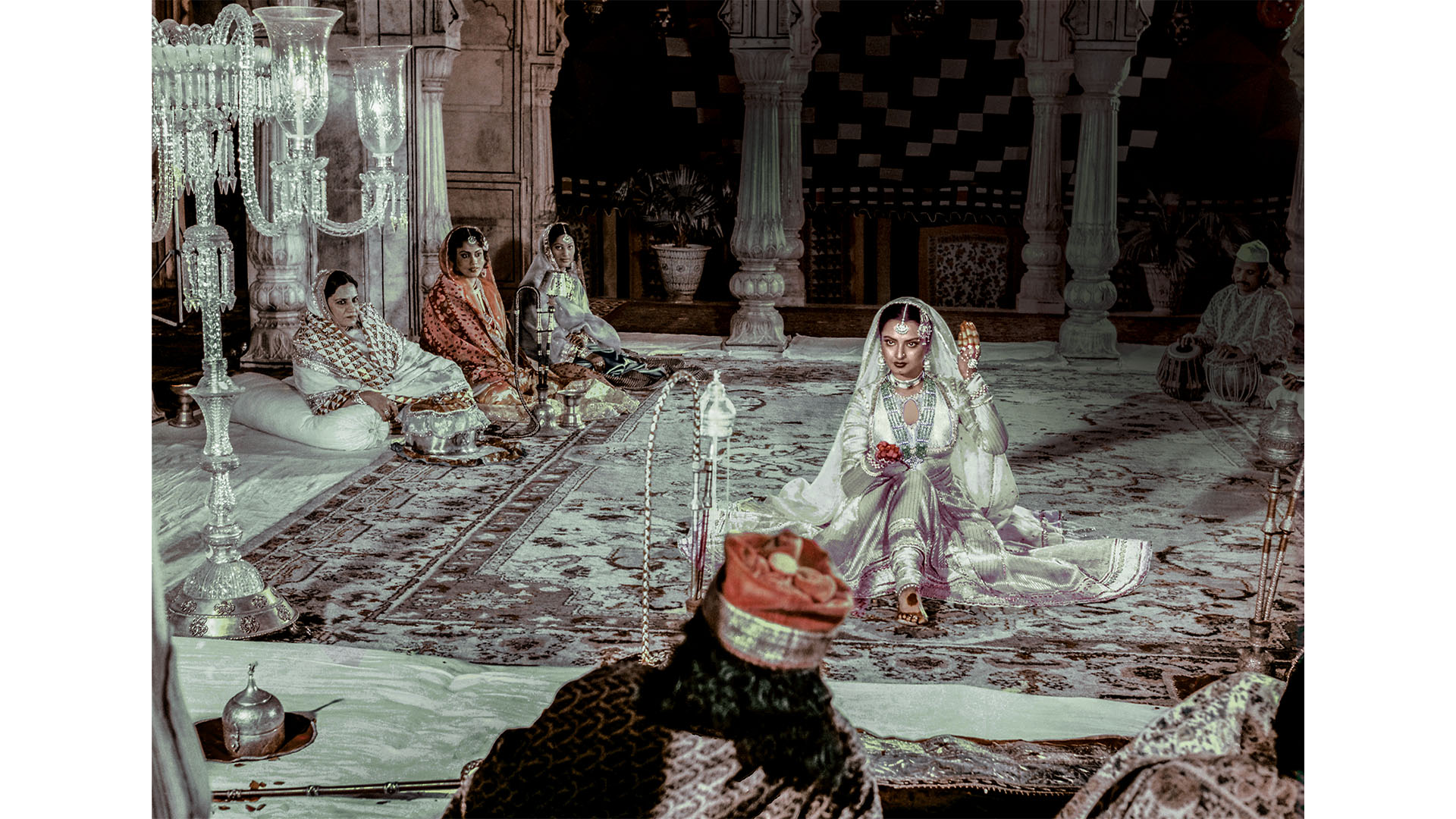
From the book Muzaffar Ali’s Umrao Jaan (2025), edited by Meera Ali and Sathya Saran, published by Mapin Publishing, Ahmedabad, in association with SK Jain & Sons and Kotwara Studios Pvt Ltd. Reproduced with permission. Images © Ashok Kanojia, Kamat Foto Flash

You often contrast Bollywood’s maximalism with the cultural maximalism of Awadh. How would you define the difference between excess for its own sake and excess shaped by intellect, culture and restraint?

What goes into a frame has been a deliberate act and has to have a cultural, aesthetic and functional purpose all aligned to reflect the truth of the slice of reality. Film design is not to hurry through a frame but to truthfully tell a tale. Umrao Jaan (1981) is lush, but never overwhelming.

How did you use poetry, costume, choreography and silence to create a form of maximalism defined by precision and emotional architecture?

Umrao Jaan (1981) was a cerebral film driven by nostalgia, layered with poetry, music wrapped in authentic textiles and fragrant with memories, bathed in light of bygone days. There were no layers left untouched, hence it could be defined as maximal. Everything had a language that spoke to each other.

Lucknow’s zubaan carries a refined humour, metaphor and musicality. How does language itself become a maximalist art?

The spoken language of language is replete with emotion of every shade, raw and refined, words are crafted with breath and breath is the essence of culture which has taken centuries to evolve and when this finds its way to celluloid it is indeed rare and special

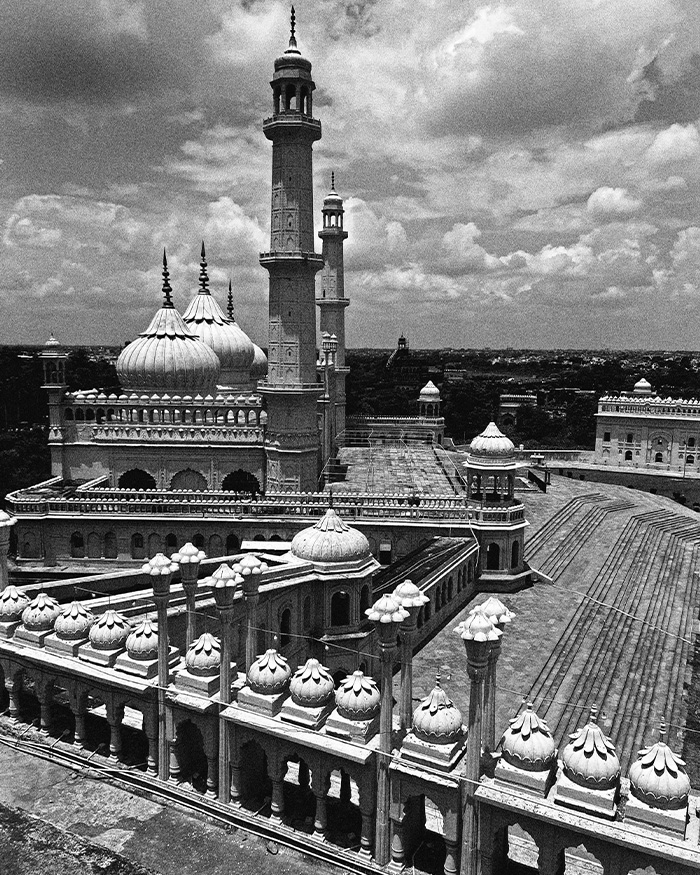
Commissioned by Nawab Asaf- ud-Daula in 1784, Bara Imambara is an architectural feat with one of the world’s largest arched halls, blending Mughal scale with Persian-inspired elegance and cultural continuity; Photograph by Sumedh Garikipati
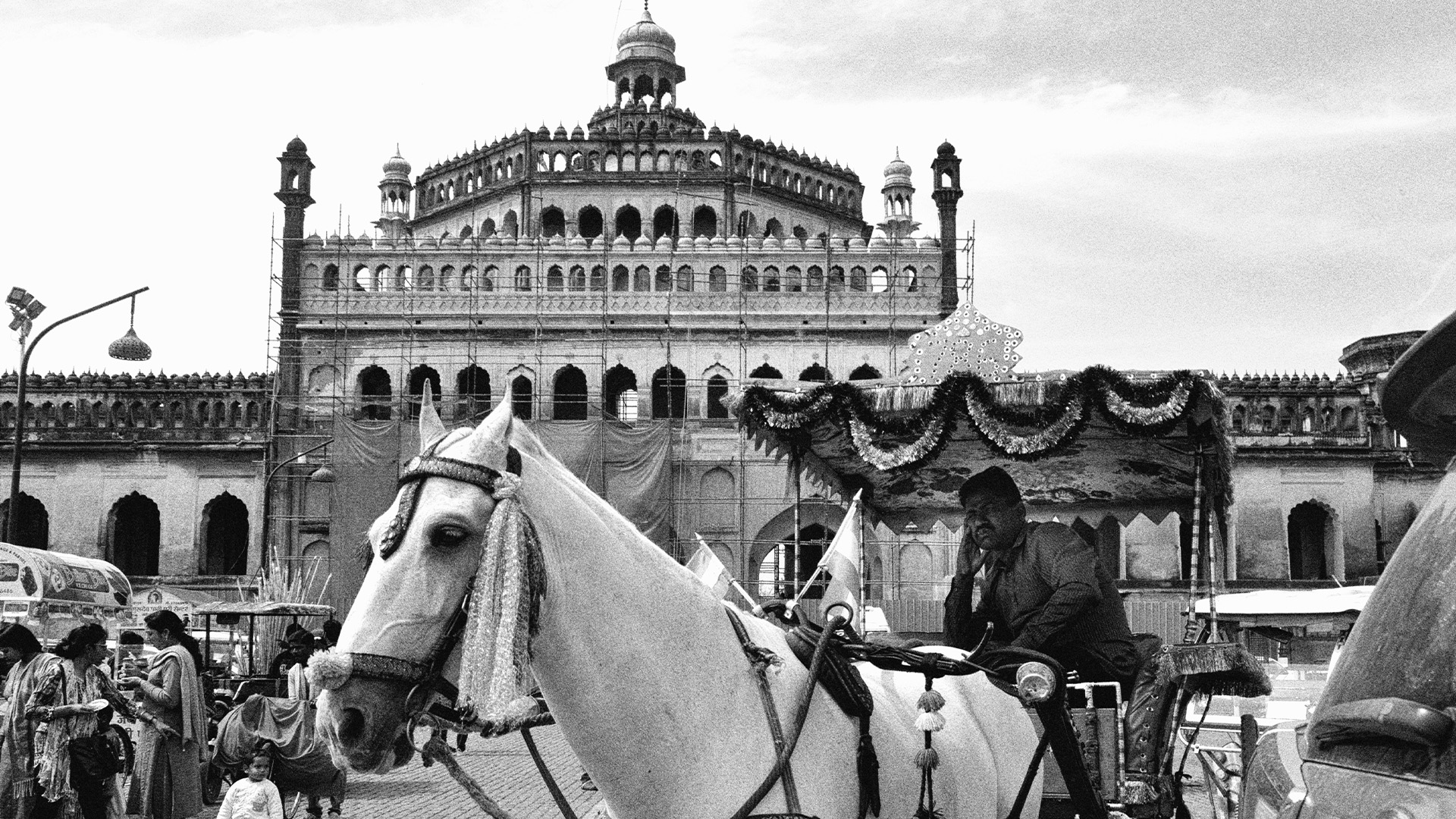
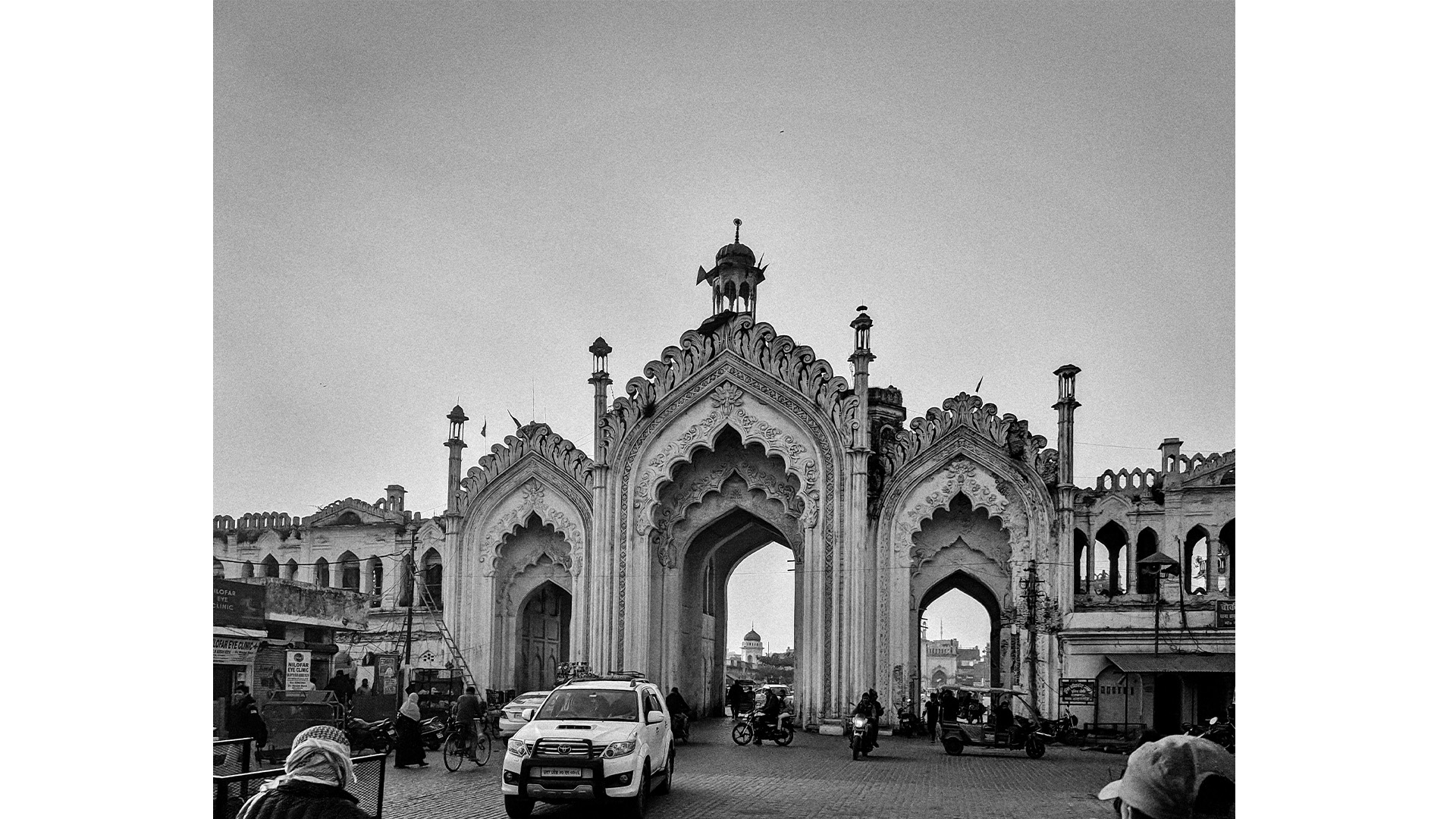
A monumental gateway, the Rumi Darwaza anchors Lucknow’s historic core with its soaring arch, lotus-bud finial, and layered detailing drawn from Awadhi and Central Asian vocabularies. Built in the 18th century under Nawab Asaf-ud-Daula, its proportions echo the grandeur of imperial ambition, while its ornament speaks of a refined, syncretic culture where Persianate motifs, local craft and Mughal scale converge; Photograph by Yash Rai

If maximalism in India today is reduced to weddings, palaces and Bollywood, what essential layers are we missing?

The object today is nothing less than a full-scale assault on the senses. We live in a time when attention spans have evaporated, thinner than smoke, quicker than a swipe. And so the art of address has shifted its battlefield. To reach a mind already wandering, you must now compete with an entire universe glowing inside a six-inch screen. The audience arrives halfway intoxicated — inebriated not by spirit, but by overstimulation. They need no further depth, no silence, no surrender.

Instead, the culture feeds them volume. Sound hammered beyond the decibel tolerance of sensibility. Rhythm pounding like a militarised heartbeat. The Bollywoodian grammar of excess — loud enough to register even through the frosted glass of a distracted, modern, mobile mind. This is the new aesthetic economy: to overwhelm first, meaning remains optional. But, the irony is almost poetic — because humanity has always yearned for the opposite. A space where art breathes. Where a note pierces because it is fragile, not because it is amplified. Where attention is not captured, but invited. And perhaps the task before us now, is not to join the assault, but to reclaim the senses. To remind the world that intoxication born from truth, from stillness, from beauty — will outlast every decibel.

Rumi Darwaza; Photograph by Ahmad Attari

Speaking to Muzaffar Ali makes it clear that India has inherited a civilisation capable of producing the kind of layered maximalism that the filmmaker, painter (and the Raja of Kotwara) points towards. Yet the country has routinely settled for noise, scale and shorthand opulence. Lucknow shows what we are squandering. It proves that refinement is a demanding practice that requires knowledge, restraint and the courage to choose meaning over momentum. And by that definition, it is a maximalist pursuit and ambition. If today’s culture flattens maximalism into decor and decibels, that is a failure of imagination, not of natural evolution. The Lucknow that shapes his work leaves little room for that laziness. A city that can hold Muharram, Kathak, poetry, zubaan and cinematic intelligence in the same emotional field has already done the work for us. It insists that every frame, every costume, every verse and even silence justifies its place. That is the challenge this interview leaves behind. Not to romanticise Lucknow, but to use its sensibility as a benchmark and to admit that anything less (or more) is simply excess without intellect.

Read more: Anniversary issue: Anica Mann on the plural legacy of India

SHARE THIS ARTICLE

You May Also Like

Watch

No results found.

Search
Close this search box.