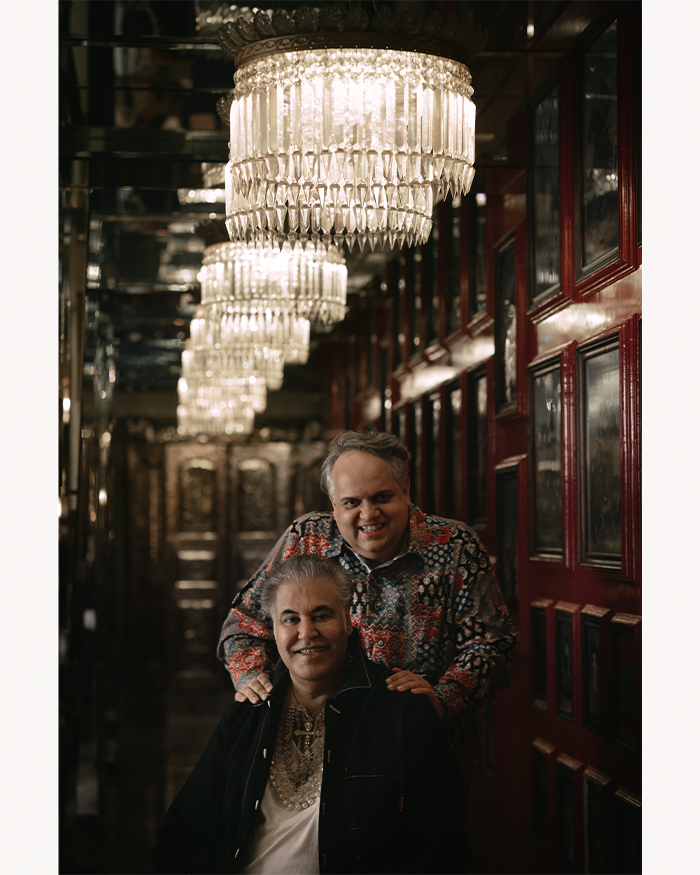
For couture behemoths Abu Jani and Sandeep Khosla, the opportunity to design a wedding came at a culturally pivotal moment. We were out of the throes of Nehru Socialism, nine years deep into post-liberalisation India. The Guest Control Orders — an infamous string of austerity measures applied from state to state between the 1960s and the 1990s, limiting the number of wedding guests and even the amount of food served — was a distant, distant memory. Cue the ‘Bollywood-ification’ of weddings: movies like Hum Aapke Hain Koun..! (1994) and Dilwale Dulhania Le Jayenge (1995) were changing how the public perceived shaadis. Austerity was on its way out. The big, fat Indian wedding was on its way in. Cut to 1997, merely two years after Bombay had become Mumbai. Abu and Sandeep had been working together for a little over a decade: crafting couture, championing Indian craft across the globe and navigating a meteoric rise to fame. They were well on their way towards becoming multi-hyphenates, with a fully sold-out debut furniture line and a jewellery collaboration about to bear fruit in London. Their newest venture? Interior designing — or playing “house doctor”, as Sandeep puts it, for a select few of their closest friends. They had just redesigned Jaya Bachchan’s home, decking the interiors with “crushed silk curtains, a technique we had revived,” reminisces Sandeep, when Jaya popped the question: would they help her design her daughter Shweta Bachchan’s wedding? The duo said yes.

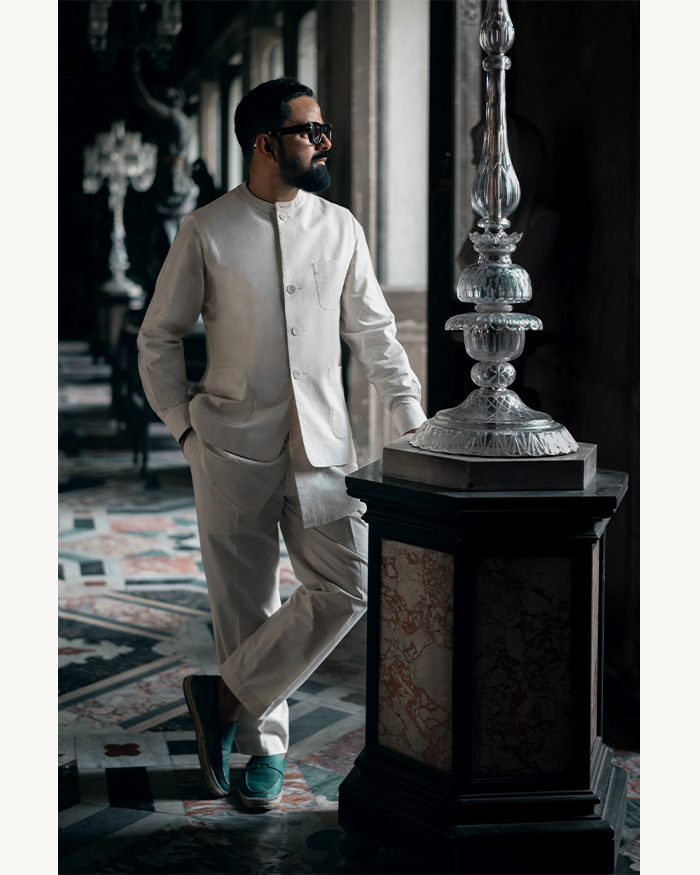
“Shweta’s wedding was our first,” Sandeep recalls. The year is now 2025. We’re in Abu and Sandeep’s Juhu home, sitting in their decked-to-the-nines living room — exactly what you’d expect from the kings of maximalism. Steve Jobs wore turtlenecks, but Sandeep prefers a crisp white shirt: his go-to for media interviews like this one (“It’s AJSK, of course!” he laughs). The late afternoon light clings to the fabric, the only unadorned surface in the space. “Shweta is like our daughter, so of course, we said yes when Jaya asked us to design the whole affair,” Sandeep continues, exclaiming, “We even called it a royal wedding!”
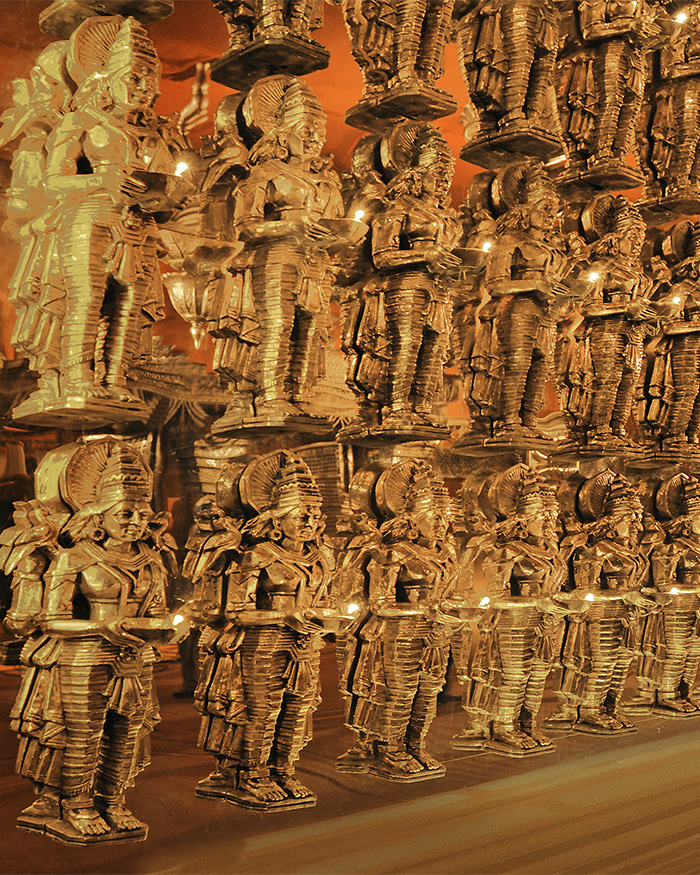
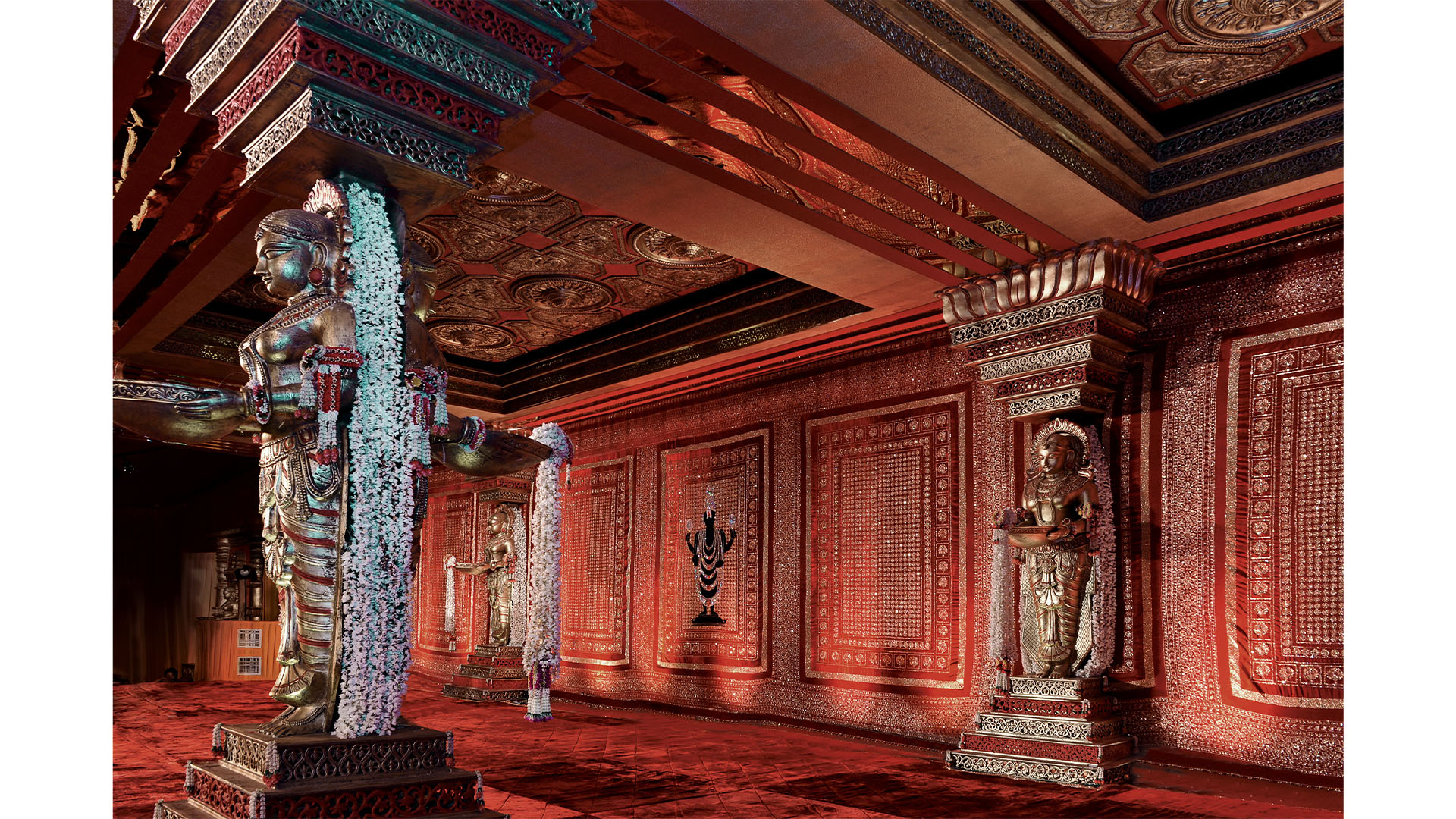
Designed by A Wonder Room, Mallika and Sidharth Indukuri’s wedding in Hyderabad featured intricate yet mammoth installations; Photograph courtesy Abu and Sandeep - A Wonder Room

And royal it was, indeed. In an age where the lehenga was often the only showstopper, Abu and Sandeep extended their couture-led finesse to the decor. The mehndi ceremony saw the Bachchan bungalow draped in swathes of tagarjali, with the late Zakir Hussain and Birju Maharaj performing for two hundred guests. For the big day, the duo used zardozi for both Shweta’s maroon ghagra and blouse, as well as the mandapa itself — thousands of golden, embroidered butis twinkling under the lights. “The set was a massive embroidered tent, created just for the ceremony. We did wonderful mirror flags, too,” Sandeep avers. The wedding was the talk of the town in its own right: not just for Shweta Bachchan’s radiant smile — a direct contrast from the demure, lowered gazes that populate bridal pictures from that era — but also for the craftsmanship, the detail, the sheer opulence of it all.

While Shweta’s wedding may have been their first, it was certainly not the last. But a significant culture was underway. When Jaya approached Abu and Sandeep to design Abhishek and Aishwarya Bachchan’s wedding a decade later, Page 3 had gripped the media landscape. Reporters outside the Bachchan residence in Juhu were hungry for details: what was the bride wearing? How expensive was the decor? Did Amitabh know Aishwarya was Manglik? Televisions and newspapers had dedicated paragraphs, segments and hours to dissecting every detail of their nuptials. You no longer needed an invitation: all you needed was a newspaper or cable TV. Indian weddings had now eclipsed rituals, turned the maximalism up higher, and thoroughly embraced spectacle.

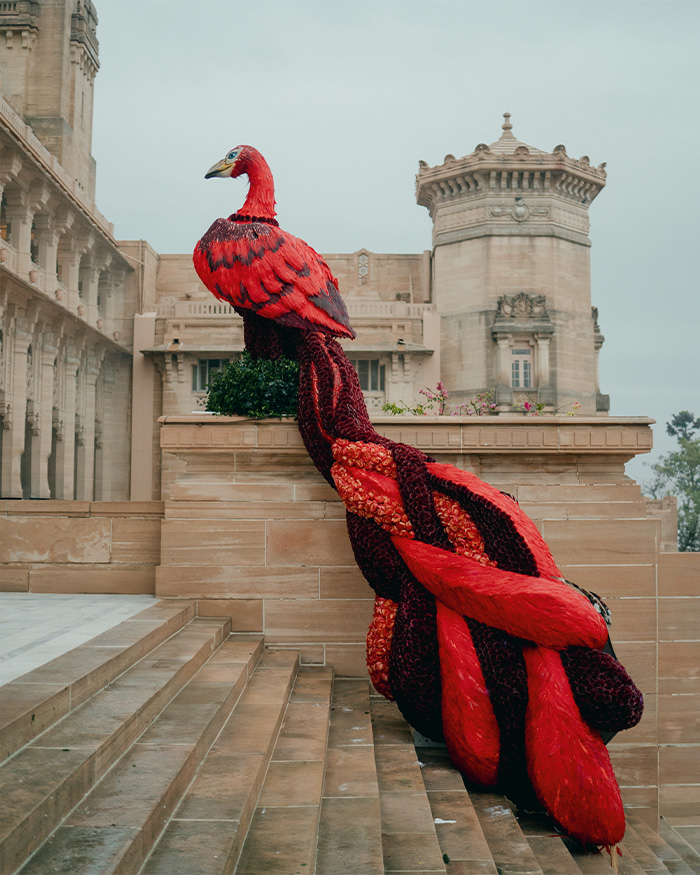
For a mehndi ceremony at Umaid Bhawan Palace, Jodhpur, guests were welcomed with a towering avian installation with a sweeping plumage bedecked with flowers; Photograph courtesy Abu and Sandeep - A Wonder Room
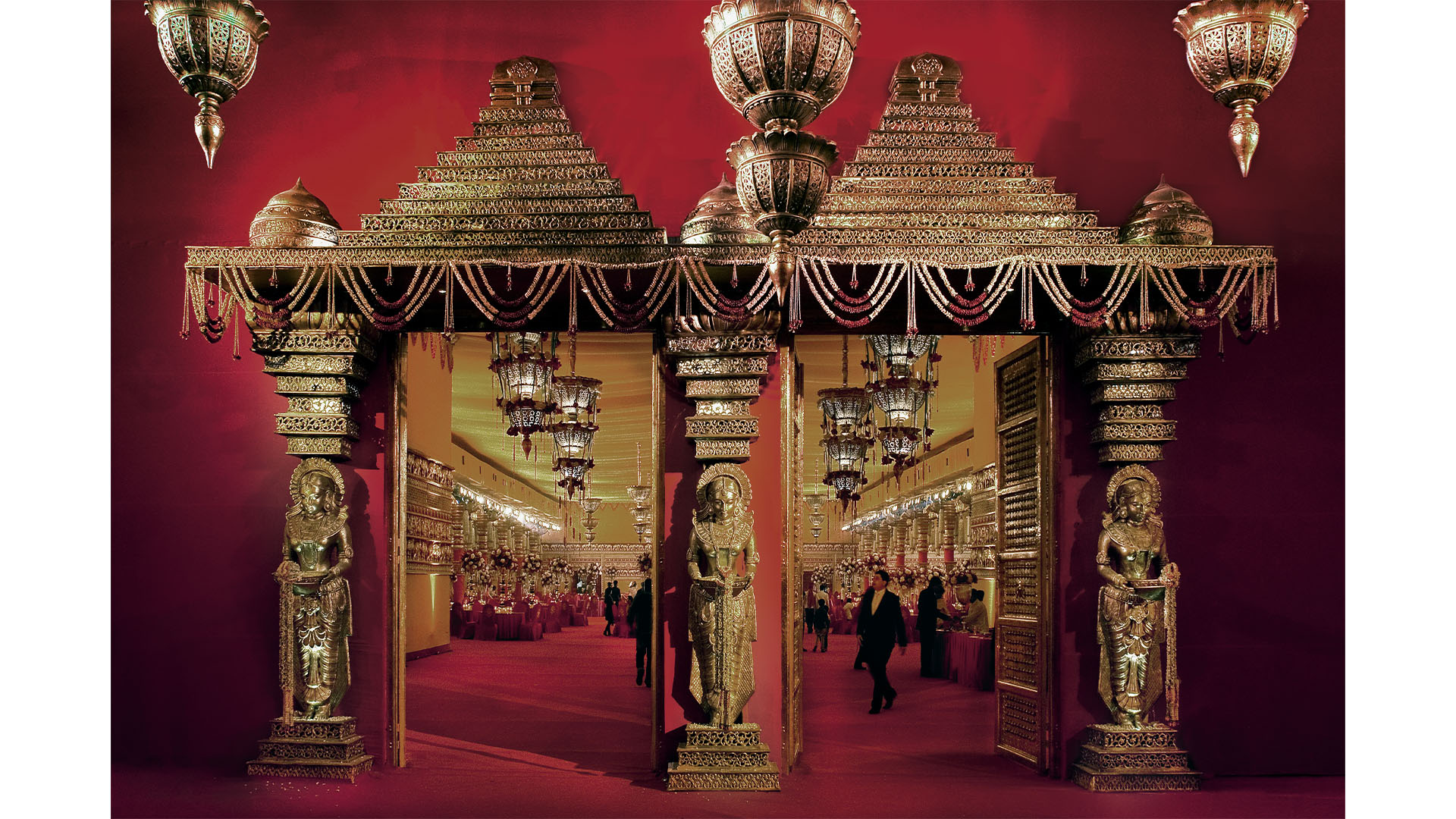
Mallika and Sidharth Indukuri’s nuptials were gilded and glorious, maximalist to the tee; Photograph courtesy Abu and Sandeep - A Wonder Room

And boy oh boy, did Abu and Sandeep deliver. As print made space for social media, millions could now scrutinise every detail of a big, fat Indian wedding from the comfort of their home. The duo responded to this shift by bringing the same microscopic focus to their planning. “Whether it’s the decor, the clothes, or even the food, people come to us for all these things,” Sandeep tells us. 2018 was unforgettable, with Nick Jonas and Priyanka Chopra’s wedding in Jodhpur, followed by Isha Ambani’s nuptials at Antilia, Mukesh Ambani’s residence in Mumbai. Both weddings, designed by the duo, saw larger-than-life decor setups for each ceremony: think Art Deco- inspired mandapas constructed out of brass, roads decked like a carnival, Greek pillars billowing with flowers, and intricate installations of mammoth scale. For the duo, there is no such thing as too much — the only concern is doing too little.

Case in point, the entire country was abuzz when Mallika and Sidharth Indukuri, children of billionaire GV Krishna Reddy of the GVK Group and Indukuri Syam Prasad Reddy of the Indu Group, tied the knot in Hyderabad back in 2011.  The venue was a customised, crafted from-the-ground-up hangar sprawling more than 2 lakh sq ft. The decor, too, was bespoke, designed to resemble a lavish grand temple with customised sculptures and billowing red velvet drapes. Abu and Sandeep conceptualised a similar grand affair for Keshav Reddy, Mallika’s younger brother, who tied the knot with wife Veena Tera in 2017. The pièce de résistance of this wedding was the 150-feet- long mandapam, crafted with touches of real gold and bedecked with Tanjore art.

A wedding at Umaid Bhavan Palace, Jodhpur; Photograph courtesy Abu and Sandeep - A Wonder Room
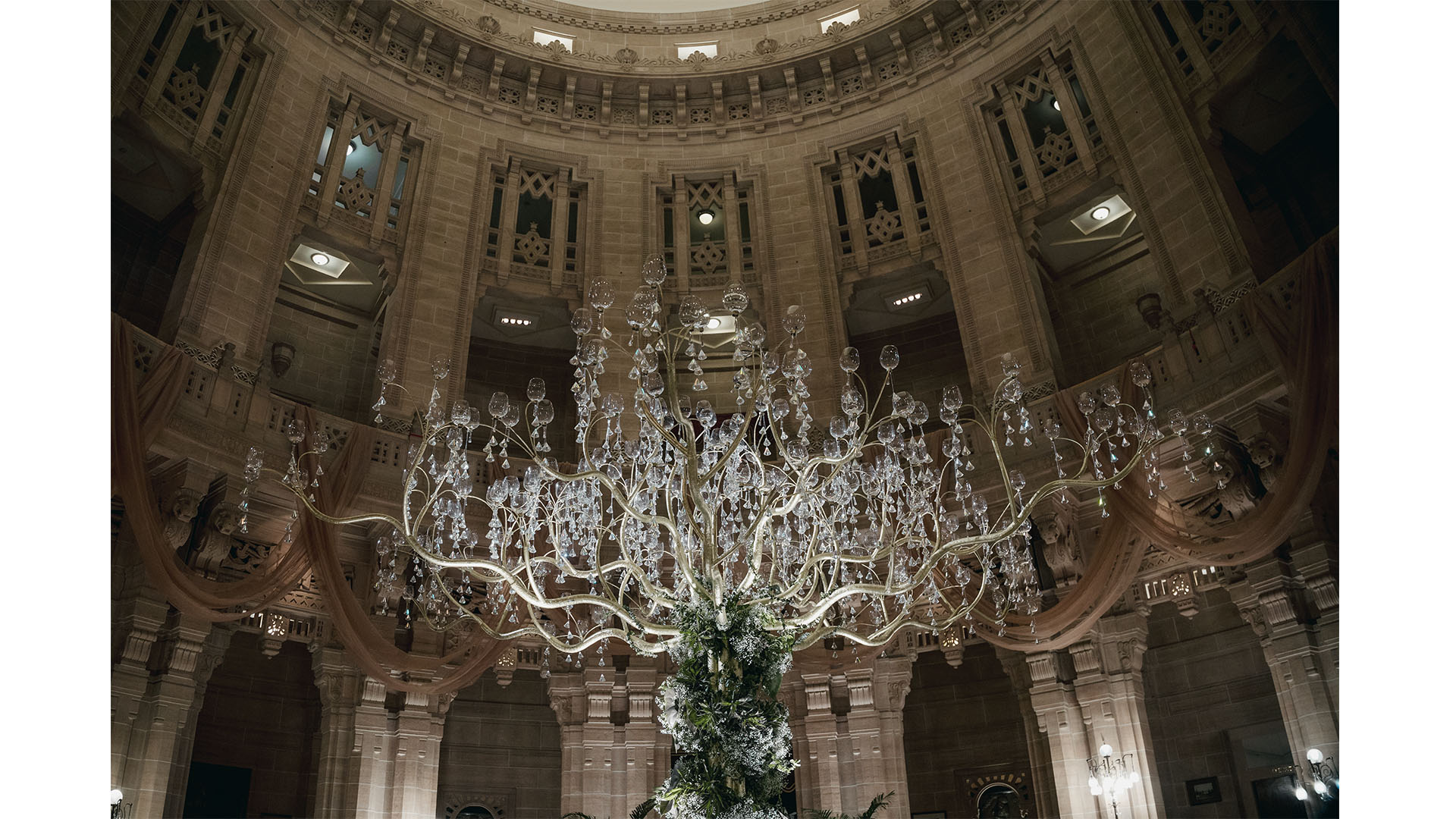
Crafted by A Wonder Room for a family “that loved to toast to everything,” Sandeep laughs, this tree- like installation, dripping with wine glasses and crystal danglers, welcomed guests at a wedding in Umaid Bhawan Palace, Jodhpur; Photograph courtesy Abu and Sandeep - A Wonder Room

The idea of a maximalist Indian wedding is not new. In Indian society, there’s a significant cultural impetus for couples to go big, as lavish ceremonies are seen as a marker of economic and social affluence. But it’s not just society — the government wants you to have a maximalist wedding, too! With an estimated average of one lakh ceremonies taking place each day between November and January in 2025-26, Kotak Asset Management Company (KAMC) reports that merely 45 days during peak wedding season in India can inject more than six lakh crores into the market. The impact is so significant that Prime Minister Narendra Modi has implored families to host destination weddings within the country, dubbing it the Wed in India movement. The industry itself generates crores of jobs each year, and mammoth celebrations, like the ones held in Jamnagar and Udaipur this year, require a village to function smoothly. Hoping for a piece of the shagun, even state governments pander to the craze: simplifying bureaucratic permission processes for outdoor events and processions. Interestingly, the Rajasthan government even delayed their assembly elections by two days back in 2023 — all to accommodate thousands of weddings happening two days prior!

The government may applaud, but there are many couples today who are opting out of the traditional band, baaja, baaraat in favour of more private affairs. But whether you go big or go home, the emergence of social media has irrevocably changed weddings forever — incurring the wrath of critics, too. One opinion rings the loudest: In the age of social media, is the big, fat Indian wedding today simply an extravagant photo-op?

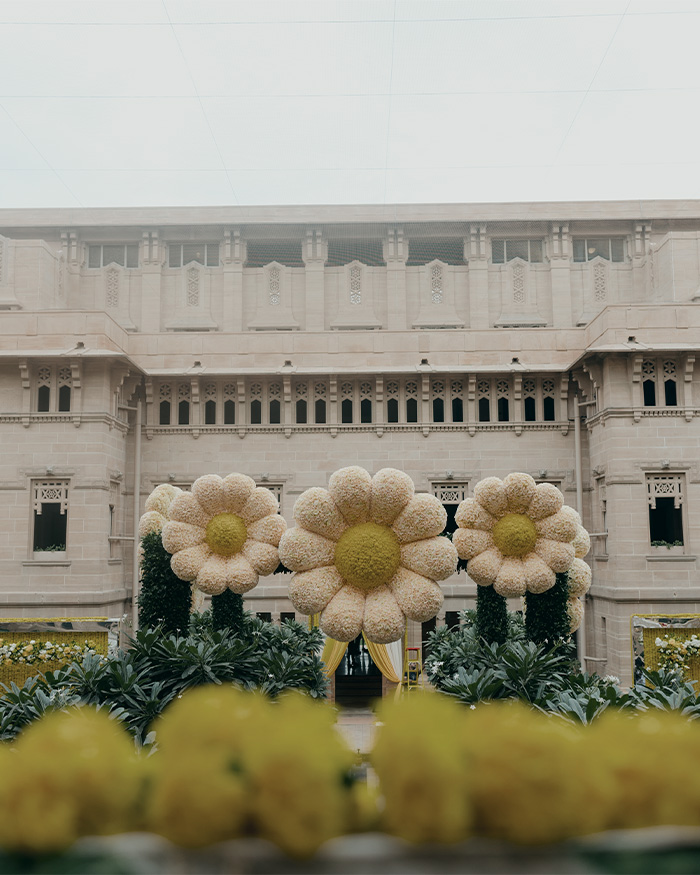
Decor for a ceremony at Umaid Bhawan Palace Jodhpur; Photograph courtesy Abu and Sandeep - A Wonder Room
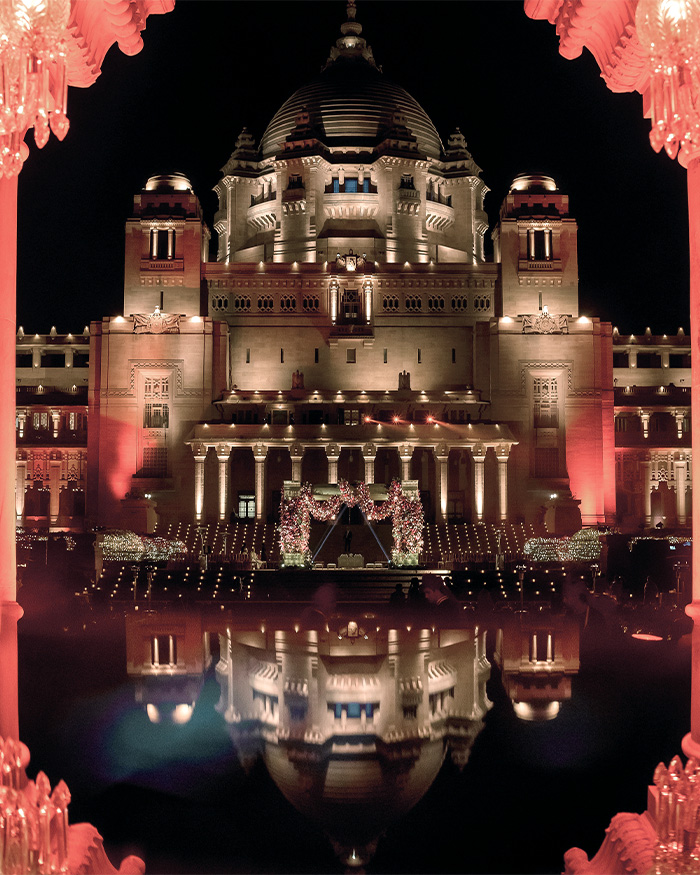
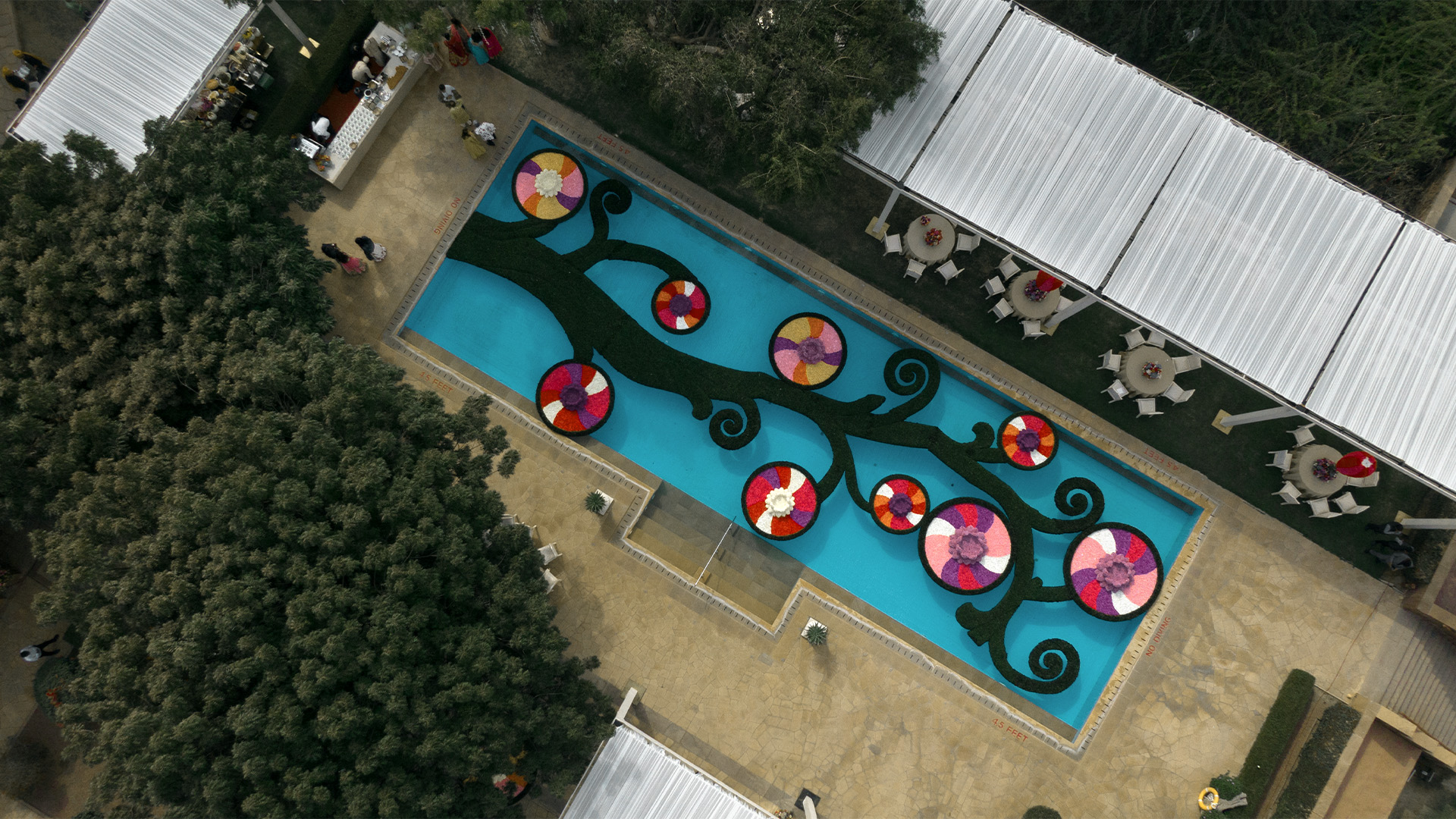
Stretching across its blue expanse, the duo opted for an elaborate floral installation to enliven the pool for the mehndi; Photograph courtesy Abu and Sandeep - A Wonder Room

Sandeep and Abu disagree. A quick scan through all the interiors and weddings they’ve designed under their design venture, A Wonder Room, reveals that their understanding of maximalism is inherently craft-driven: whether it comes to employing artisans to embroider swathes of cloth with zardozi, or creating customised fabric panels for a wedding nobody will ever forget. But they’re a little tongue-in-cheek, too. Some of their most memorable anecdotes come from the host of OTT (over-the-top) ceremonies they’ve designed: right from crafting a towering tree speckled with wine glasses indoors “for a family who loved to toast to everything,” Sandeep laughs, to convincing a hotel to let them create an elaborate floral installation in the swimming pool (“It was 6 a.m. It was cold. Kudos to the florists, they were in the water for hours,” he shudders).

The advent of the pandemic saw a huge dip in large-scale weddings across the country. Many argued that the era of the big, fat Indian wedding was over — yet the country’s booming marriage industry, valued at over a hundred billion today, continues to grow at an unprecedented pace. Abu and Sandeep, too, are far from worried. “It has been challenging. But to complete 40 years in the industry, and still be relevant and still set trends, makes us feel phenomenal,” Abu enthuses. They’ve survived in an era preceding Page 3, thrived in the era of social media, and continue to champion the art of crafting weddings in a way that is absolutely, inherently maximal. Fearing change is secondary to the larger picture they’re pursuing. “India will change, but the arts and crafts will survive. We just want India to be fashionable forever,” smiles Abu.

Read more: Anniversary issue: Mallika Sarabhai on maximalism and divinity

SHARE THIS ARTICLE

You May Also Like

Watch

No results found.

Search
Close this search box.