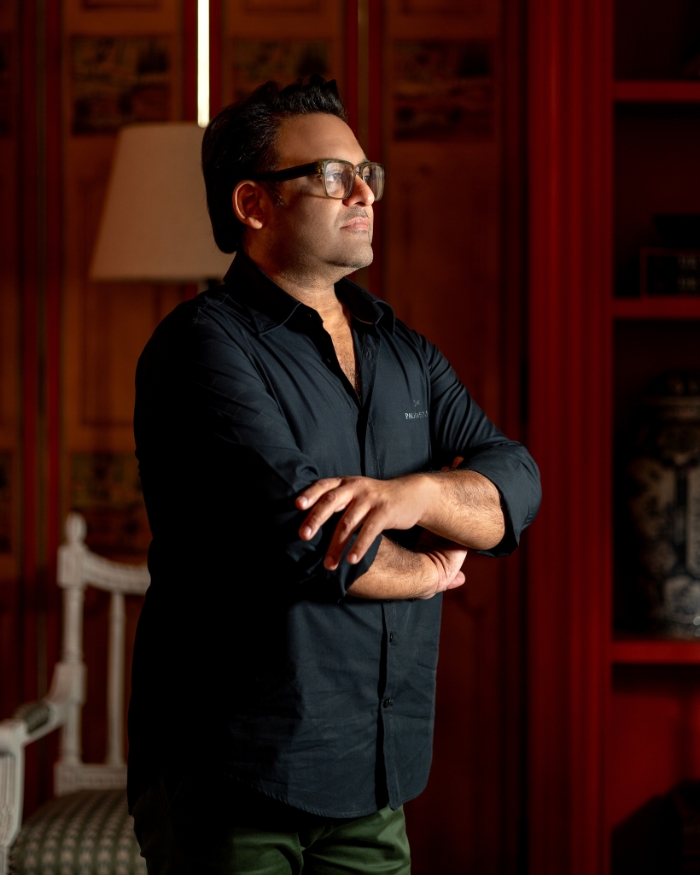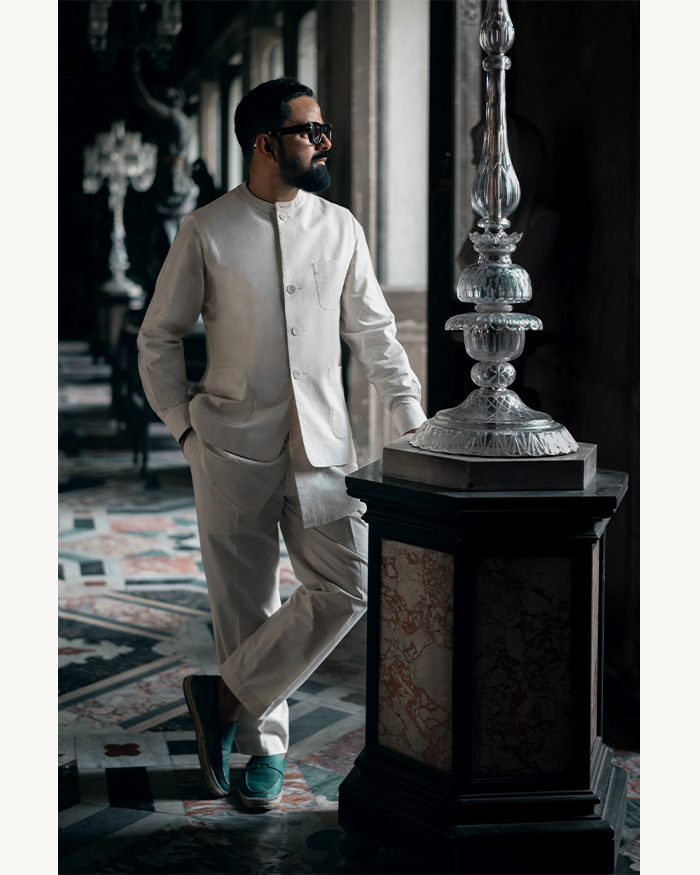
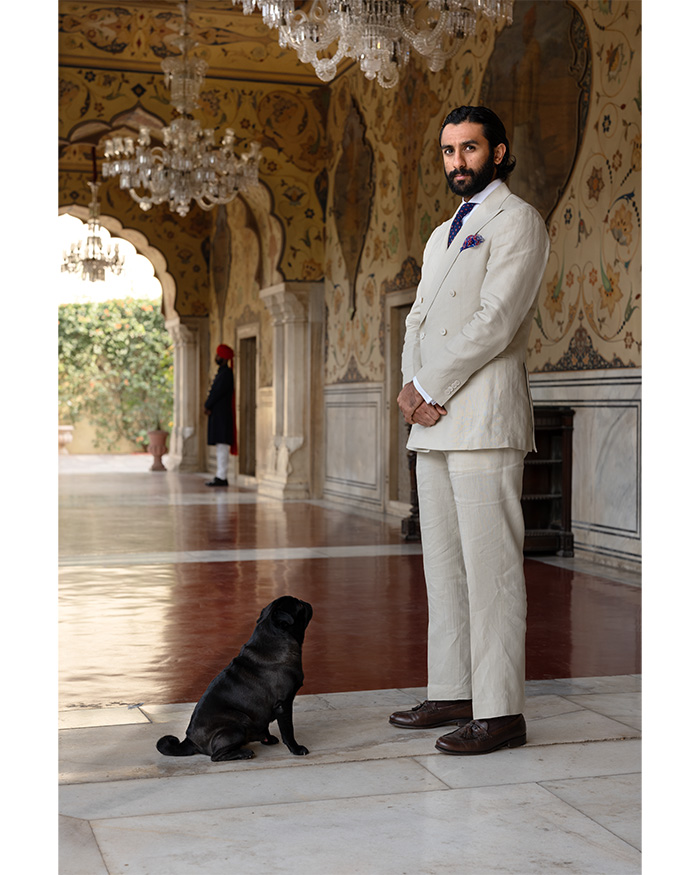
All of 27 years old, in the league of the Generation Z, a descendant of the erstwhile clan of the Kachhwaha Rajputs and crowned at the age of 12, His Highness Maharaja Sawai Padmanabh Singh of Jaipur stands at rare crossroads: born into history, living in the present and shaping a future. His influence has little to do with the throne, however. The modern maharaja’s eminence is perhaps multidimensional — vocalised on social media as a public figure, frequent appearances on magazine covers, attendance at galas and red carpets, and of course, embedded into Jaipur’s crafts and community building, restoration plans, managing the affairs of the City Palace, Jaipur and trusts and commanding the world-admired legacy of polo as a captain — all a natural part of his world. His influence also emanates from his ability to articulate why Jaipur matters today, why Indian maximalism is not confined within a palace and why it must exist as a larger worldview. Because what becomes of royal inheritance in a democracy where formal titles and imperial powers do not exist anymore? When the Indian government abolished royal titles under The Constitution (Twentysixth Amendment) Act, 1971, the reality of royalty shifted immediately from a political institution to a cultural authority. “I have grown up watching how my grandfather, through his military service, and my mother, through her work in public life, have treated heritage as a duty towards others, not just as a family story,” he says, often belovedly known to many as Pacho, who inhabits the colossal sprawls of the City Palace, Jaipur that rose to life in 1727 built by Maharaja Sawai Jai Singh II, as his private home as well as a public landmark. The sky, the land, the air feel mesmeric even today.
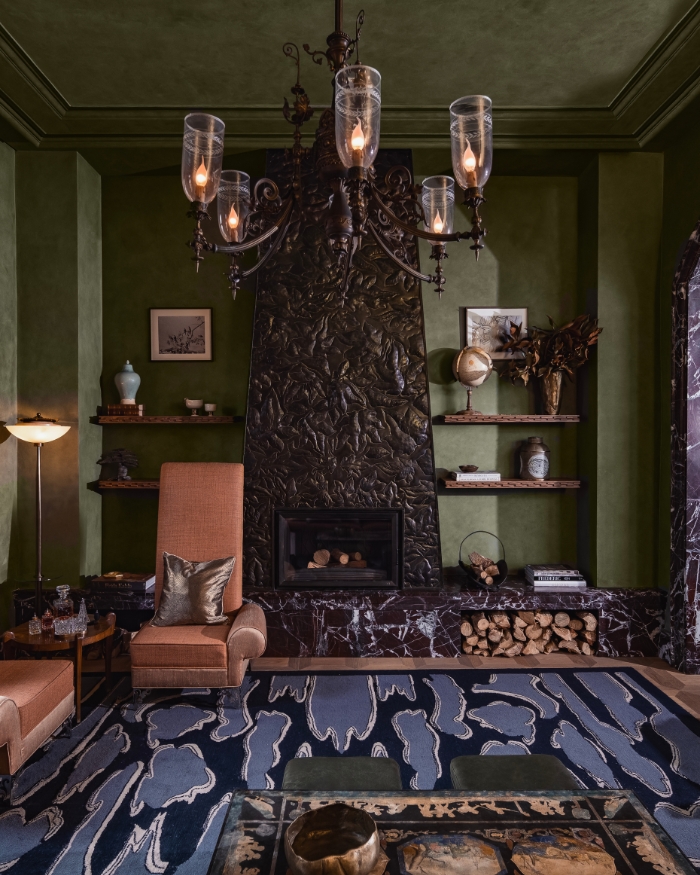
“I have grown up watching how my grandfather and my mother have treated heritage as a duty towards others, not just as a family story”

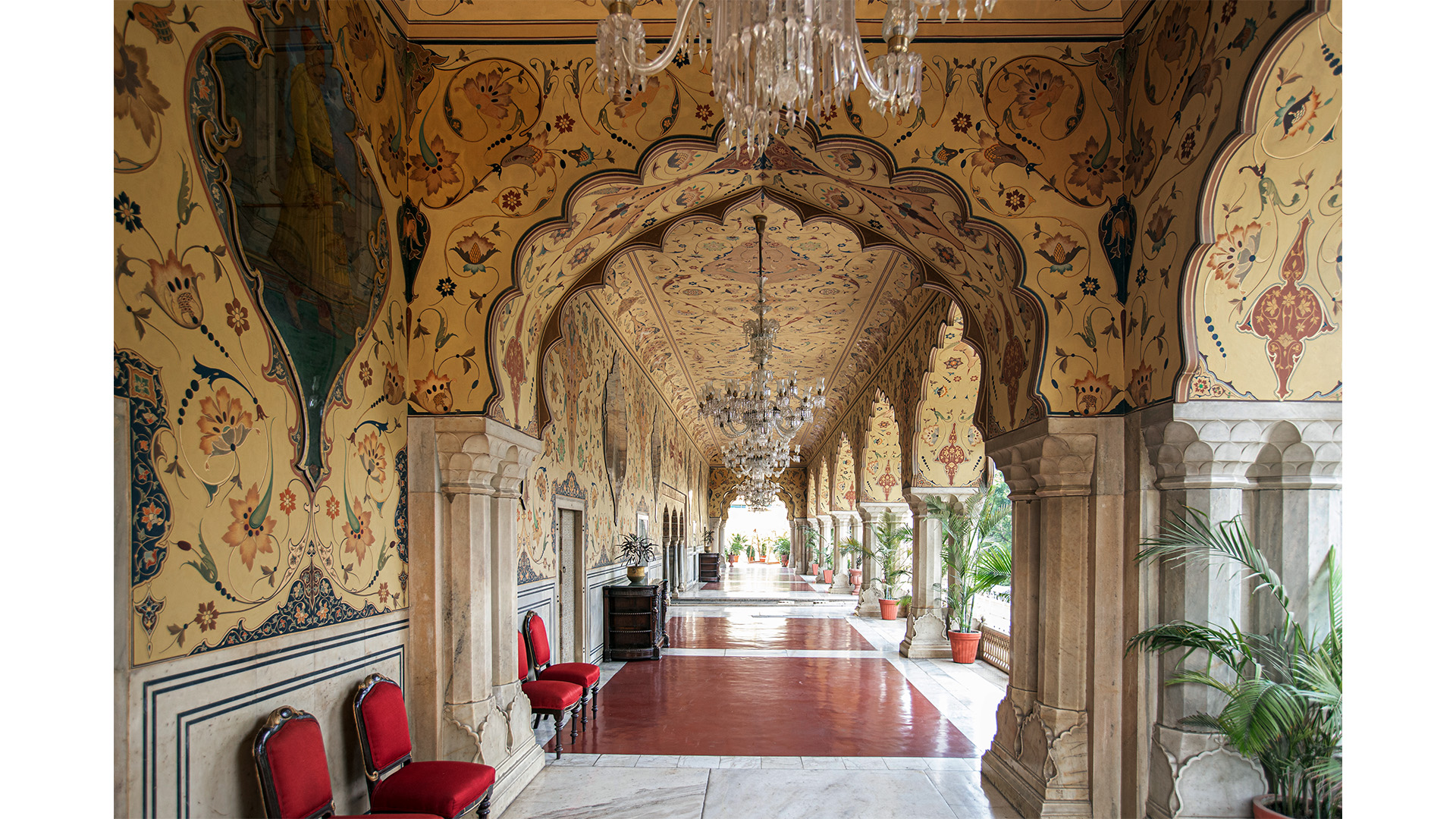
The Chandra Mahal verandah features wall paintings by the German artist Archibald Herman Müller, c.1920

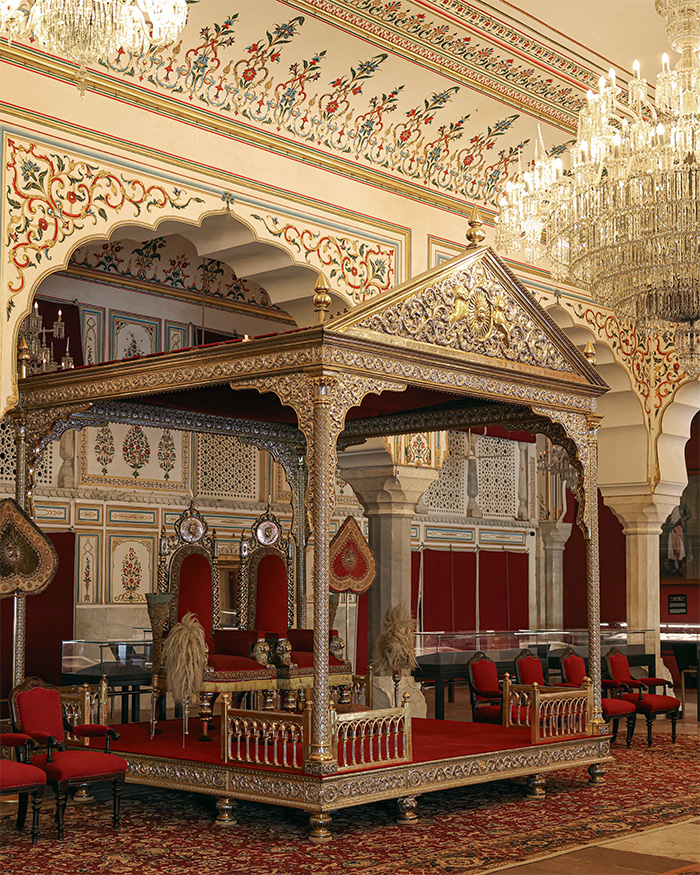
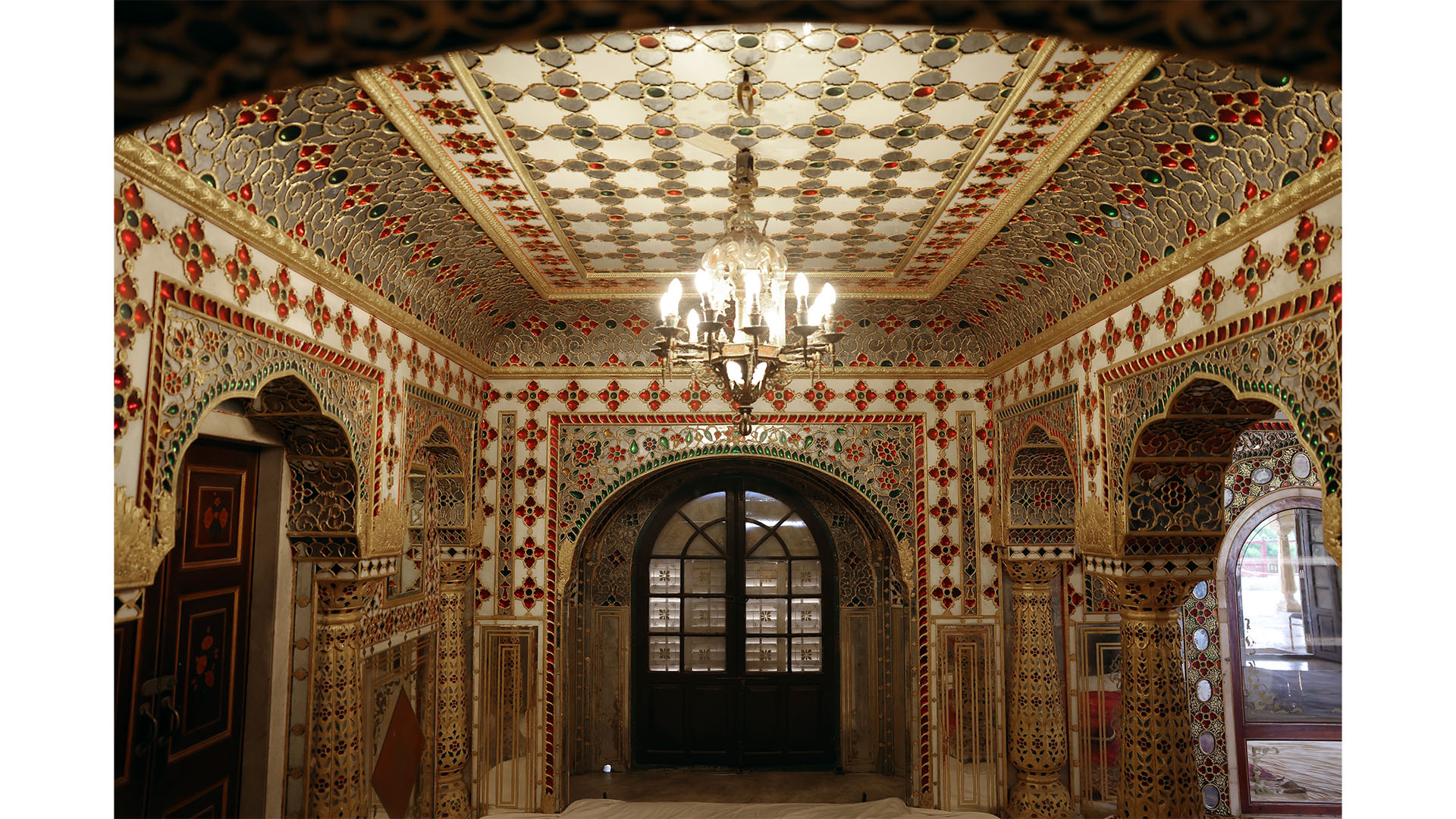
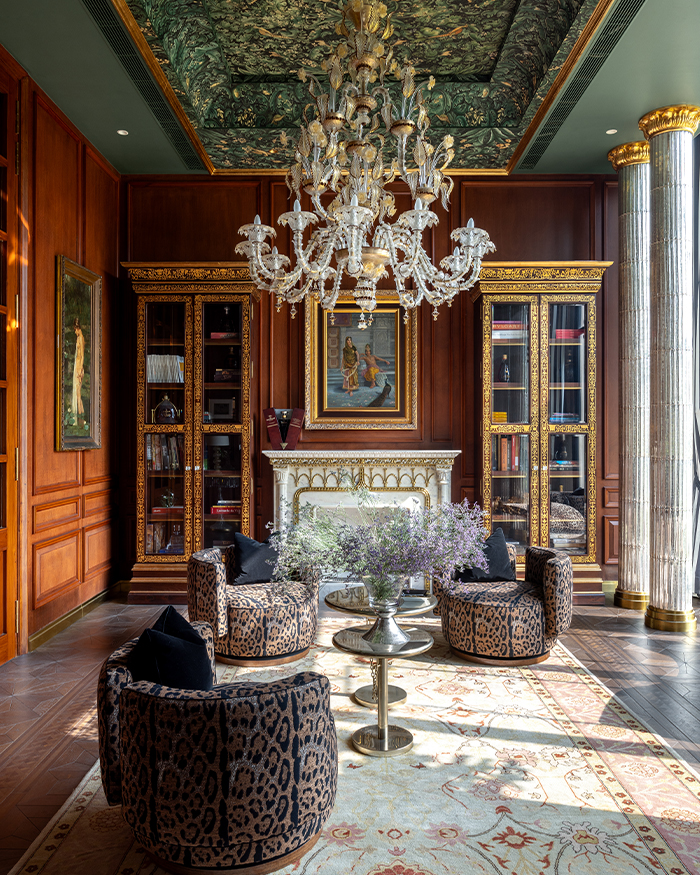
Pacho has inherited a palace of spectacles. From the Indo-Saracenic arches in Mubarak Mahal and Czech chandeliers in Sabha Niwas to ceilings inlaid with Thikri work that scatter light like shattered constellations and rooms lacquered in aaraish to walls stroked with miniature-style frescoes and palatial doors hammered by generations of metalsmiths. But what he sees most clearly is the intelligence behind this ornamentation. Which may be yet another face of India’s maximalism. “Behind every surface there is technique and an entire lineage of thought gone into creating that visual richness. I hope people will look closer and see the intelligence and craftsmanship behind the ornament.”

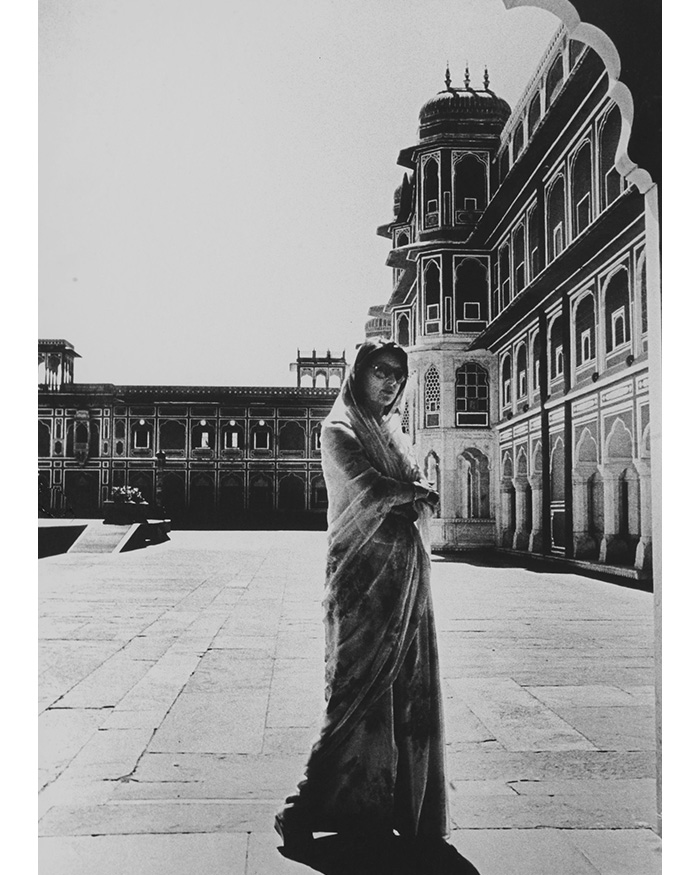
Maharani Gayatri Devi at a courtyard in the City Palace, Jaipur, 20th century; Photography courtesy Private collection of the Royal Family of Jaipur
Shobha Niwas in the Chandra Mahal building

In the 18th century, when the dynasty of Kachhwaha Rajputs moved the capital from Amer, Sawai Jai Singh II envisioned Jaipur as the new capital with architect Vidyadhar Bhattacharya. The city was meticulously planned and visually abundant: broad streets, traditional facades, guilds of craftspeople shaping neighbourhoods and structures that would be synonymous to monuments. In Jaipur, maximalism has largely been an urban reality. A cluster of multiple cultures, materials and motifs coexisting — Rajput, Mughal, Persian, European and Rajasthani influences borrowed and melded into one another.

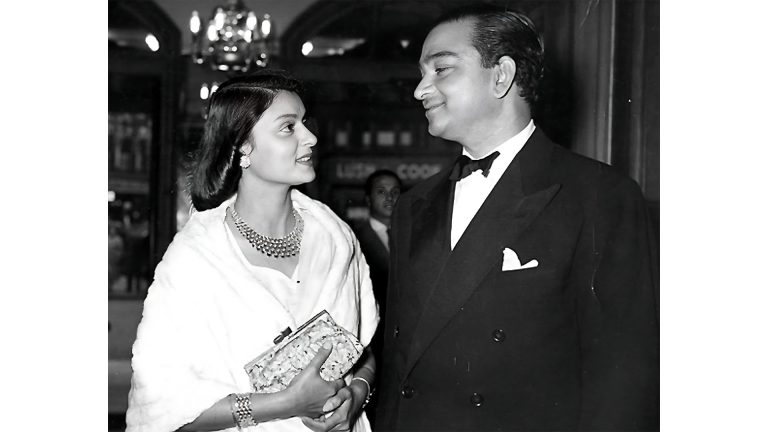
Maharaja Sawai Man Singh II and Maharani Gayatri Devi at Rambagh Palace, 20th century; Photography courtesy Private collection of the Royal Family of Jaipur
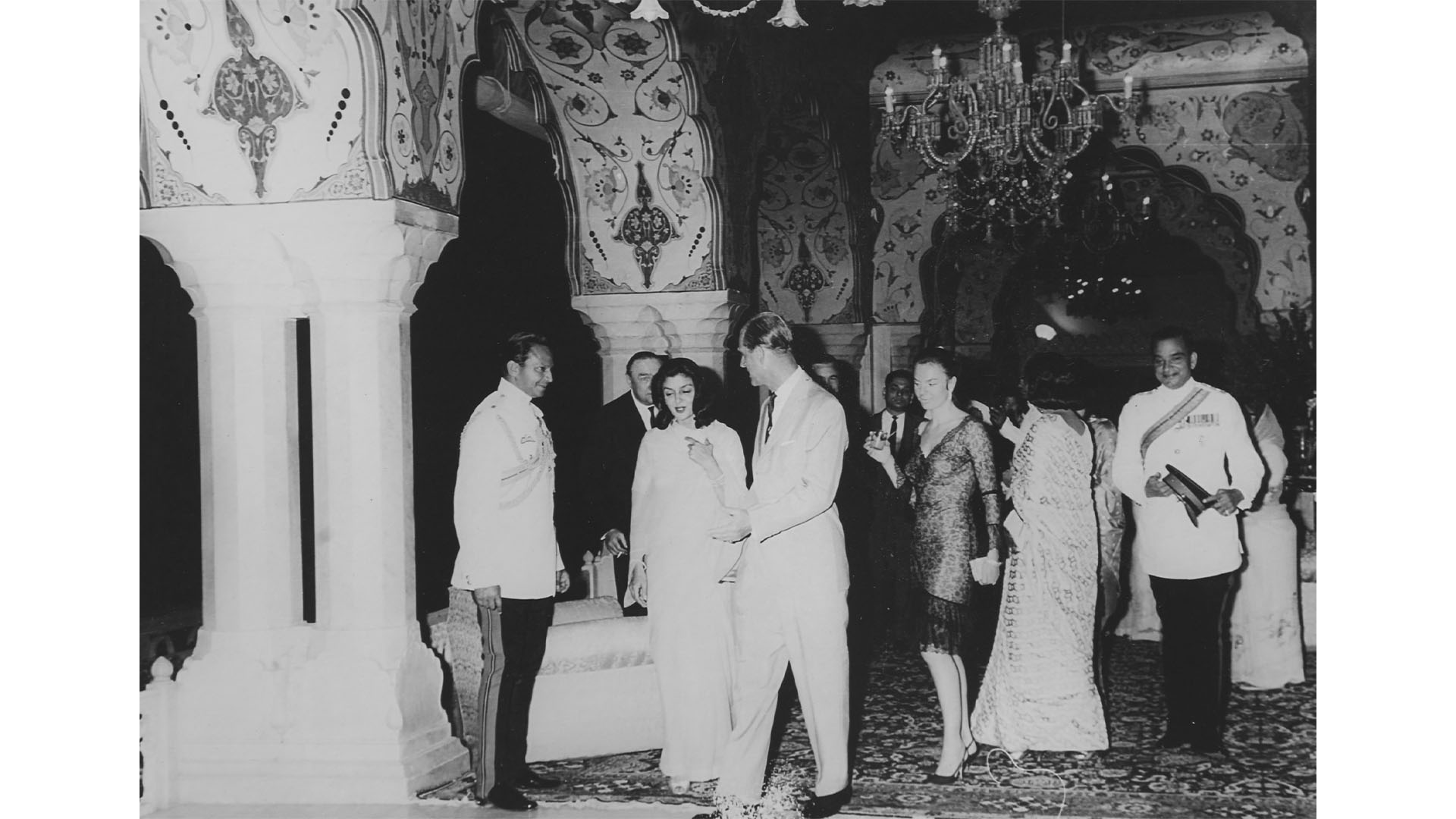
Capt. Maharaj Kumar Bhawani Singh of Jaipur, Maharani Gayatri Devi, HRH the Duke of Edinburgh and HH Maharaja Sawai Man Singh II of Jaipur; Photography courtesy Private collection of the Royal Family of Jaipur

“I see my role as custodian of our heritage, protecting and renewing what has been handed down, whether through the City Palace, Jaigarh or polo,” he says. Pacho’s inheritance has allowed him to experience many histories, communities, and creative practices up close. “This exposure has taught me that maximalism is not only a visual language. It is also about the number of voices and traditions held within. Indian maximalism, to me, is powerful because it carries so many cultures and communities in one frame.” Every corner of the palace is maximalist indeed but Pacho sees glory in the depths under the aesthetic. “You feel this in the Sabha Niwas (the royal hall of public audience) where the structure is incredibly impressive, with intricately detailed walls and ornate chandeliers. But what makes it truly special is knowing the history that has taken place there. That’s maximal.” Sabha Niwas was where, at 11, his Raj Tilak was performed, and at 18, his durbar took place. Though the western gaze repeatedly sees India’s maximalism as decoration and not as the human stories behind it, reducing it to craft without the craftsperson and abundance without context — Pacho’s aim is to reclaim this gaze. “Too often, pieces of Indian design are lifted out of context. I would like to see more credit, visibility and partnership extended to the communities and creators behind those ideas.”

Pacho’s legacy does not end at nostalgia. He hopes that people visit Jaipur to not only admire its history but to collaborate, learn and build bodies of work that take shape from its past and present. He emphasises, “Focusing on collaborations that keep Indian voices at the centre is the most essential where our designers, artisans and historians are leading the conversation, not just inspiring it.”

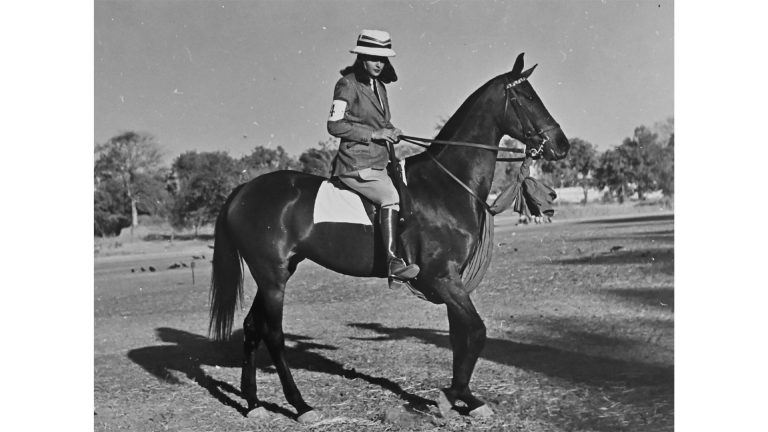
Maharani Gayatri Devi at the Rajasthan Polo Club, Jaipur, 20th century; Photography courtesy Private collection of the Royal Family of Jaipur
SHARE THIS ARTICLE

You May Also Like

Watch

No results found.

Search
Close this search box.