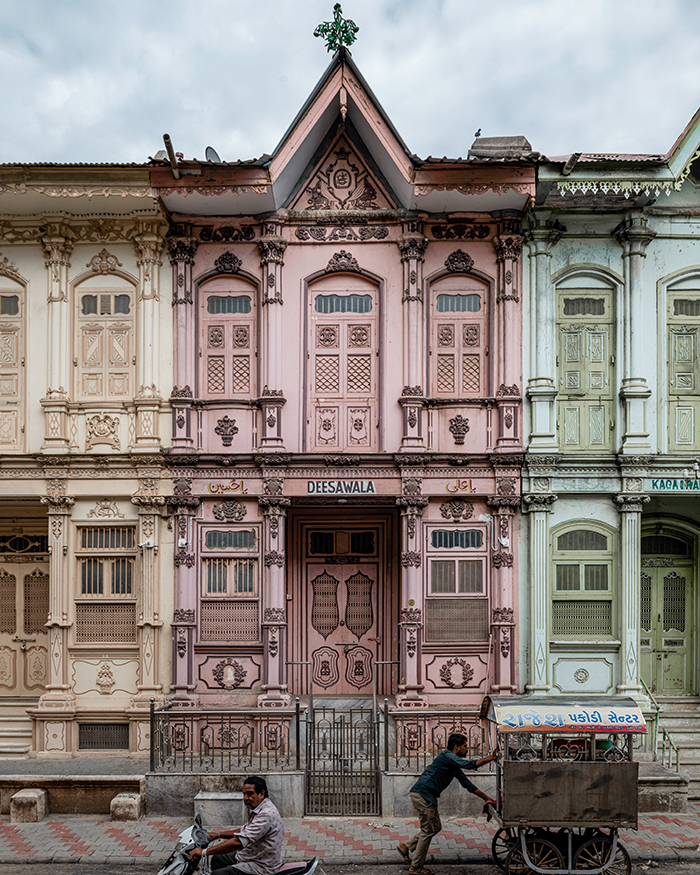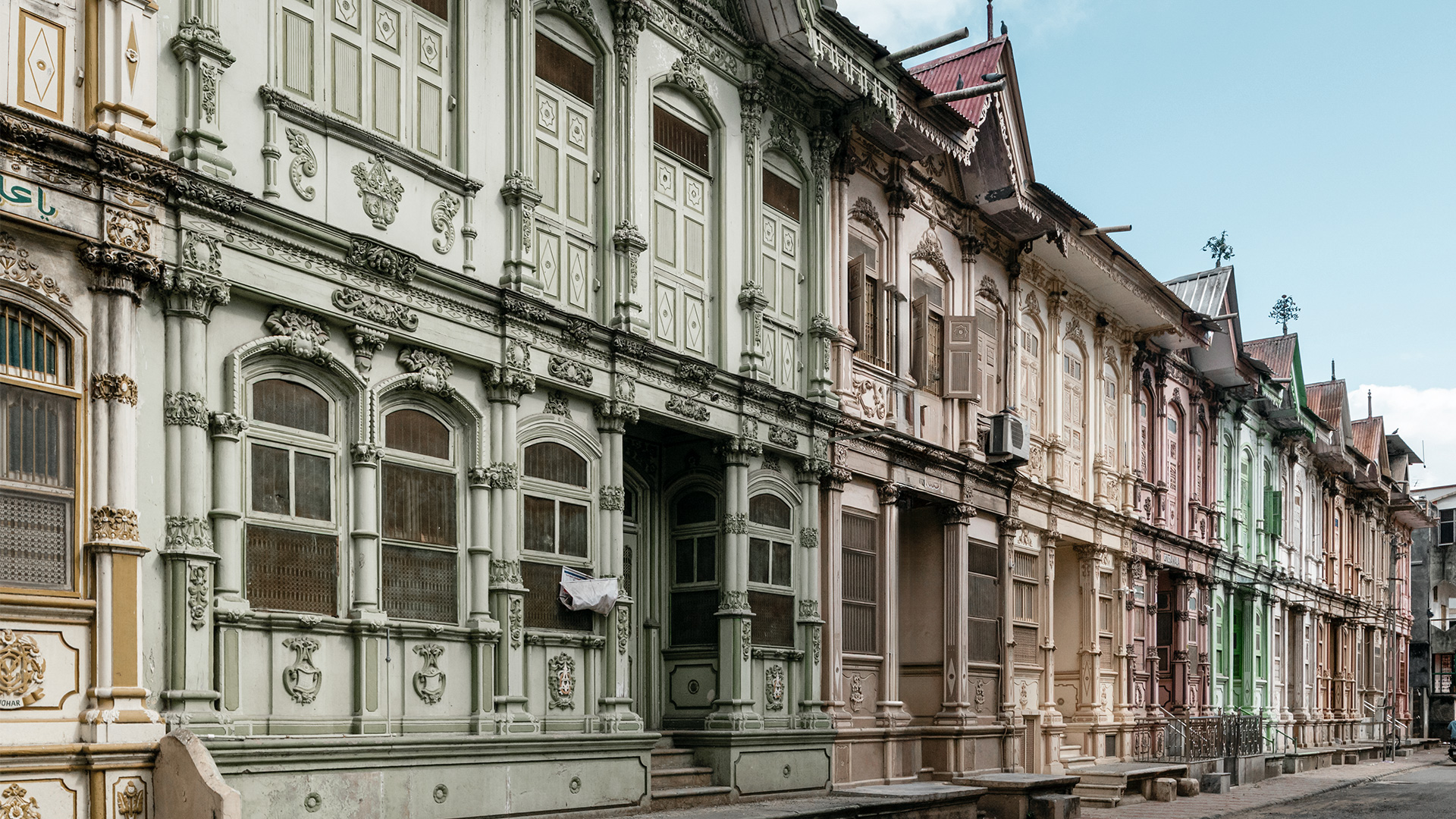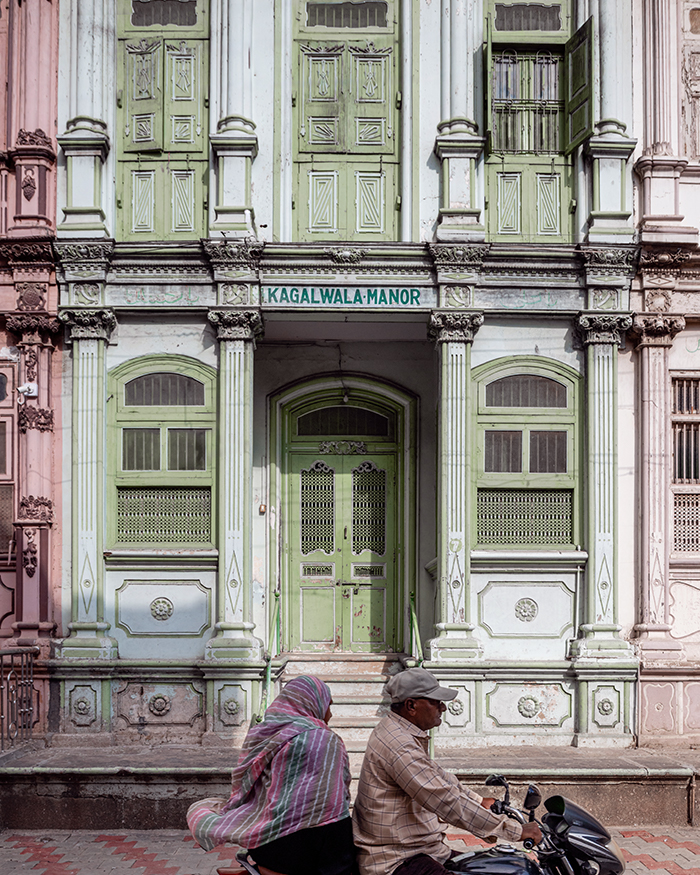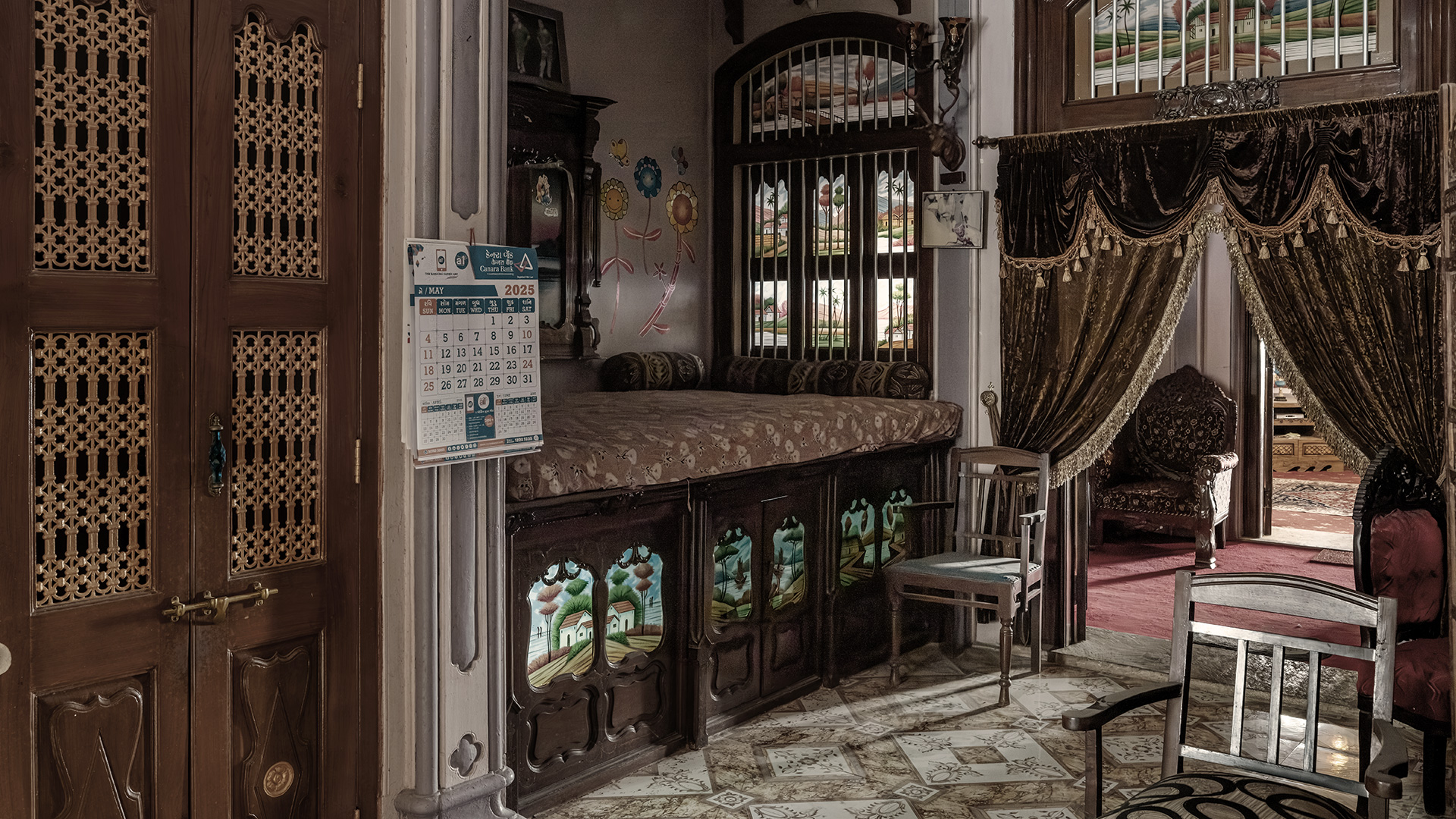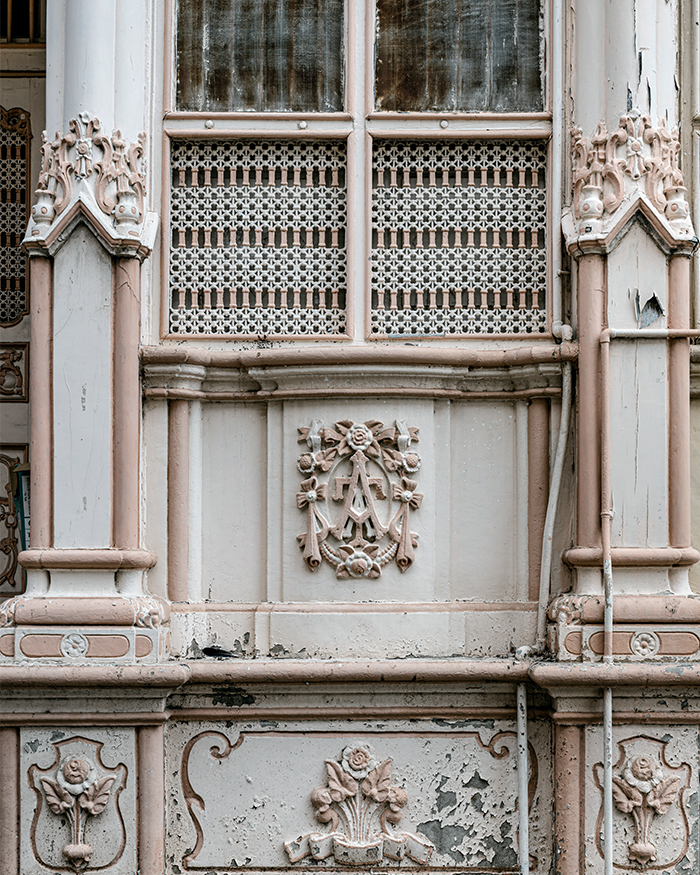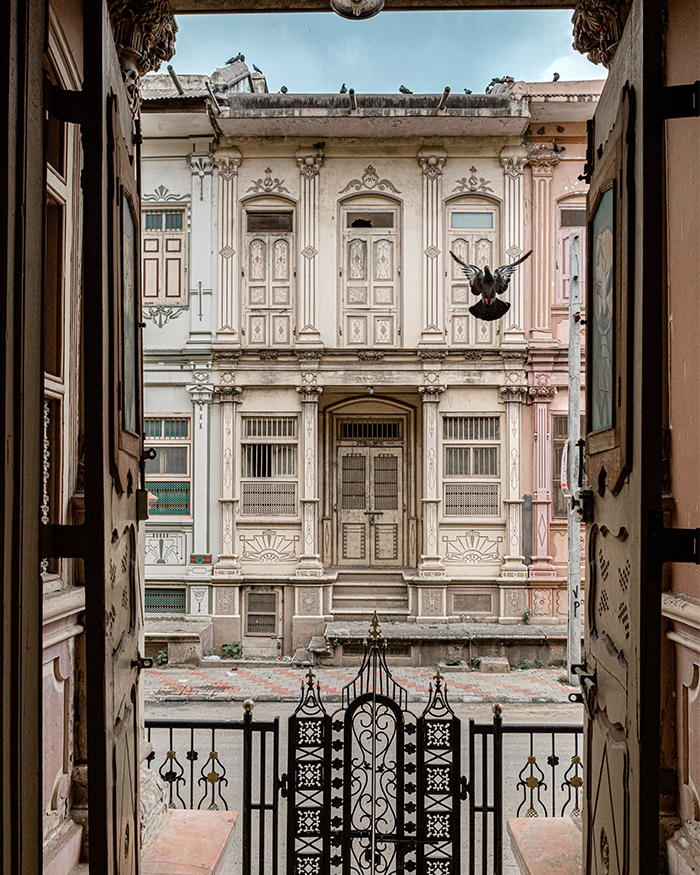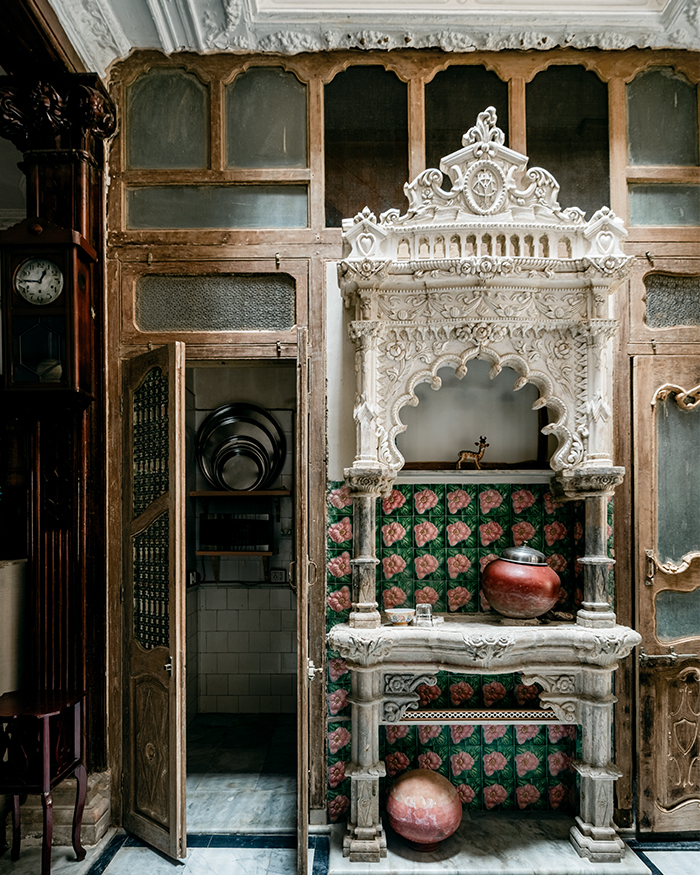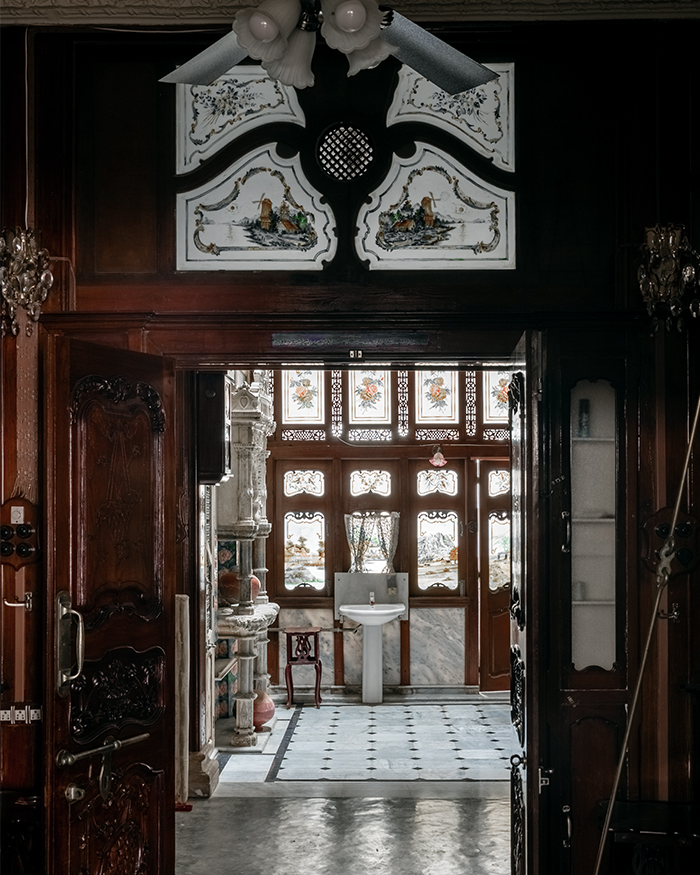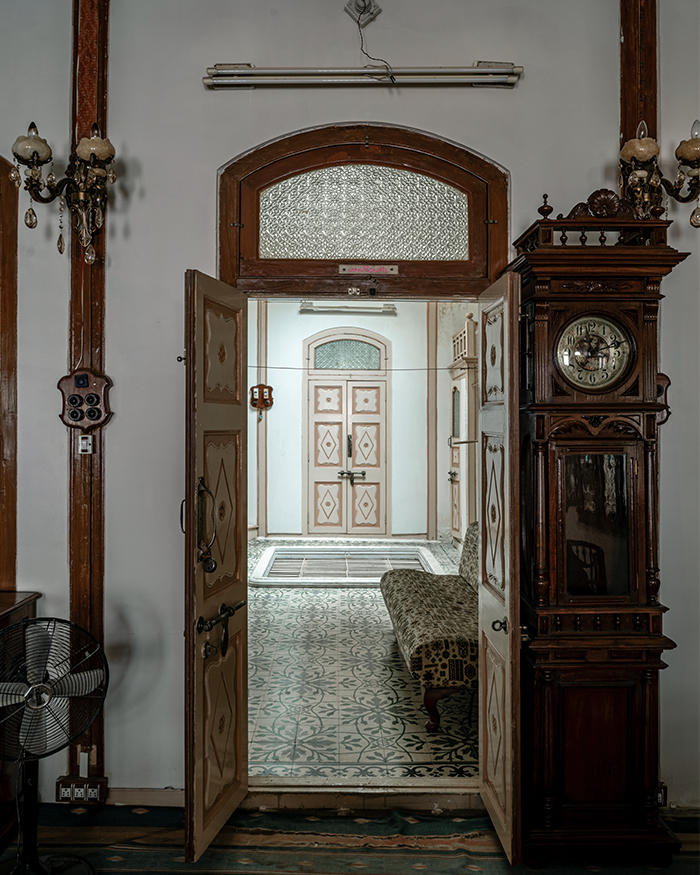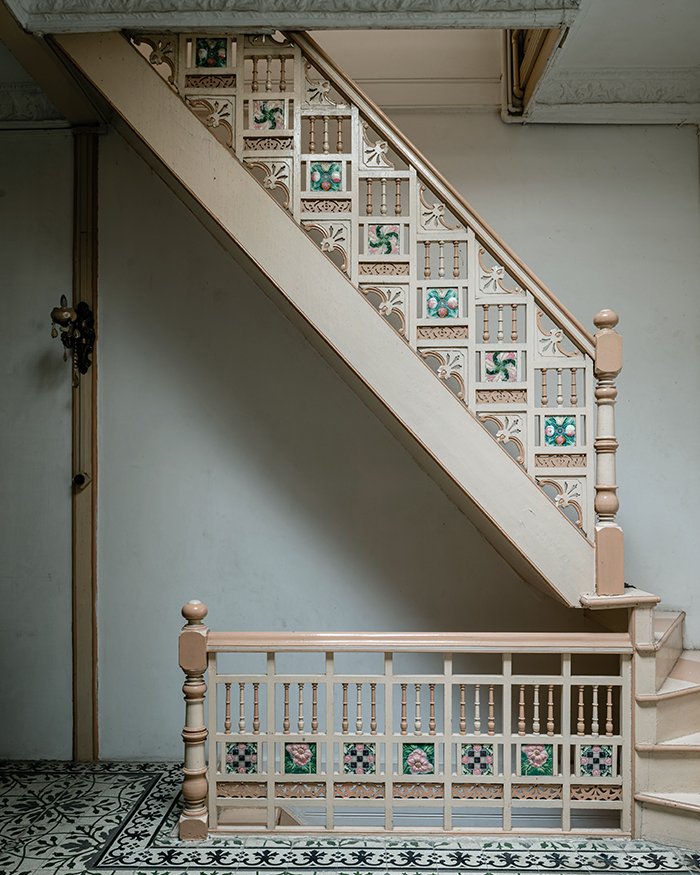
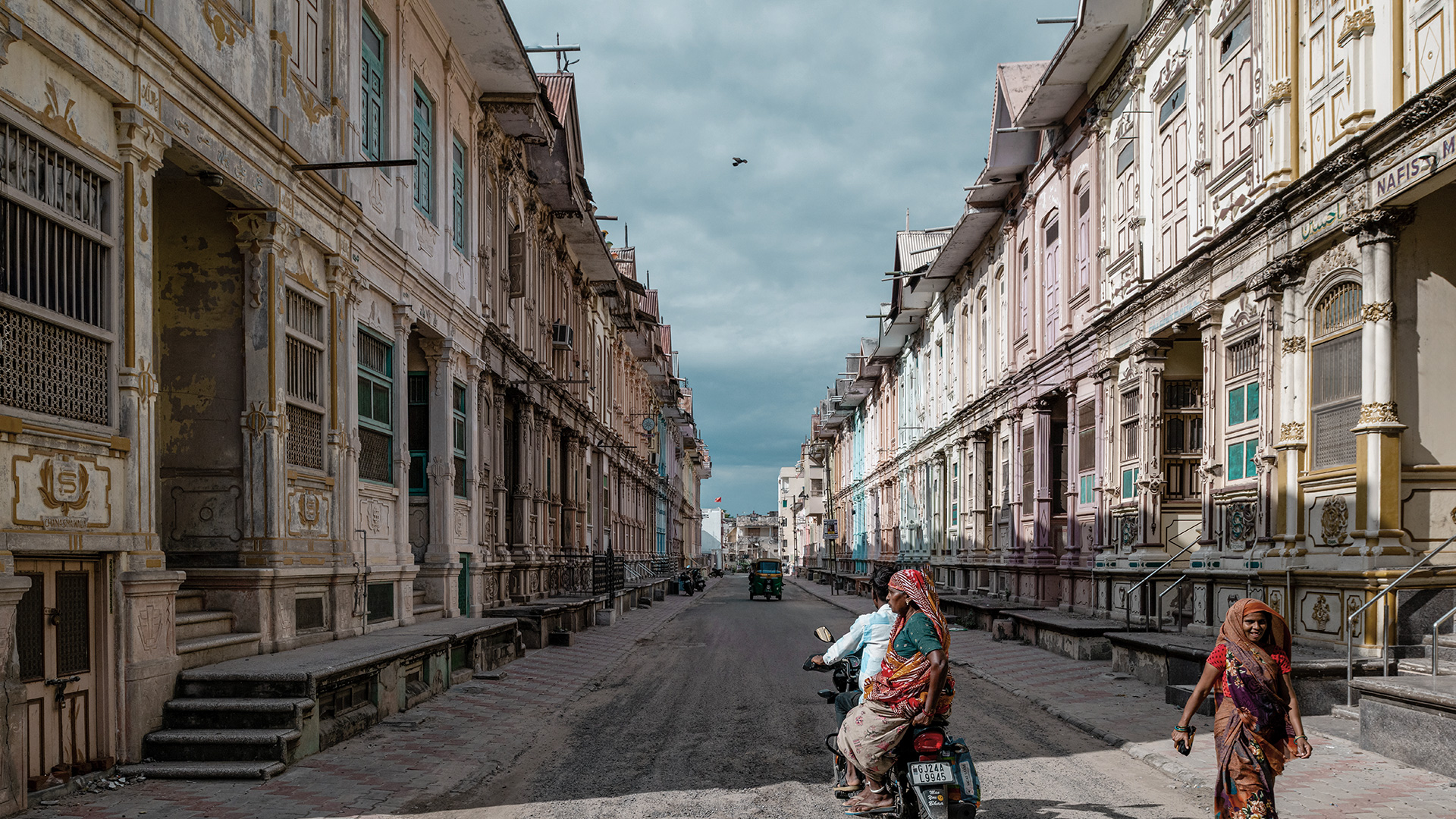
Siddhpur has been photographed endlessly. It has appeared in travel features, coffee table books, photo documentaries and in ELLE DECOR India a decade ago. Nearly every Indian architectural photographer has pointed a lens at its pastel facades. It is visually irresistible, a city with no wrong angles. But that alone is not a reason to examine it again. Siddhpur occupies a rare position in India’s cultural and architectural landscape, metaphoring maximalism shaped by time, migration and layered identity rather than spectacle or restoration. They call it a ghost town, but the long pastel rows do not appear dead; they look paused. At any moment, it feels like a door could open, a family could return, a conversation could pick up midsentence.
The houses may be abandoned, but the town has not quite agreed to disappear yet. Its historical significance predates its pastel Bohra mansions. Known as Sristhal, it rose to prominence in the 10th century CE under the Chaulukya dynasty. The monumental Rudra Mahalaya Temple, completed in 1140 CE, was among Gujarat’s most important temple complexes, built on an ambitious scale with elaborate pillars, sculpted toranas and multiple shrines. Although the temple was later dismantled during periods of conflict, its surviving fragments (now preserved under the Archaeological Survey of India) remain a key reference for medieval architectural innovation and stone engineering. The dual inheritance of monumental built history and rituals positioned Siddhpur as a Western Kashi in the cultural imagination.
"With Parisian facades that seem to dissolve into infinity, the havelis of Siddhpur reflect a hybrid identity born out of migration, aspiration and global exchange"
- Shriti Das